
English Speaking Course Finder
Find Your Perfect English Course
Answer a few questions to get personalized recommendations for English speaking courses in India.
If you’re in India and want to speak English confidently-whether for a job, interview, or just to feel more at ease in daily conversations-you’re not alone. Millions of people across cities and towns are trying to break through the fear of making mistakes, the hesitation when speaking, and the pressure to sound "perfect." The good news? You don’t need to be fluent overnight. You just need the right kind of training. Not every English course delivers. Some focus too much on grammar drills. Others are just fancy listening exercises with no real speaking practice. So what actually works in India today?
What Makes an English Course Effective?
Not all English courses are built the same. A course that teaches you to memorize 500 vocabulary words won’t help you order coffee without pausing. What matters is active speaking. The best programs in India today focus on three things: regular practice, real-life context, and immediate feedback.
Look for courses where you’re speaking at least 60% of the time-not listening to a teacher talk for an hour. If you’re sitting quietly while someone explains the difference between present perfect and past simple, you’re wasting time. Real fluency comes from doing, not just knowing.
Also, avoid courses that use only textbook dialogues like "Hello, how are you?" and "I would like to book a ticket." Those might help with basic phrases, but they don’t prepare you for asking a colleague for help, explaining a problem to a customer, or joining a team meeting. The best courses simulate real situations: job interviews, client calls, networking events, even casual chats at a café.
Top 5 English Speaking Programs in India (2025)
After reviewing over 30 programs across urban and semi-urban centers, here are the five that consistently deliver results based on student outcomes, instructor quality, and speaking hours per week.
- British Council India (Live Online & In-Person) - Known globally, their India branches offer structured speaking modules with certified trainers. Classes are small (max 8 students), and every session includes role-plays based on workplace scenarios. Students report noticeable improvement in 6-8 weeks. Their online platform lets you record yourself and get AI-powered feedback on pronunciation.
- EF English Live (India-focused version) - This platform is designed for Indian learners. It uses real Indian accents as examples, not just British or American ones. You get 5 live group classes per week, plus 2 one-on-one sessions with a native speaker. The curriculum covers common Indian English phrases so you’re not learning to sound like someone from London or New York-you’re learning to sound clear and confident in your own context.
- Spoken English by Alakh Pandey (YouTube + App) - Started as a free YouTube channel, this program now has a paid app with daily speaking challenges. Alakh’s approach is simple: speak for 3 minutes every day on a random topic. No grammar lessons. No tests. Just practice. Over 2 million Indians use this daily. Many say it broke their mental block around speaking.
- FluentU (India Corporate Program) - Used by companies like TCS, Infosys, and Wipro to train employees. FluentU uses real videos-TED Talks, news clips, YouTube vlogs-with interactive subtitles and speaking prompts. You repeat phrases after the speaker, then record your version. The system compares your intonation and rhythm. It’s not for beginners, but if you’re at an intermediate level and want to sound natural, this is one of the most effective tools available.
- Local Coaching Centers in Tier-2 Cities (e.g., Indore, Lucknow, Jaipur) - Don’t overlook small-town centers. Many are run by retired teachers or former English lecturers who’ve spent decades teaching students. These centers often charge ₹1,500-₹3,000 per month and offer 6-8 hours of speaking practice weekly. They focus on correcting common Indian English errors: "I am having a doubt," "Please do the needful," or "I am feeling tired." These phrases might be common, but they don’t sound natural to native speakers. Good local coaches fix these without making you feel embarrassed.
What to Avoid
There are dozens of "guaranteed fluency in 30 days" ads online. They promise you’ll sound like a native speaker after watching 10 videos. Don’t fall for it.
Here are the red flags:
- Classes with 20+ students - You won’t get enough speaking time.
- Only video lessons with no live interaction - You need someone to correct your mistakes in real time.
- Focus on TOEFL/IELTS prep without speaking practice - Passing a test doesn’t mean you can hold a conversation.
- Teachers who speak only English and don’t understand your struggles - If they can’t explain why you’re stuck in Hindi or regional language thinking, they’re not helping you bridge the gap.
Also, avoid courses that charge ₹15,000+ for a 2-month program with no clear syllabus or progress tracking. You should know exactly what you’ll improve each week: pronunciation? sentence structure? vocabulary for meetings? If they can’t tell you, walk away.

How to Measure Your Progress
Fluency isn’t about knowing 5,000 words. It’s about how easily you can express your thoughts without stopping.
Here’s a simple way to track your improvement every two weeks:
- Record yourself speaking for 2 minutes on any topic: your day, your favorite movie, your goal for this year.
- Listen back. Note how many times you paused, repeated a word, or switched to Hindi.
- Do the same recording after two weeks of training. Compare.
Most people see a 40-60% drop in pauses and fillers like "um," "like," or "actually" within 4-6 weeks if they’re practicing daily.
Another test: Try explaining something complex-like how your phone works or why you chose your job-without using Hindi words. If you can do it without stopping, you’re getting there.
Real Stories from Indian Learners
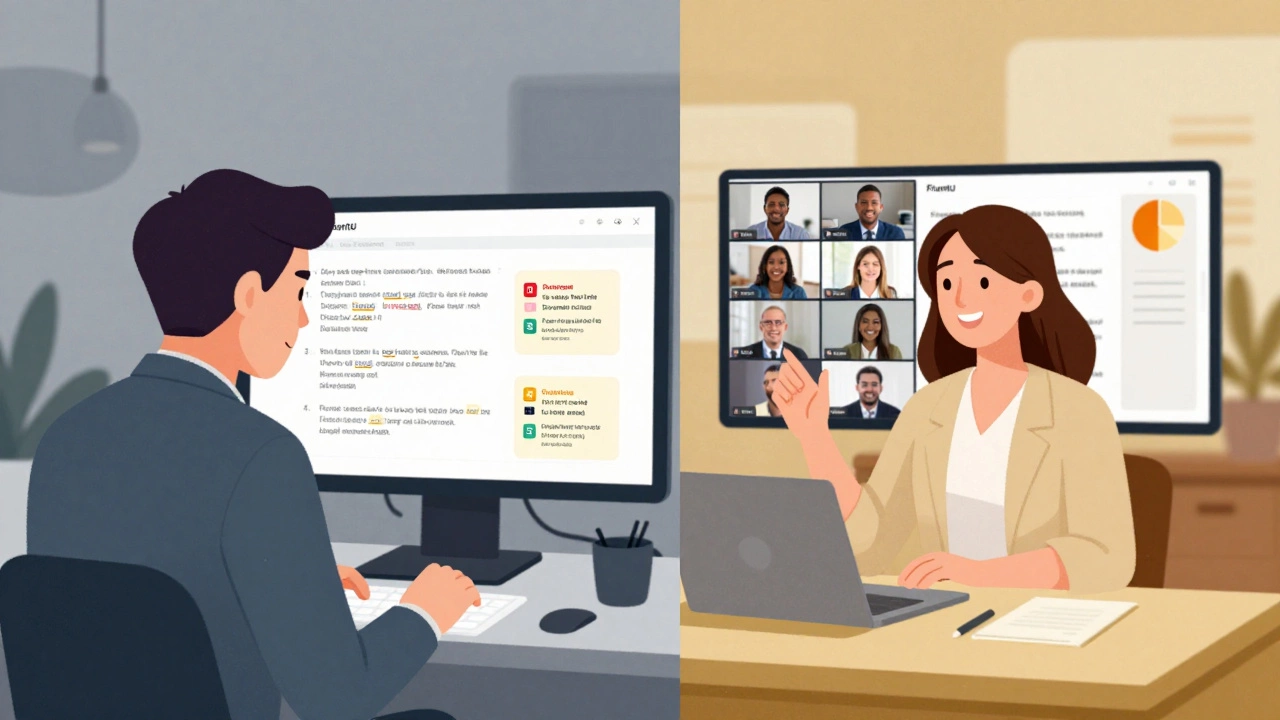
Riya from Bhopal used to avoid video calls at work. She’d turn her camera off and type everything. After joining a local coaching center for ₹2,500/month, she practiced 15 minutes every morning before work. In 10 weeks, she led her first team meeting on Zoom. "I still make mistakes," she says. "But now I don’t panic. I just keep going."
Vikram, a software engineer from Pune, spent ₹8,000 on an online course that taught him grammar rules but gave him zero speaking time. He switched to Alakh Pandey’s daily challenge. He started speaking for 3 minutes while brushing his teeth. After three months, he got promoted to a client-facing role. "I didn’t become perfect," he says. "I became comfortable. That’s what mattered."
These aren’t rare cases. They’re the norm for people who chose consistent practice over perfection.
How to Start Today
You don’t need to enroll in a course right away. Here’s what you can do in the next 7 days:
- Find one English video (YouTube, Netflix, or podcast) that you enjoy. Watch it without subtitles.
- Pause every 30 seconds and repeat what the person said out loud. Mimic their tone and speed.
- Write down 3 new phrases you heard. Use them in a sentence about your day.
- Speak to yourself in English for 5 minutes before bed. Describe your day. No journaling-just talking.
- Find one person you trust and ask them to have a 10-minute English chat with you once this week.
That’s it. No apps. No fees. Just practice. If you do this for a week, you’ll notice your mouth starts moving differently. That’s the first sign of change.
Final Thought: Fluency Is a Habit, Not a Goal
You won’t wake up one day and suddenly speak perfect English. But if you speak a little every day-whether it’s talking to your mirror, your pet, or a friend-you’ll get there. The best English courses in India don’t give you magic. They give you structure, feedback, and space to try without fear.
Choose a program that makes you speak more than it makes you study. And remember: it’s not about sounding like a native speaker. It’s about being understood. And that’s something anyone can learn.
Can I learn English speaking for free in India?
Yes, you can. Free resources like Alakh Pandey’s YouTube channel, BBC Learning English, and the British Council’s free app offer daily speaking practice. But free doesn’t mean easy. You need discipline. The key is to speak out loud every day-even if it’s just for 5 minutes. Free courses won’t correct your mistakes unless you record yourself and compare with native speakers. For faster progress, consider investing in a low-cost local coaching center (₹2,000/month) that gives you live feedback.
Is online English speaking better than in-person classes in India?
It depends on your learning style. Online classes are flexible and often cheaper. But in-person classes give you immediate physical feedback-like seeing the teacher’s mouth movements or getting corrected on the spot. If you’re shy or easily distracted, in-person might be better. If you live in a small town with no good centers, online is your best option. Look for online programs that offer live sessions with real teachers-not just pre-recorded videos.
How long does it take to speak English fluently in India?
Most people see real improvement in 8-12 weeks if they practice daily. Fluency doesn’t mean being perfect. It means speaking without freezing, switching to Hindi, or overthinking grammar. If you spend 30 minutes a day speaking-whether with a tutor, app, or friend-you’ll notice a big difference in 2-3 months. It’s not about the course length. It’s about how often you open your mouth and try.
Do I need to learn American or British English to speak well?
No. What matters is clarity, not accent. Many Indian professionals speak with a mix of Indian, British, and American influences-and that’s perfectly fine. Companies in India don’t expect you to sound like someone from London or New York. They want you to be understood. Focus on pronunciation of key sounds (like "th," "v," and "w"), sentence rhythm, and reducing filler words. Accent is secondary.
What if I’m too shy to speak English?
Shyness is the biggest barrier-not your language skills. Start small. Talk to yourself in the mirror. Record your voice. Speak to your pet. Then try one person you trust. Most people are kinder than you think. Every time you speak, even if you make a mistake, you’re building courage. The goal isn’t to be perfect. It’s to be brave enough to try again tomorrow.
If you’ve been waiting for the perfect time to start speaking English, that time is now. Not next month. Not after you finish your current job. Today. One sentence at a time.