
Window Entry Feasibility Checker
Assessment Report
Likelihood of Non-Destructive Entry (NDE)
--
Risk of Property Damage
--
Recommended Method:
Select options above to view recommendation.
It is 2 AM. You are locked out of your house. The front door is deadbolted tight, but the kitchen window is slightly ajar from earlier in the evening. Your instinct might be to call a locksmith and ask, "Can you open that window for me?" The answer isn't a simple yes or no. It depends entirely on the type of window, the security mechanism involved, and the specific training the professional has received.
While most people associate locksmiths with doors, keys, and car ignitions, their expertise often extends to windows. However, this service sits in a gray area between traditional lock manipulation and general entry techniques. For someone considering locksmith training India or any vocational path in security trades, understanding this boundary is crucial. It defines what you will learn, what tools you will need, and ultimately, what services you can legally and ethically offer your clients.
The Core Question: Can Locksmiths Open Windows?
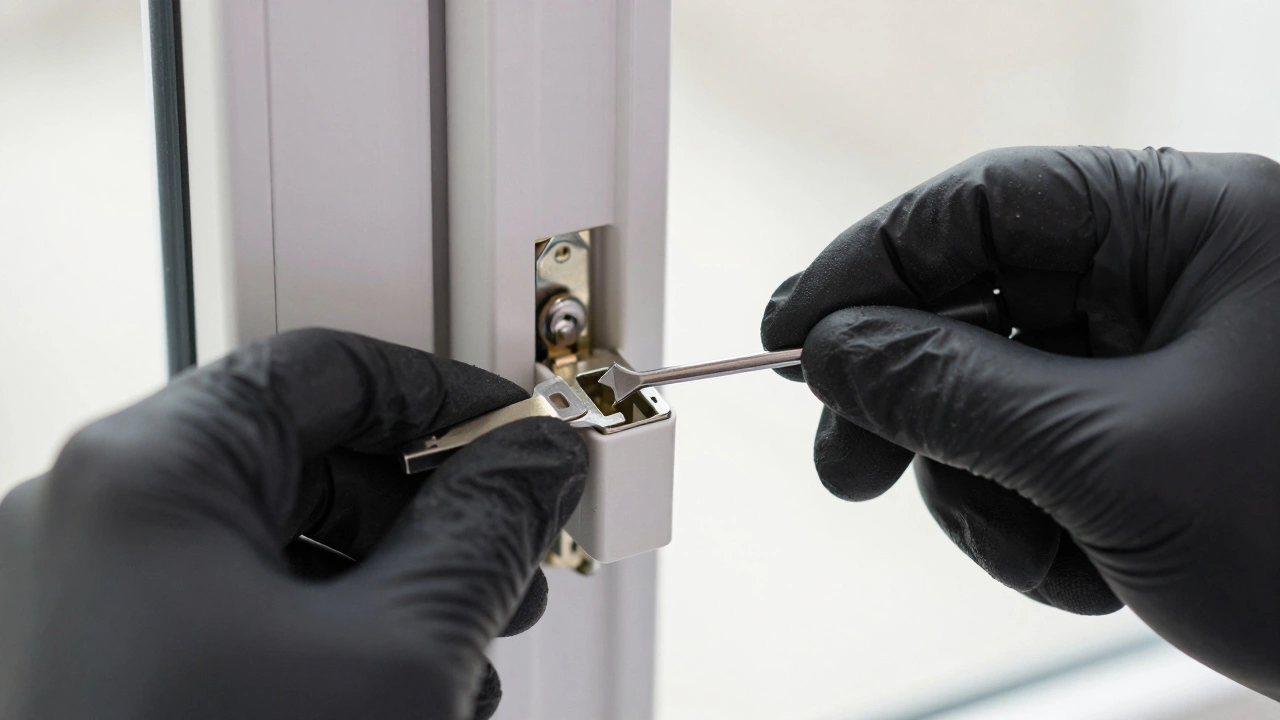
Yes, many locksmiths do open windows, but not all windows are created equal. If a window uses a standard latch, hook-and-eye bolt, or a basic sash lock, a trained locksmith can usually bypass it without causing damage. They use specialized tools like shim kits, tension wrenches, and pick guns to manipulate the locking mechanism just as they would with a door cylinder.
However, if the window is secured by high-security bars, welded grilles, or complex multi-point locking systems common in modern apartments, the task shifts from "lock picking" to "forced entry." This requires different tools-such as glass cutters, hydraulic spreaders, or angle grinders-and carries a higher risk of property damage. In these cases, a locksmith might decline the job or refer you to a glazier or a general handyman, depending on their insurance coverage and skill set.
| Window Type | Locking Mechanism | Typical Method | Risk of Damage |
|---|---|---|---|
| Standard Sash Window | Lift-and-turn latch | Shimming/Picking | Low |
| Sliding Glass Door | Roller lock/Keyed lock | Bypass tool/Lifter | Medium |
| Security Grille Window | Padlock/Hasp | Lock picking/Cutting | Low (to lock) |
| Tempered Glass Fixed Pane | No lock (broken entry) | Glass cutting/Specialized shatter | High |
Why Window Entry Matters in Locksmith Training
If you are looking into locksmith training programs in India, you will find that window entry is rarely taught as a standalone module. Instead, it is integrated into broader courses on "Non-Destructive Entry" (NDE) and "Emergency Access." This makes sense because the principles of leverage, tension, and mechanical advantage apply to both doors and windows.
In Indian cities like Mumbai, Delhi, and Bangalore, where high-rise living is common, window security is a major concern. Many residential complexes install barred windows that require padlocks. A locksmith who cannot open these efficiently loses credibility. Therefore, comprehensive training must cover:
- Padlock Manipulation: Most window grilles are secured by padlocks. Students learn to pick wafer locks, disc detainer locks, and even high-security medeco-style locks.
- Latch Shimming: Learning how to insert thin metal strips to disengage internal latches without breaking the glass.
- Legal Boundaries: Understanding local laws regarding forced entry. In India, the Bharatiya Nyaya Sanhita (BNS) and previous IPC sections have strict rules about trespassing. A locksmith must verify identity before attempting any entry.
The Tools of the Trade for Window Entry
A locksmith’s toolkit for windows differs slightly from their door-focused kit. Here are the essential items you will encounter during training:
- Shim Kits: Flexible plastic or metal strips used to slide past the latch bolt. These are vital for sliding doors and sash windows.
- Tension Wrenches: Used to apply rotational force while picking a lock. Essential for keyed window locks.
- Glass Cutters: Specialized diamond-tipped wheels for scoring tempered glass if non-destructive methods fail. Note: Breaking tempered glass requires caution as it shatters into small cubes.
- Hydraulic Spreaders: For prying open stuck frames or removing hinges in extreme emergencies.
- Flashlights and Mirrors: To inspect the interior of the window frame and locate the locking mechanism visually.
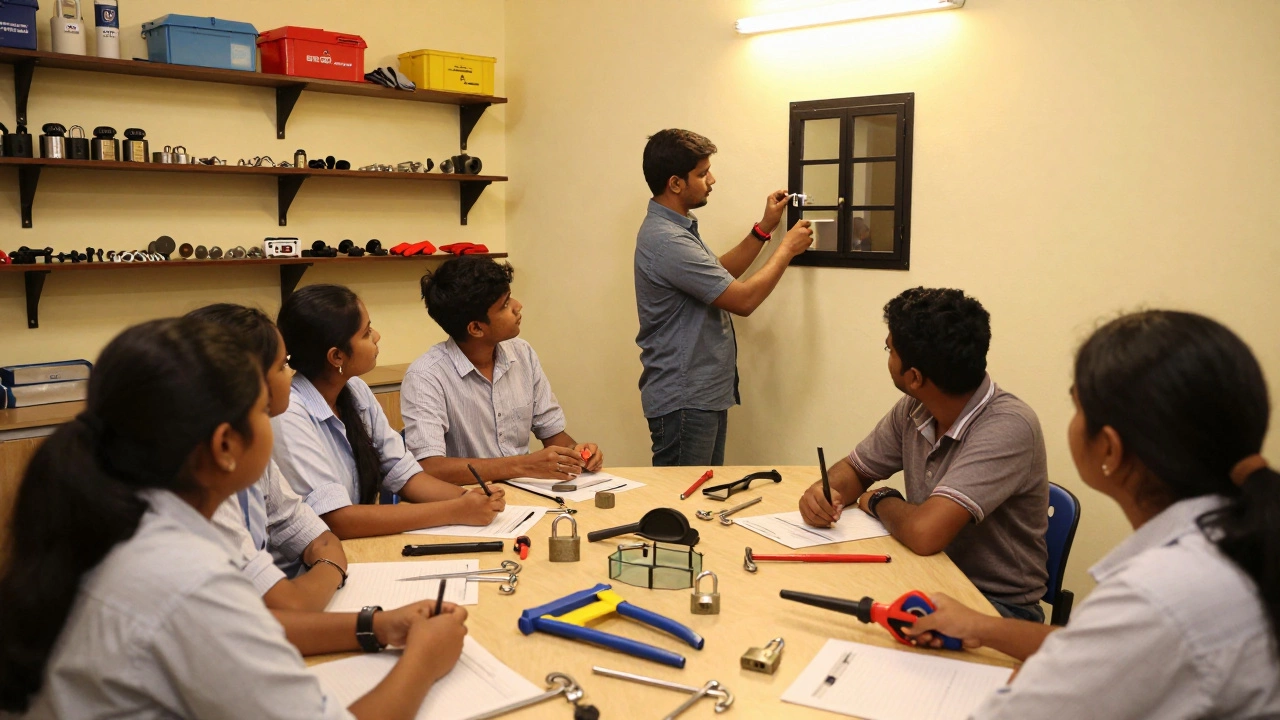
During practical sessions in vocational institutes, students practice these techniques on dummy window units. The goal is speed and precision. A professional should be able to open a standard latched window in under two minutes without leaving visible marks.
Training Landscape in India: What to Expect
The landscape for locksmith training India varies significantly between formal institutions and informal apprenticeships. Formal courses offered by polytechnics or private vocational centers provide structured curricula. These programs typically last 6 months to 1 year and include theory exams alongside practical workshops.
Key components of a reputable course include:
- Mechanics of Locks: Understanding pin tumbler, wafer, and lever mechanisms.
- Electronic Security: Basics of smart locks and keyless entry systems, which are increasingly installed on balcony and patio doors.
- Customer Service & Ethics: How to handle distressed customers, verify ownership, and document work.
- Business Setup: Licensing requirements, GST registration, and marketing strategies for starting a locksmith business.
Informal apprenticeships, where you learn under an experienced locksmith, offer hands-on experience but may lack depth in theoretical knowledge and legal compliance. For a career in urban centers, formal certification is often preferred by corporate clients and housing societies.
Common Misconceptions About Window Locksmithing
There are several myths surrounding this niche. Let’s clear them up.
Myth 1: Locksmiths can break any window silently.
Reality: No professional wants to make noise or cause damage. Silent entry is only possible if the lock can be picked or shimmed. If the mechanism is rusted or broken, some noise or minor damage is inevitable.
Myth 2: Only locksmiths should open windows.
Reality: If a window is simply stuck due to swelling wood or paint, a carpenter or handyman might be better suited. Locksmiths specialize in locked mechanisms, not structural issues.
Myth 3: Training is too expensive for beginners.
Reality: While premium courses cost money, many government-sponsored schemes in India, such as those under the National Skill Development Corporation (NSDC), offer subsidized or free training in allied trades including security services.
Career Opportunities Beyond Doors
Mastering window entry expands your marketability. Residential clients often need help with patio doors, skylights, and basement egress windows. Commercial clients, such as retail stores, rely on locksmiths to secure storefronts with roller shutters and reinforced glass panels.
In India, the growing real estate sector means more homes are being built with advanced security features. This creates demand for technicians who understand both traditional mechanical locks and modern electronic integrations. A locksmith who can confidently say, "I can get you in through the window safely," adds significant value to their service portfolio.
Choosing the Right Training Program
When evaluating locksmith courses, look for these red flags and green lights:
- Green Light: Curriculum includes NDE (Non-Destructive Entry) for various entry points, including windows and vehicles.
- Green Light: Provides hands-on practice with real locks and windows, not just simulations.
- Red Flag: Promises "instant mastery" without covering legal and ethical responsibilities.
- Red Flag: Lacks information on post-training support or job placement assistance.
Ask potential instructors about their experience with window-specific scenarios. Have they dealt with rusted casement locks? High-security balcony grilles? Their answers will reveal the depth of their expertise.
Safety First: Protecting Yourself and the Client
Window entry can be dangerous. Falling from heights, cuts from glass, and injuries from prying tools are real risks. Proper training emphasizes safety protocols:
- Always wear cut-resistant gloves when handling glass or sharp metal edges.
- Use stable ladders and ensure they are secured before working on upper-story windows.
- Communicate clearly with the client inside to avoid accidental injury during entry.
- Carry liability insurance to protect against accidental property damage.
A professional locksmith prioritizes safety over speed. Rushing a job can lead to broken glass, injured fingers, or worse. Take your time, assess the situation, and choose the least destructive method available.
Conclusion: Is Window Work Worth Learning?
Absolutely. While doors remain the primary focus of locksmithing, windows represent a significant portion of emergency calls. By mastering window entry techniques, you differentiate yourself from competitors who only know how to pick door locks. In the competitive market of vocational training in India, versatility is key. Whether you start with a formal diploma or an apprenticeship, ensure your curriculum covers the full spectrum of access control, including the often-overlooked world of window security.
Do locksmiths charge extra for opening windows?
Pricing varies by provider and location. Some locksmiths include window entry in their standard service fee, while others charge a premium due to the increased difficulty or risk of damage. Always ask for a quote before the technician begins work. Emergency hours (night/weekends) typically incur higher rates regardless of the entry point.
Can a locksmith open a window without a key?
Yes, if the window has a mechanical latch or lock, a locksmith can often bypass it using shims or picks. However, if the window is secured by a solid bar or grille with a padlock, they will need to pick or cut the padlock. If there is no lock at all and the window is just stuck, they may need to force it open, which could cause damage.
Is locksmith training in India recognized globally?
Recognition depends on the specific institution. Courses accredited by national bodies like NSDC or state-level technical education boards hold weight within India. For global recognition, look for certifications from international organizations like ALASA (Associated Locksmiths of America) or similar European/Asian bodies, though these are less common in initial training phases.
What is the duration of locksmith training courses?
Duration varies widely. Short-term certificate courses can last 3-6 months, focusing on basic skills. Diploma programs may take 1-2 years and include deeper theoretical knowledge and business management. Apprenticeships can last 1-3 years depending on the mentor's schedule and the apprentice's pace.
Are there online options for locksmith training?
Online courses can teach the theory behind locks, security systems, and business operations. However, practical skills like picking, shimming, and drilling cannot be learned effectively online. Look for hybrid programs that combine video lectures with mandatory in-person workshops for hands-on practice.