Plumbing Math Calculator: Pipe Sizing & Slope
Estimate total water demand and required drainage slope based on practical trade math principles.
Results
0 GPM
0 inches
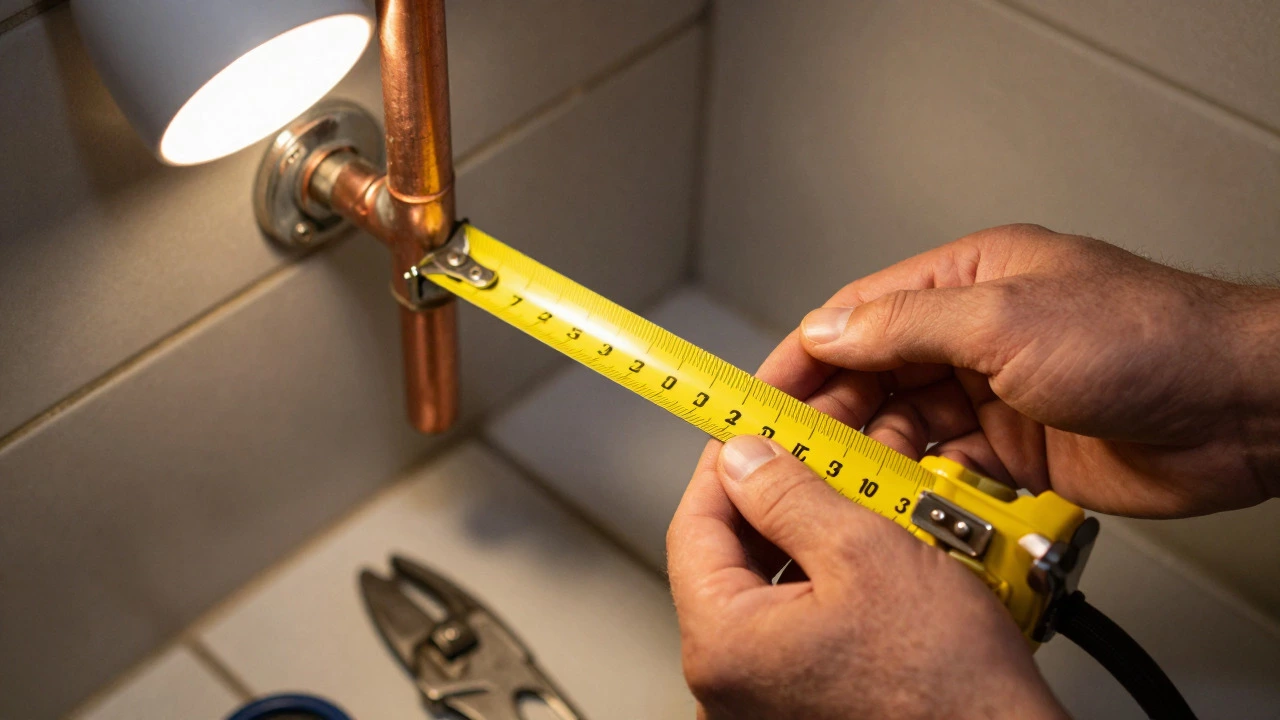
Picture this: you’re standing in a cramped bathroom, holding a pipe cutter. The new showerhead needs to be installed exactly two inches above the existing tile line. If you guess and cut too short, you’re buying more copper. Cut it wrong again, and you’ve wasted an hour of labor. Now, does that sound like advanced calculus? Or does it sound like basic arithmetic?
The myth that plumbers need to be math wizards is one of the biggest barriers keeping talented people out of the trade. The reality is far less intimidating. You don’t need to solve integrals or memorize trigonometric identities. However, you do need to be comfortable with numbers, measurements, and spatial reasoning. In the world of plumber training, the foundational education required to become a licensed professional installer and repairer of water systems, math is a tool, not a hurdle.
The Real Math Behind the Pipes
Let’s break down what "math" actually looks like on a job site. It’s rarely abstract. It’s almost always practical, immediate, and visual. When you are learning how to read blueprints or calculate material costs, you are using specific mathematical concepts that are taught clearly in any reputable vocational training, education focused on developing practical skills for specific trades program.
First, there is measurement. This is the bread and butter of the trade. You need to know fractions-specifically halves, quarters, eighths, and sixteenths. If a pipe is 12 inches long and you need to cut off 3/4 inch, can you find that mark on your tape measure? If yes, you have the math skills for 90% of residential work. You also need to understand decimal equivalents because modern laser levels and digital calipers often display decimals rather than fractions.
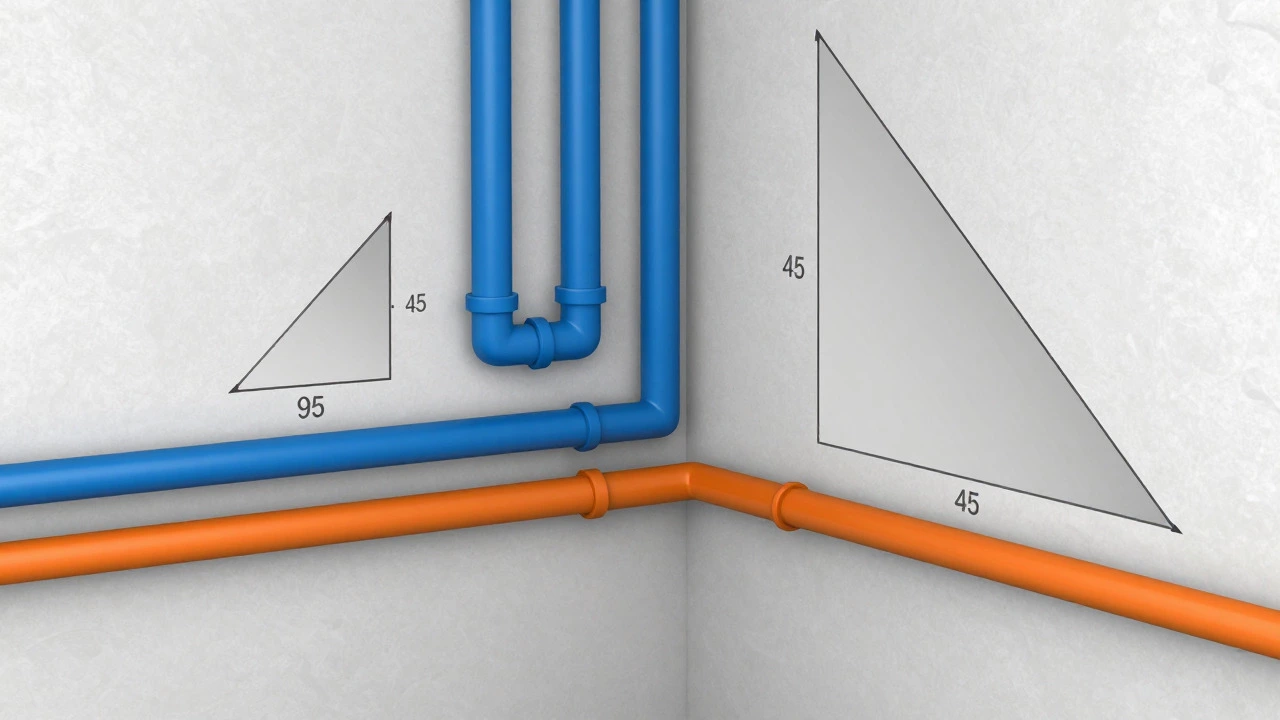
Second, there is geometry. Plumbing isn’t just straight lines. Pipes go around corners, up walls, and through floors. You’ll use the Pythagorean theorem occasionally to figure out diagonal distances, but more often, you’ll rely on understanding angles. Knowing that a 45-degree elbow combined with another 45-degree elbow creates a 90-degree turn is crucial. You aren’t proving the theorem; you’re applying the logic of shapes to fit physical objects into tight spaces.
Third, there is arithmetic for volume and flow. How much water will fit in a tank? What size pump do you need to move that water up two stories? These questions require multiplication, division, and a basic understanding of pressure (PSI). For example, if a fixture requires 2 gallons per minute (GPM) and you have three fixtures running simultaneously, you need to know your total demand is 6 GPM to size the pipe correctly. Undersizing leads to low pressure; oversizing wastes money and space.
What Plumber Training Courses Actually Teach
If you’re worried about your math background, take a closer look at what a standard trade course, a specialized educational program designed to teach specific manual or technical skills covers. Most accredited programs, whether they are community college diplomas or private institute certificates, start with "Trade Math."
This isn’t a generic high school math class. It’s tailored specifically to the tools and tasks you’ll face. In Auckland, New Zealand, where I live, many institutes offer modules that focus on metric conversions since we use the metric system exclusively. But even in imperial-using countries, the curriculum is similar:
- Fractions and Decimals: Converting between the two seamlessly.
- Area and Volume: Calculating square footage for flooring drains or cubic feet for gas tanks.
- Slope and Grade: Understanding that waste pipes need a specific pitch (usually 1/4 inch per foot) to drain properly without clogging.
- Blueprint Reading: Interpreting scales. If a drawing is scaled at 1/4 inch = 1 foot, you need to multiply your measured distance by 4 to get the real-world length.
Instructors know their students come from diverse backgrounds. They don’t assume you remember algebra from ten years ago. They rebuild your foundation from scratch, focusing only on what applies to pipes, fittings, and codes. The goal isn’t to make you a mathematician; it’s to make you a competent technician who doesn’t waste materials.
Tools That Do the Math For You
Technology has changed the trade significantly over the last decade. You no longer need to carry a slide rule or perform complex head-loss calculations in your head. Modern plumbing relies heavily on technology that handles the heavy lifting.
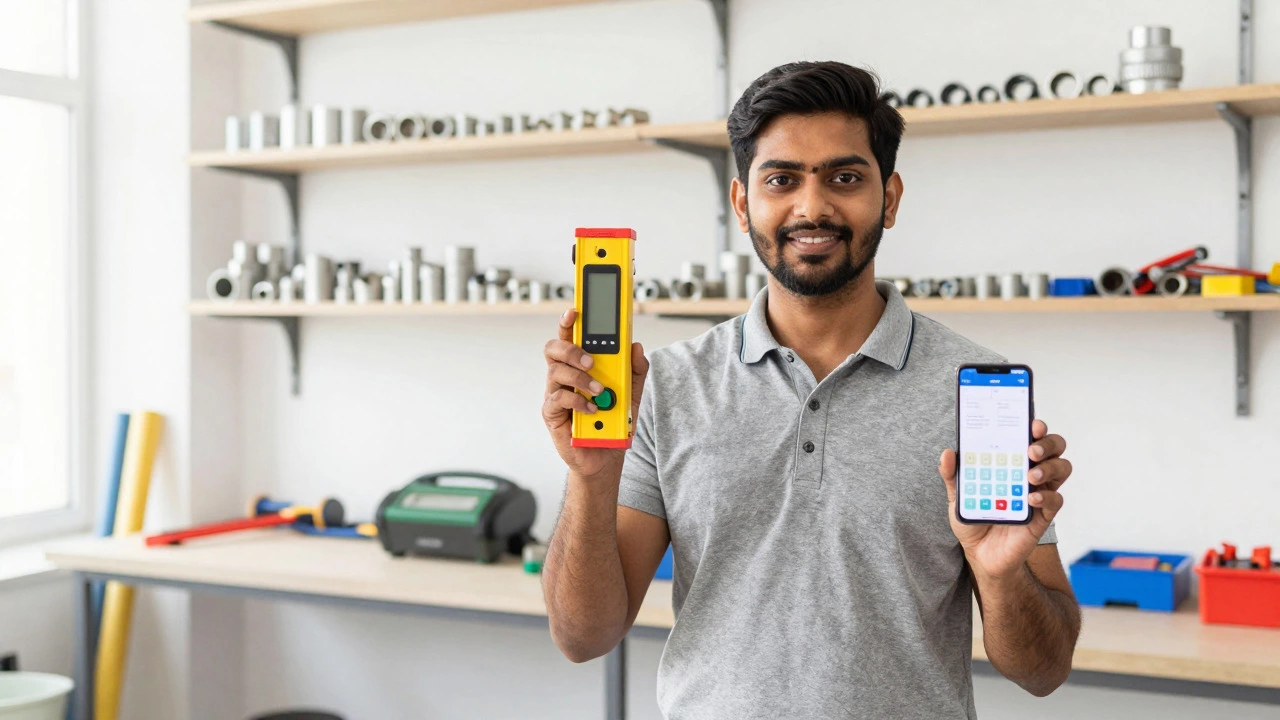
Most apprentices carry smartphones loaded with apps. There are free calculators that determine pipe sizing based on flow rate and length. There are augmented reality apps that help visualize pipe runs before you cut anything. Laser measures give you precise distances instantly, removing the error from reading a flexible tape measure in a dark crawlspace.
Even the equipment itself is smarter. Gas detectors provide digital readings. Pressure gauges have clear digital displays. While understanding the underlying principles is still necessary for troubleshooting, the day-to-day calculation burden is lighter than ever. This shift means that logical thinking and problem-solving are becoming more valuable than raw computational speed.
| Skill Area | What You Actually Do | Common Myth |
|---|---|---|
| Measurement | Read tape measures, convert fractions to decimals | You need to know advanced geometry proofs |
| Arithmetic | Add/subtract lengths, calculate material costs | You need to solve complex algebraic equations daily |
| Geometry | Understand angles for elbows and offsets | You need to draw perfect geometric shapes by hand |
| Physics | Understand basic pressure and flow concepts | You need a degree in fluid dynamics |
Why Logical Thinking Matters More Than Numbers
Here is the secret that veteran plumbers won’t tell you until you’ve been in the field for a few years: math is easy to look up. Logic is hard to fake. When a sink isn’t draining, you don’t calculate the viscosity of the water. You think logically. Is the trap blocked? Is the vent stack open? Is there a kink in the hose?
This type of diagnostic reasoning is a form of structured thinking that resembles mathematical logic but doesn’t require numbers. It’s about cause and effect. If X happens, then Y must be true. This skill is developed through experience and mentorship, not through solving quadratic equations.
Furthermore, communication is a huge part of the job. You need to explain to a homeowner why a repair costs $500 instead of $50. You need to read contracts and invoices accurately. Being numerate helps here, but it’s more about financial literacy than academic math. Can you add up a bill? Can you estimate hours? That’s all that’s required.
Overcoming Math Anxiety in Trade School
If you have "math anxiety," you are not alone. Many students enter skill training, programs designed to enhance specific practical abilities for employment with a fear of numbers due to negative past experiences in school. The good news is that trade schools are supportive environments.
Instructors are there to help you pass, not to fail you. They understand that confidence grows with repetition. Start by practicing with a tape measure at home. Measure your furniture. Cut pieces of scrap wood to specific fractional lengths. Check your cuts with a square. As you see that your hands can match your eyes and your brain, the fear dissipates.
Also, remember that you are allowed to use references. On a job site, you can keep a cheat sheet in your pocket with common conversions. You can use a calculator app. No one is judging you for checking your work. Accuracy matters more than speed in the beginning. As you gain experience, the mental shortcuts will come naturally.
Is It Worth It? The Career Perspective
Let’s talk about the bottom line. Plumbing is a stable, well-paying career. In New Zealand, and globally, skilled tradespeople are in high demand. The barrier to entry is not an Ivy League education; it’s willingness to learn and work hard. If you let a fear of simple math stop you, you might miss out on a lifetime of financial security and job satisfaction.
The return on investment for a certificate course, an official document verifying completion of a specific training program in plumbing is significant. You earn while you learn as an apprentice, and your wages increase steadily as you gain certifications. The math involved in calculating your own salary growth is pretty straightforward-and very rewarding.
Ultimately, being "good at math" in plumbing means being careful, precise, and willing to double-check your work. It doesn’t mean being a genius. It means respecting the numbers enough to use them correctly. If you can count change, read a ruler, and follow instructions, you have the baseline skills needed to start.
Do I need algebra for plumbing?
For most residential plumbing jobs, you do not need algebra. Basic arithmetic, fractions, and geometry are sufficient. Algebra might be useful for complex commercial engineering projects involving fluid dynamics, but even then, software handles most of the heavy calculations.
What kind of math is tested in plumber exams?
Licensing exams typically include a section on trade math. This covers reading blueprints, calculating pipe lengths, determining slope for drainage, and converting units. The questions are practical scenarios, not abstract theory.
Can I become a plumber if I failed math in high school?
Yes. High school math grades are rarely a prerequisite for trade apprenticeships. Employers care more about your attitude, reliability, and willingness to learn. Trade schools provide remedial math instruction to bring everyone up to speed.
How important is geometry in plumbing?
Geometry is moderately important. You need to understand angles to install elbows and offsets correctly. Visualizing 3D space is crucial for planning pipe routes in tight areas. However, you rarely draw geometric proofs; you apply geometric principles physically.
Do plumbers use calculators on the job?
Yes, many plumbers use smartphone apps or dedicated construction calculators for complex measurements, material estimates, and code compliance checks. Using tools to ensure accuracy is considered professional, not cheating.