Locksmith Service Time Estimator
Breakdown
Picture this: You are standing in the driveway at 7 PM on a rainy Tuesday. Your keys are inside the house, and you are locked out. The panic sets in immediately. You call a locksmith, and the first thing you ask is, "How long will this take?" The answer isn't just about convenience; it determines whether you get home for dinner or spend the night at a hotel.
The short answer is that a standard key cut takes between 30 seconds and two minutes. However, that number changes drastically depending on the type of lock, the equipment available, and the complexity of the security system. For someone considering locksmith training in India or anywhere else, understanding these timelines is crucial. It’s not just about turning a crank; it’s about precision engineering under pressure.
The Standard Residential Key Cut
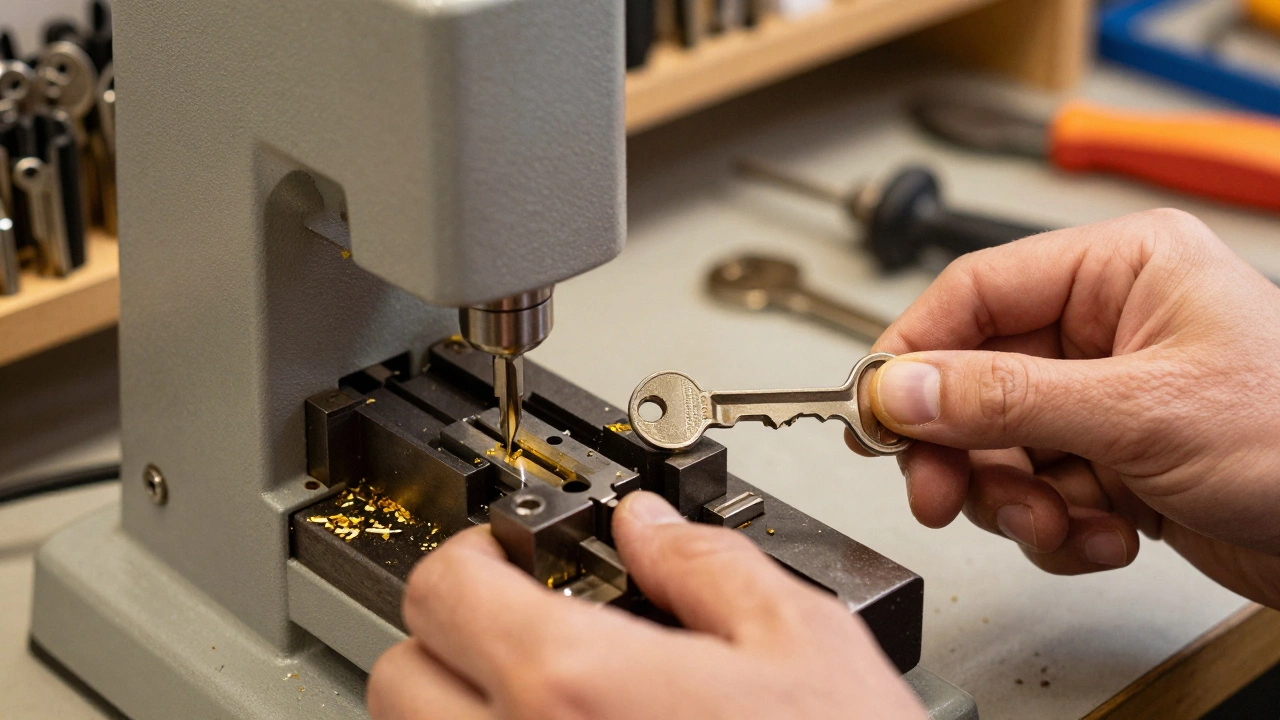
Let’s start with the most common scenario. You have a standard pin tumbler lock-think of your front door, bedroom doors, or office cubicles. These locks use simple wafers that align when the correct key is inserted. Modern key-cutting machines, like those from brands such as Silca or Abloy, can duplicate these keys almost instantly.
If a locksmith has the original key to copy, the process involves clamping the master key into the machine, inserting a blank key, and running the cutter along the edge. This mechanical duplication takes roughly 30 to 60 seconds. If the locksmith needs to pick the lock to create a new key from scratch (a process called decoding), it might take an additional 5 to 10 minutes to read the shear line and code the blank accurately.
- Time to duplicate existing key: 30-60 seconds.
- Time to decode and cut new key: 5-10 minutes.
- Common lock types: Kwikset, Schlage, Yale (standard grade).
Why is this so fast? Because the tolerances are relatively forgiving. A standard residential key doesn’t need micron-level precision to function. The pins are larger, and the wear tolerance is higher. For students in vocational training programs, mastering this basic operation is usually covered in the first week of hands-on practice. It builds muscle memory and confidence.
High-Security Keys Take Longer
Now, imagine you work in a corporate office or live in a high-end apartment complex. You likely have high-security keys. Brands like Mul-T-Lock, Medeco, or Assa Abloy Diamant use complex mechanisms. Some have side bars, others have magnetic particles, and many require specific authorization codes to cut.
Cutting these keys isn’t as simple as sliding a blank into a machine. First, the locksmith must verify their authority. They often need to contact the property manager or input a unique code into a secure database. This administrative step alone can add 10 to 15 minutes to the job.
Once authorized, the actual cutting process is more intricate. High-security blanks are made of harder metals, sometimes stainless steel or titanium alloys. The cutting machine needs to be calibrated precisely to avoid damaging the delicate teeth or magnetic elements. A single mistake means starting over with a new blank, which costs significantly more than a standard key.
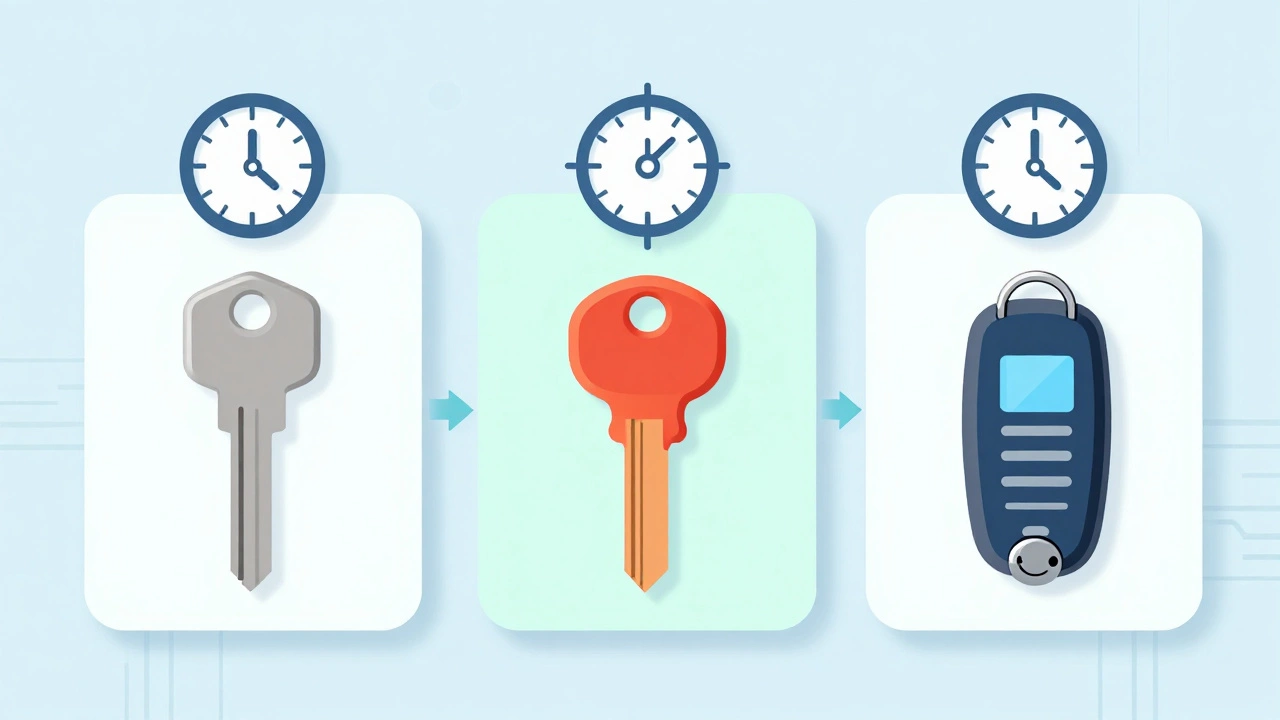
| Lock Type | Average Cutting Time | Complexity Level | Special Requirements |
|---|---|---|---|
| Standard Residential | 30-60 seconds | Low | None |
| High-Security (e.g., Mul-T-Lock) | 5-15 minutes | High | Authorization Code |
| Car Transponder Keys | 10-30 minutes | Medium-High | Programming Equipment |
| Electronic/Digital Keys | Immediate (Pairing) | Variable | Software Access |
In regions with robust vocational locksmith training, technicians learn early on that patience is key here. Rushing a high-security cut can ruin the blank and damage the client’s trust. The margin for error is slim, and the stakes are high.
Car Keys and Transponders
Vehicle keys are a different beast entirely. Modern cars don’t just rely on the physical shape of the key. They contain transponder chips that communicate with the car’s immobilizer system. If the chip isn’t programmed correctly, the engine won’t start, even if the key turns the ignition.
Cutting the metal blade for a car key takes about 2 to 5 minutes, similar to a high-security house key. But the real time sink is programming. The locksmith needs specialized diagnostic tools to interface with the car’s computer. They may need to retrieve the vehicle identification number (VIN) from the dashboard, access manufacturer databases, and perform synchronization procedures.
For older vehicles without transponders, it’s quick. For newer models with smart keys or proximity fobs, the process can take 20 to 45 minutes. Factors like battery health, signal interference, and software glitches can extend this time further. If the locksmith lacks the specific tool for your car model, they might need to order parts or software updates, turning a 30-minute job into a multi-day wait.
This is why mobile locksmiths carry extensive inventories and updated software. In competitive markets, including those emerging from technical skill development programs, staying current with automotive technology is non-negotiable. A technician who only knows how to cut blades but cannot program chips is obsolete.

Factors That Slow Down the Process
Even with the right skills and tools, several external factors can delay key creation. Understanding these helps set realistic expectations for both customers and trainees.
- Availability of Blanks: Not all locksmiths carry every type of key blank. Rare or discontinued keys may need to be ordered from distributors, adding days to the timeline.
- Machine Calibration: Key-cutting machines require regular maintenance. A dull cutter or misaligned guide can produce inaccurate keys, requiring re-cuts and adjustments.
- Environmental Conditions: Extreme heat or cold can affect electronic components in car keys and digital locks. Working in a cramped space, like a garage corner, can also slow down setup time.
- Verification Procedures: Ethical locksmiths verify ownership before making copies. This might involve checking ID, proof of address, or contacting authorities. While this adds time, it prevents illegal duplication and protects the customer.
For those undergoing professional trade certification, learning to manage these variables is part of the curriculum. It’s not just about technical skill; it’s about operational efficiency and customer service.
The Role of Technology in Speed
Technology has revolutionized key cutting. Laser-cutting machines, once reserved for high-end automotive shops, are now accessible to general locksmiths. These machines can cut sidewinder keys with incredible precision in under a minute. Digital decoding tools allow technicians to read lock cylinders without picking them, reducing guesswork and errors.
Additionally, cloud-based inventory systems let locksmiths check stock levels in real-time. If a local shop doesn’t have a specific blank, they can order it from a nearby distributor with same-day delivery. This integration of hardware and software speeds up the entire workflow.
In educational contexts, such as modern locksmith apprenticeships, students are taught to use these digital tools alongside traditional hand techniques. This hybrid approach ensures they can handle any situation, whether they’re working with a vintage lock or a smart home system.
What Does This Mean for Trainees?
If you are considering entering the locksmith profession, speed is a valuable metric, but accuracy is paramount. A fast locksmith who makes mistakes loses money on replacements and damages their reputation. A slow locksmith who is accurate might lose customers to competitors who offer quicker service.
The goal is to find the balance. Through repetitive practice, you develop the dexterity to cut keys quickly while maintaining precision. Training programs emphasize this through timed drills and quality checks. Students learn to identify common pitfalls, such as incorrect blank selection or improper clamping, which cause delays.
Moreover, understanding the business side of speed is important. Knowing which services are profitable and which are time-consuming helps in pricing jobs correctly. A high-security key cut might take longer, but it commands a higher fee due to the expertise and equipment required.
Conclusion: Setting Realistic Expectations
So, how fast can a locksmith make a key? For a standard house key, expect it within a minute. For a high-security or car key, budget 10 to 30 minutes. Always account for verification steps and potential complications. Whether you are a customer needing immediate help or a student planning your career path, knowing these timelines empowers you to make better decisions.
Investing in quality training, like comprehensive locksmith courses, ensures you have the skills to deliver these results efficiently. The industry rewards those who combine technical proficiency with professional reliability.
Can a locksmith make a key without the original?
Yes, a locksmith can make a key without the original by picking the lock and decoding the cylinder. This process involves reading the depth of each pin stack and cutting a new blank to match those measurements. It takes longer than duplicating an existing key, typically adding 5 to 10 minutes to the job.
Why do some keys take longer to cut than others?
Complexity and security features dictate cutting time. Standard residential keys have simple cuts and large tolerances, allowing for rapid duplication. High-security keys, car transponders, and electronic keys require precise calibration, authorization codes, and programming, which extends the process significantly.
Is locksmith training difficult?
Locksmith training requires a mix of manual dexterity, technical knowledge, and problem-solving skills. While basic key cutting can be learned quickly, mastering high-security systems and automotive programming takes dedicated study and practice. Vocational programs provide structured learning paths to build these competencies.
Do I need special equipment to cut high-security keys?
Yes, high-security keys often require specialized machines and software. Standard key cutters may not have the precision needed for complex profiles or magnetic elements. Additionally, authorization systems are necessary to legally cut restricted keys, ensuring only approved professionals can duplicate them.
How long does it take to program a car key?
Programming a car key typically takes 10 to 30 minutes, depending on the vehicle model and the locksmith's equipment. Older cars with simple transponders are faster, while modern vehicles with smart fobs and encrypted systems require more time for synchronization and software updates.