Diploma Duration & Career Path Planner
Select your current qualification and desired field to see the estimated time commitment and age upon completion.
Your Profile
Estimated Outcome
-- Years
--
Timeline Visualization
Max reference duration: 3 YearsWhy This Duration?
Select your qualifications above to view the recommended diploma duration and career timeline.
You’ve probably heard that a diploma is the "shortcut" to a degree. It’s cheaper, it’s faster, and you can start working sooner. But how much faster are we talking? Is it one year? Two? Three? The answer isn’t as simple as picking a number because the duration of a diploma in India depends entirely on where you’re starting from and what you want to study.
If you are a student fresh out of Class 10, you’re looking at a three-year commitment. If you’ve already finished Class 12 or even hold a bachelor’s degree, your timeline shrinks dramatically to two years or even six months. This guide breaks down exactly how long these courses take, why the timelines vary, and how to plan your career path without wasting time.
The Standard Rule: 3 Years After Class 10
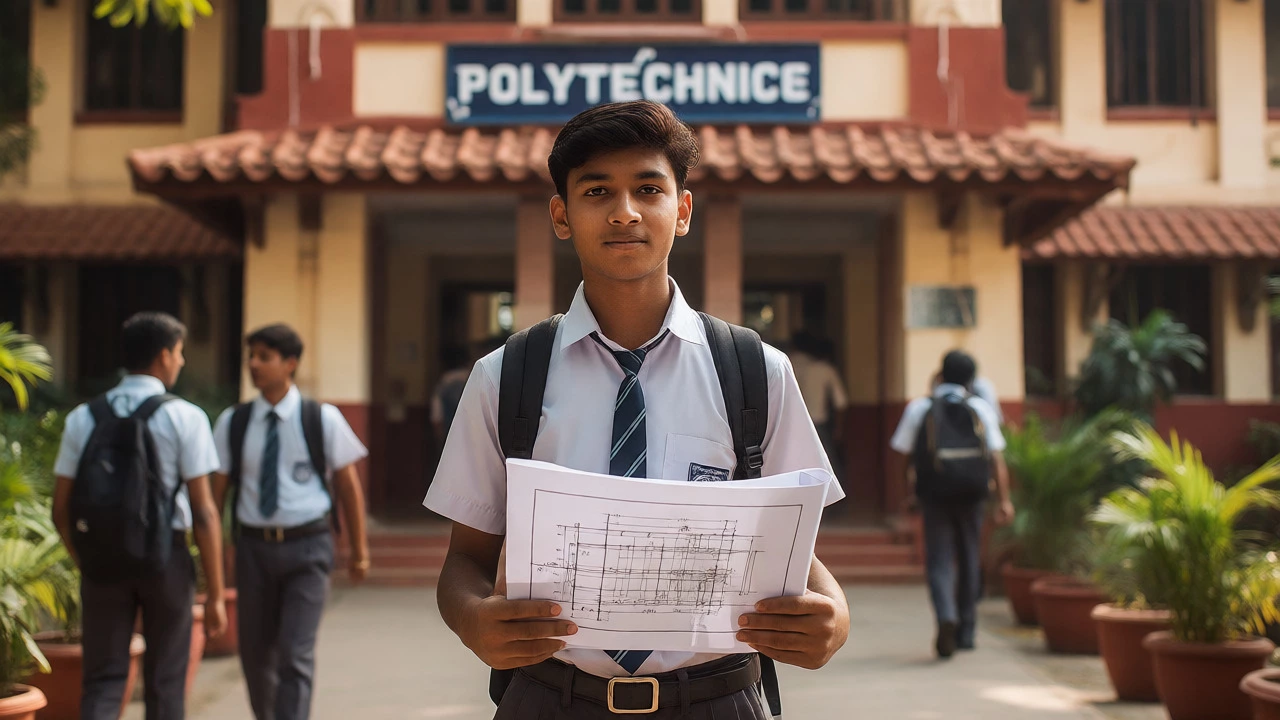
For the vast majority of students in India, the standard entry point for a technical diploma is right after completing their secondary education (Class 10). In this scenario, the course duration is strictly three years. This structure is regulated by the State Boards of Technical Education and often aligned with national standards like the AICTE (All India Council for Technical Education).
Why three years? Because you aren’t just learning the trade; you’re also finishing your higher secondary equivalent. The first year covers foundational subjects like mathematics, physics, and communication skills alongside basic technical concepts. The second and third years dive deep into specialization-whether that’s mechanical engineering, computer applications, or civil technology.
- Year 1: Foundation. General science, math, and intro to the field.
- Year 2: Core Technical Skills. Specialized subjects begin here.
- Year 3: Advanced Application & Internship. You spend significant time in labs or on-site training.
This path is designed for students aged 15-16 who want to skip the two-year Class 11-12 gap and go straight into vocational training. By the time you graduate at age 18 or 19, you have a job-ready skill set and an equivalent qualification to a High School Diploma.
The Accelerated Route: 2 Years After Class 12
If you’ve already completed your Higher Secondary Certificate (HSC) or Class 12 board exams, you don’t need to repeat the foundational years. Here, the diploma duration drops to two years. This is known as the "Lateral Entry" route.
Lateral entry allows you to jump directly into the second year of the three-year program. Since you’ve already studied advanced mathematics and sciences in Class 11 and 12, you bypass the introductory modules. This is incredibly popular among students who realize too late that they want a technical career but didn’t pursue engineering degrees immediately after school.
It’s important to note that not all institutes offer lateral entry for every branch. Engineering branches like Mechanical, Civil, and Electrical almost always do. Non-engineering diplomas, such as Hotel Management or Fashion Designing, might have different structures, sometimes requiring a full two-year intensive program regardless of prior schooling if the curriculum is highly specialized.
Short-Term Diplomas: 6 Months to 1 Year
Not all diplomas are academic degrees. Many private institutions and professional bodies offer "professional diplomas" or "certificate diplomas" that focus purely on specific skills rather than broad educational foundations. These typically last between six months and one year.
These are common in fields like:
- Digital Marketing
- Graphic Design
- Financial Accounting
- Event Management
Unlike government-regulated polytechnic diplomas, these are often industry-led. For example, a Digital Marketing diploma from a private academy might be 6 months long, focusing heavily on SEO, social media ads, and analytics tools. They won’t give you the same academic weight as a 3-year engineering diploma, but they get you employable in niche sectors quickly.

Engineering vs. Non-Engineering Timelines
The field of study significantly impacts the schedule. While the academic calendar might look similar, the practical requirements differ. Engineering diplomas require rigorous lab hours and industrial training, which are non-negotiable parts of the 3-year count. You cannot compress this timeline easily.
In contrast, arts and commerce-based diplomas might offer more flexibility. Some institutions allow part-time study for management or humanities diplomas, stretching the 2-year course over 3 years for working professionals. However, for technical trades like Electrician or Plumber training, hands-on practice is mandatory, so delays in attendance can push your completion date back.
| Entry Qualification | Standard Duration | Typical Age Group | Common Fields |
|---|---|---|---|
| Class 10 Passout | 3 Years | 15-18 Years | Engineering, Polytechnic, Nursing |
| Class 12 Passout | 2 Years | 17-20 Years | Lateral Entry Engineering, IT, Commerce |
| Bachelor’s Degree Holder | 1 Year / 6 Months | 21+ Years | Specialized Management, Teaching, Tech Upskilling |
| Skill-Based Private Cert | 6 Months - 1 Year | Any Adult Learner | Digital Marketing, Design, Accounting |
What About Distance Learning?
If you are working and want to upskill, distance education offers a flexible alternative. Institutes like IGNOU (Indira Gandhi National Open University) or state open universities offer diplomas via correspondence. The duration here is usually minimum 1 year to maximum 3 years, depending on the program.
The key difference? No fixed attendance. You submit assignments and appear for exams at designated centers. This means you could theoretically finish a 2-year diploma in 1.5 years if you accelerate your coursework, though most institutions enforce a minimum period to ensure learning retention. Conversely, if you fall behind due to work pressure, you might stretch it to 4 years without losing eligibility.

Internships and Industrial Training: Do They Add Time?
A common misconception is that internships extend the course duration. In most recognized Indian diploma programs, industrial training is part of the semester credits. For example, in a 3-year mechanical engineering diploma, you might spend 3-6 months in the final year doing an internship. This time counts toward your graduation requirement.
However, some specialized institutes require a "post-diploma" apprenticeship for certification. For instance, in certain healthcare or allied health diplomas, you might need a 6-month clinical rotation after classroom theory. Always check the syllabus breakdown. If the internship is listed as "optional," it doesn’t add to your official duration. If it’s "mandatory for certification," it does.
Planning Your Career Path
So, how do you choose? If you are young (under 18) and unsure about traditional higher education, the 3-year post-10th diploma is your best bet. It saves you two years compared to doing 12th + B.E./B.Tech (which takes 4 years total). You enter the workforce at 19 instead of 22.
If you are older or already have a degree, look for 1-year specialized diplomas. They won’t replace a master’s degree, but they fill specific skill gaps. For example, an MBA graduate taking a 6-month digital marketing diploma becomes instantly hireable in performance marketing roles.
Remember, the clock starts ticking when you enroll. Check the admission cycles. Most polytechnics admit once a year (June/July). Missing this window can cost you a whole year of waiting. Private institutes often have rolling admissions, allowing you to start any month, which can save valuable time if you are eager to begin.
Can I complete a 3-year diploma in less than 3 years?
Generally, no. Government-regulated polytechnic diplomas follow a strict semester system with mandatory attendance and lab hours. You must complete all six semesters. However, private short-term professional diplomas may offer accelerated batches where you attend classes daily to finish in 12-14 months instead of 18.
Is a 2-year diploma after 12th worth it?
Yes, especially for lateral entry into engineering. It gives you the same job opportunities as a 3-year diploma holder but saves you two years of time. It’s ideal if you want to start earning earlier or if you plan to pursue a B.E. degree later via lateral entry into the second year of engineering college.
Do online diplomas have the same duration as offline ones?
The theoretical duration is the same, but the pace is flexible. An online diploma labeled "1 year" might allow you to complete it in 8 months if you study intensively, or stretch it to 2 years if you are working full-time. Always check the institution's policy on maximum completion time.
What happens if I fail a semester?
If you fail, you will likely have to retake the exam in the next available cycle, which could delay your graduation by 6 months to a year. Most institutes allow multiple attempts within a maximum timeframe (usually 6-8 years for a 3-year course), but each failure adds to the total time spent.
Are there 1-year diplomas after graduation?
Yes, many specialized institutes offer 1-year postgraduate diplomas in areas like Data Science, HR Management, or Financial Analysis. These are designed for degree holders looking to pivot careers or gain niche expertise quickly without committing to a 2-year Master’s program.