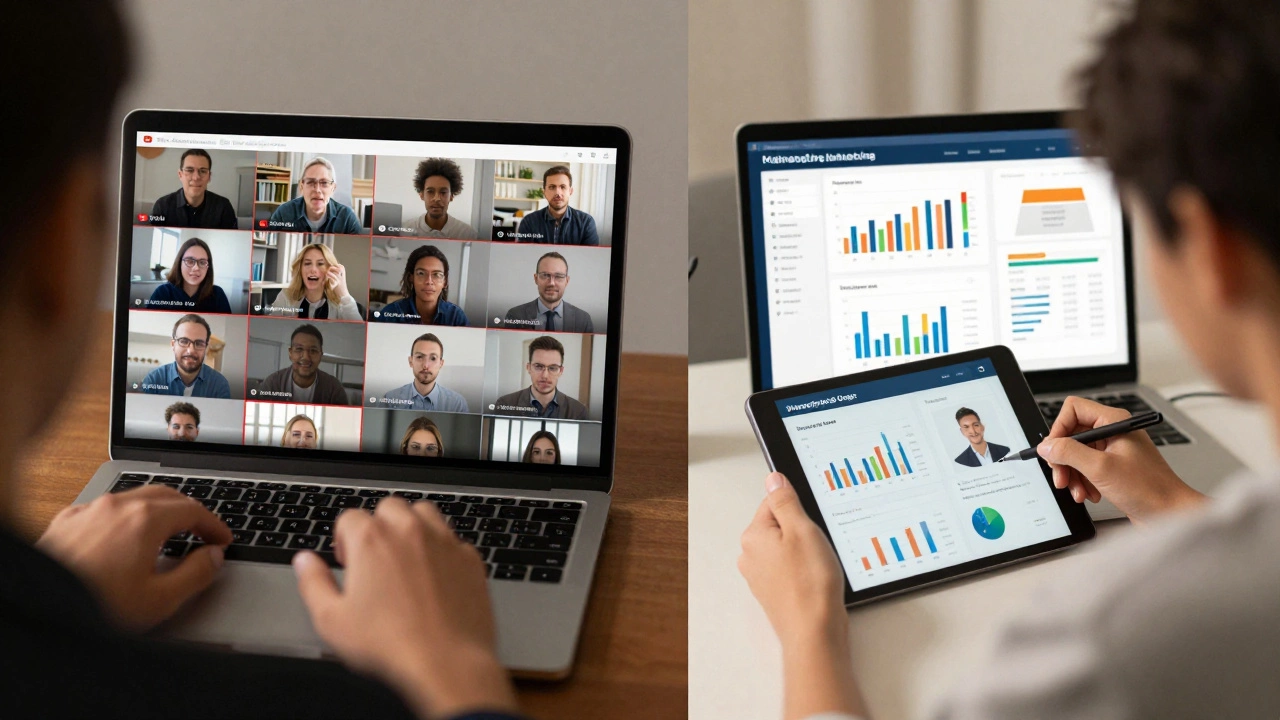
Digital Marketing Course Price Calculator
Find Your Perfect Course Price
Get a personalized estimate based on your goals and what matters most to you.
Select your goals and budget to see your recommended course price range.
How much is a digital marketing course? If you’re asking this question, you’re not alone. People want to know if it’s worth spending money on training when they can find free videos online. The truth? You can learn the basics for free, but if you want to actually land a job or run profitable campaigns, you need real training - and that costs money. But how much? And what do you actually get for that price?
Free vs Paid: What’s the difference?
You can find hundreds of free YouTube videos on Google Ads, Facebook Ads, SEO, and email marketing. Some of them are good. But free content is scattered, outdated, and rarely gives you hands-on practice. You’ll learn theory, but not how to fix a broken campaign or write an ad that converts.
Take SEO, for example. A free tutorial might tell you to "use keywords." A paid course shows you how to use Ahrefs to find low-competition keywords that real businesses are ranking for right now. It shows you how to audit a website, fix broken links, and write meta descriptions that get clicks - not just keywords.
Free resources are like a map with no street names. Paid courses are like having a local guide who’s been driving those roads for years.
What you’ll actually pay in 2026
Digital marketing courses range from $0 to over $5,000. But here’s what most people actually pay in New Zealand and globally:
- Free courses: Google Skillshop, Meta Blueprint, HubSpot Academy. These are legit and useful for starters. You’ll get certificates, but they’re not enough to stand out to employers.
- $50-$200: Short, focused courses on Udemy, Coursera, or Skillshare. Examples: "Facebook Ads for Beginners," "Google Analytics 4 Crash Course." These are good if you need one specific skill fast.
- $300-$1,000: Comprehensive certification programs. Think Digital Marketing Institute (DMI), HubSpot Certification, or Google Career Certificates. These include projects, feedback, and real-world case studies. Many include job placement support.
- $1,500-$5,000: Bootcamps and diploma programs. These are 8-16 weeks long, often live, with mentors. You’ll build a portfolio, get 1:1 coaching, and sometimes land an internship. Schools like General Assembly or local providers like ITC Auckland offer these.
In New Zealand, most people spend between $400 and $1,200 on a course that actually moves the needle. That’s not a lot compared to a university degree - but it’s still a serious investment.
What you get for your money
When you pay for a course, you’re not just buying videos. You’re buying:
- Structured learning: No more jumping between 20 YouTube videos. Everything is in order - from setting up your first ad to analyzing ROI.
- Hands-on projects: You’ll run real campaigns (on dummy accounts or with real clients). You’ll see what happens when you set the wrong audience or use the wrong bid strategy.
- Feedback: A mentor checks your work. They’ll tell you why your email subject line sucks and how to fix it. That’s priceless.
- Certification: Employers recognize names like Google, Meta, and DMI. A certificate from these shows you’ve been tested, not just watched videos.
- Community: You’ll join a group of people learning the same thing. You’ll ask questions, share job leads, and even find clients later.
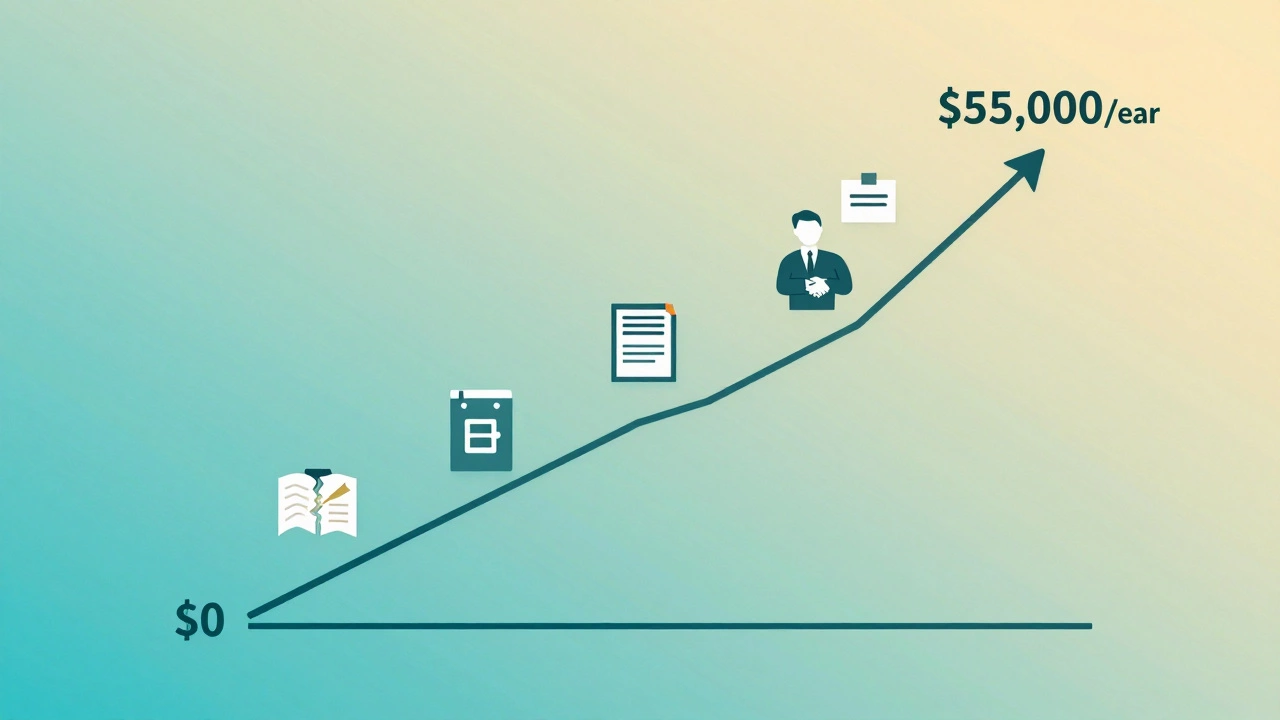
One student from Wellington told me she spent $850 on a DMI course. Three months later, she got hired as a junior digital marketer at a small agency. Her portfolio? Built entirely during the course. Her first paycheck? $55,000 a year.

Hidden costs you might miss
Some courses look cheap - until you dig deeper. Watch out for:
- Software fees: Some courses require you to pay for tools like SEMrush or Canva Pro. Make sure the course includes access or gives you free trials.
- Exam fees: Google and Meta certifications are free to learn, but you pay $100-$150 to sit the final test.
- Time: A 10-hour course sounds easy. But if you’re working full-time, it might take 6 weeks to finish. That’s 2-3 hours a week. Are you ready for that?
- Updates: Digital marketing changes fast. A course from 2023 might not cover TikTok Ads or Google’s latest AI tools. Check if the course includes free updates for a year.
Who should skip the course?
You don’t need a course if:
- You’re just starting a side hustle and only need to run one Facebook ad.
- You’re happy learning slowly through trial and error.
- You have a boss who will train you.
But if you want to switch careers, get hired faster, or freelance with confidence - skip the free stuff. Spend the money. It pays for itself in your first job.
Where to find the best value
Here’s where to look in 2026:
- Google Career Certificates: Free to audit. Pay $39/month on Coursera for full access and certification. Takes 6 months. Recognized globally.
- Digital Marketing Institute (DMI): $800-$1,200. Best for job seekers. Includes LinkedIn profile review and interview prep.
- HubSpot Academy: Free certifications in inbound marketing, email, and CRM. Great for beginners. No certificate fee.
- Local providers in Auckland: ITC, Unitec, and private trainers like Marketing Lab NZ offer 12-week bootcamps for $1,500-$2,500. Often include work experience.
Don’t just pick the cheapest. Pick the one that gives you a portfolio, a certificate, and feedback. That’s what gets you hired.
Is it worth it?
Let’s say you spend $1,000 on a course. You spend 8 weeks learning. You finish with a portfolio, a Google Ads certificate, and a LinkedIn profile that says "Digital Marketer." Within 3 months, you land a part-time job paying $30/hour. You work 10 hours a week. That’s $1,200 in one month. You’ve already earned back your investment - before you even start full-time.
That’s the math. It’s not magic. It’s strategy.
Digital marketing isn’t about knowing the latest trend. It’s about knowing how to make money from it. A good course teaches you that. Free videos don’t.
What to do next
Here’s your 3-step plan:
- Decide what you want to do: get a job? Start a business? Freelance?
- Find one course that matches your goal. Don’t sign up for three. Pick one that includes projects and feedback.
- Start within 7 days. Waiting doesn’t make it cheaper. It just makes you stay stuck.
You don’t need to be tech-savvy. You don’t need a degree. You just need to take the first step - and invest in the right training.