
High-Income Career Path Finder
Not sure which path fits you? Select the strength that best describes your personality to see your high-income potential.
Analytical
I like solving puzzles, building systems, and learning software.
Persuasive
I enjoy talking to people, negotiating, and hitting targets.
Hands-on
I prefer physical work, building things, and technical crafts.
Creative
I care about aesthetics, psychology, and how things look/feel.
Your Path: Cloud Architect / Cybersecurity
You have the mindset for High-Leverage Tech. Focus on infrastructure or security to bypass the degree requirement.
Next Step: Start with free courses on Coursera or edX (audit mode) and build a GitHub portfolio.
Your Path: SaaS Sales Executive
You are wired for the Revenue Engine. Your income is tied directly to the value you bring to the company.
Next Step: Look for entry-level Sales Development Representative (SDR) roles in software companies.
Your Path: Specialized Master Electrician/HVAC
You belong in High-Value Vocational Trades. Specialize in industrial or medical equipment for maximum pay.
Next Step: Search for union apprenticeships or government-funded vocational grants in your city.
Your Path: UX Designer
You excel at the intersection of Psychology and Design. A strong portfolio beats a degree every time.
Next Step: Build a "Proof of Competence" portfolio by redesigning a clunky app you use every day.
The Myth of the Mandatory Degree
For decades, we've been told that a four-year university degree is the only reliable ticket to a six-figure salary. But the job market has shifted. Employers are moving away from prestige-based hiring and toward skill-based hiring. They don't care where you went to school; they care if you can actually solve the problem sitting on their desk. If you can prove you have the technical ability to generate revenue or save costs for a company, the $100,000 mark is completely reachable without ever stepping foot in a lecture hall.
The secret is focusing on "high-leverage skills." These are abilities that are in high demand but have a low supply of qualified workers. When you find that gap, you gain bargaining power. You aren't just applying for a job; you're offering a specialized solution to a painful problem. Whether it's fixing a broken server, closing a million-dollar deal, or managing a complex project, the value you provide dictates your paycheck, not your diploma.
| Career Path | Primary Skill Required | Typical Entry Path | Potential for $100k+ |
|---|---|---|---|
| Cloud Architect | Infrastructure Management | Certifications & Projects | Very High |
| Sales Executive | Persuasion & Negotiation | Entry-level SDR roles | High (Commission based) |
| Specialized Electrician | Industrial Wiring | Apprenticeships | High (with Overtime) |
| UX Designer | User Psychology & Design | Portfolio & Bootcamps | Moderate to High |
Mastering the Digital High-Ground
The fastest way to hit six figures today is through tech, specifically roles that don't require a Computer Science degree. Let's talk about Cloud Computing is the delivery of computing services-including servers, storage, databases, and networking-over the internet. Companies are moving everything to the cloud, but there aren't enough people to manage it. If you master AWS (Amazon Web Services) or Microsoft Azure, you're looking at a career path that often starts at $60k and jumps to $120k within three years once you have a few professional certifications.
Then there's the world of Cybersecurity, which is the practice of protecting systems, networks, and programs from digital attacks. With data breaches costing companies millions, a professional who can stop a hack is worth their weight in gold. You don't need a degree here; you need certifications like CompTIA Security+ or CISSP. These prove to an employer that you understand the protocols and can handle the pressure of a real-time attack.
If you're more creative, UX Design (User Experience Design) allows you to get paid for how people interact with apps. It's a blend of psychology and visual art. By building a portfolio that shows you can take a clunky app and make it intuitive, you can bypass the HR degree filter entirely. Most companies will hire a designer with a killer portfolio over one with a degree and no real-world work examples.

The Power of Skilled Trades
We often forget that "blue-collar" doesn't mean "low pay." In fact, some of the most stable six-figure incomes come from Vocational Training. Consider the role of a master electrician or a specialized HVAC technician. These aren't just jobs; they are technical crafts. As the older generation of tradespeople retires, the shortage of skilled labor has driven wages through the roof.
The path here is an apprenticeship. You earn while you learn, meaning you aren't taking on student debt to get qualified. Once you move from a general helper to a journeyman and finally a master, your hourly rate spikes. In many regions, a contractor who owns their own business and employs a few others can easily clear $150k a year. The key is specialization-don't just be a "handyman," be the person who can install complex industrial solar arrays or high-voltage medical equipment.
Plumbing and welding are similar. Specifically, Underwater Welding or precision pipe-fitting for oil and gas pipelines are niches where the pay is astronomical because the work is dangerous and requires extreme precision. This is where you trade comfort for a massive paycheck.
The Revenue Engine: High-Ticket Sales
If you have a personality that enjoys talking to people and a thick skin, sales is the most direct route to $100k without a degree. Why? Because sales is the only role in a company where you are directly responsible for the money coming in. When you bring in $1 million in new business, the company is more than happy to give you a $100k slice of that pie.
The trick is to avoid low-ticket retail sales and move into SaaS Sales (Software as a Service). Selling a $50,000 annual software subscription to a corporate executive is very different from selling a phone plan. You start as an SDR (Sales Development Representative), spending your days prospecting and booking meetings. Once you hit your targets, you move up to an Account Executive (AE) role, where the commissions can easily push you past the six-figure mark.
To succeed here, you need to master Consultative Selling, which is a method where you act as an advisor to the client rather than a pusher. You identify their pain points and show how your product solves them. It's a psychological game, and the best players are often those who learned on the job, not in a business school.
How to Get Free Skill Training
You might be wondering how to actually acquire these skills without paying for a degree. The internet has democratized education to the point where the information is free; the only thing missing is your discipline. For tech skills, platforms like Coursera, edX, and Khan Academy offer courses from top universities for free if you choose the "audit" option. You don't get the certificate, but you get the knowledge.
For coding and IT, freeCodeCamp and The Odin Project are gold mines. They provide a structured path and, more importantly, they force you to build real projects. A GitHub profile full of working code is a much stronger signal to a recruiter than a degree in Information Systems from a mid-tier college.
For those looking into trades, look for government-funded vocational programs or union apprenticeships. Many cities have grants specifically designed to get people into the trades to fight the labor shortage. These programs often pay you a living wage while you study for your certifications during the week.
Building Your "Proof of Competence"
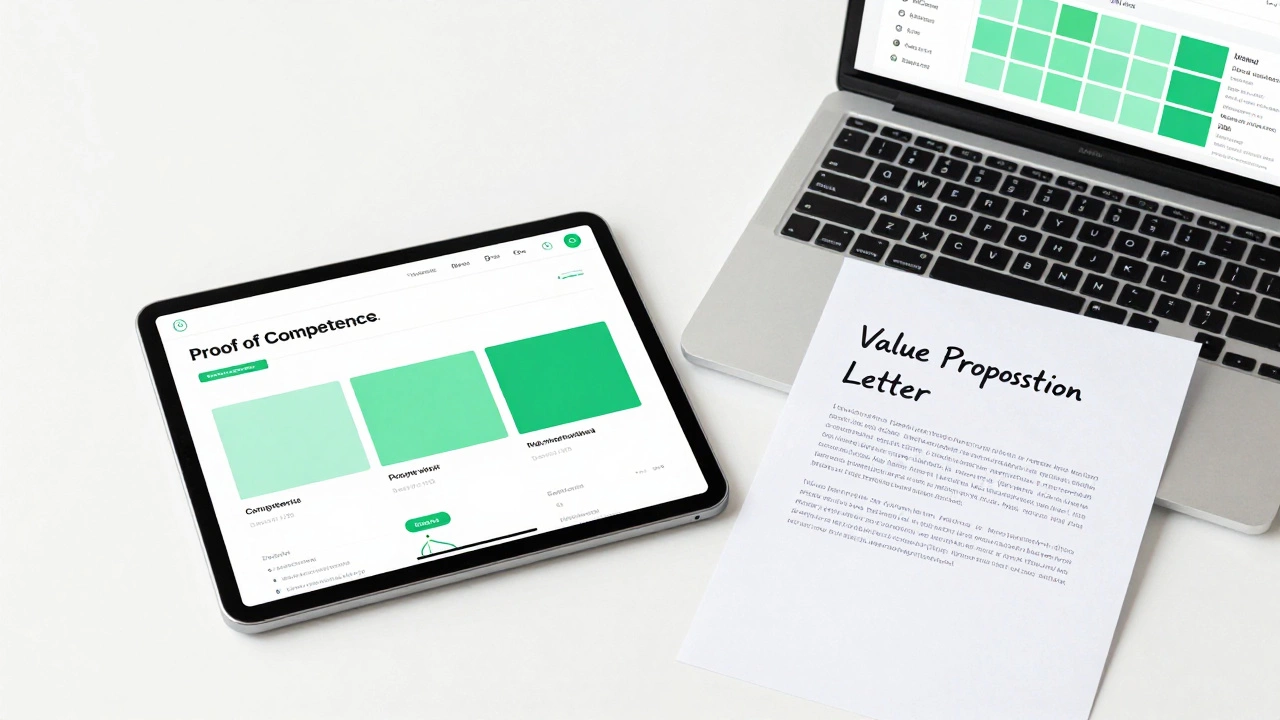
Since you don't have a degree to act as a proxy for your intelligence, you need a different kind of proof. This is what I call a "Proof of Competence" portfolio. If you're a coder, it's a set of live apps. If you're a digital marketer, it's a case study showing how you grew a social media account from 0 to 10k followers and increased sales by 20%. If you're in the trades, it's a gallery of your cleanest, most complex installs.
Stop sending generic resumes. Instead, send a "Value Proposition Letter." Instead of saying "I am looking for a job," say "I noticed your website has a slow load time which is likely costing you conversions. I've built a prototype that speeds it up by 40%. Here is the link; I'd love to discuss how we can implement this for your whole site." That approach gets you hired because you've already provided value before they've even paid you a dime.
Networking is the second part of the equation. Don't just "network" by asking for jobs. Provide value first. Share interesting insights on LinkedIn about your industry. Help people in forums. When you become known as the "person who knows how to fix X," the jobs start coming to you. This is how you move from a $50k entry-level role to a $100k specialist role.
How long does it actually take to reach $100k without a degree?
It varies by path, but typically it takes 2 to 5 years. In SaaS sales, you could hit it in 2 years if you are a top performer. In skilled trades, it usually takes 4-5 years to complete an apprenticeship and reach journeyman status. In tech, a focused 6-12 months of intense study followed by 2 years of experience is a common trajectory.
Will companies actually hire me if I don't have a degree?
Yes, especially in tech, sales, and trades. Many companies now use "blind hiring" or skill-based assessments. If you can pass a technical test or show a portfolio of successful projects, the degree becomes irrelevant. The key is to target companies that value outcomes over credentials.
What is the riskiest part of this path?
The biggest risk is lack of structure. When you aren't in a degree program, you have to be your own teacher and project manager. Many people start a free course and quit when it gets hard. The discipline to finish a certification and build a portfolio is the actual "filter" that separates those who make $100k from those who stay at minimum wage.
Which free certifications are actually respected?
In IT, vendor-specific certifications are the most respected, such as those from AWS, Google Cloud, or Microsoft. In security, CompTIA certifications are widely recognized. While the learning material can be free, you usually have to pay for the actual exam to get the official badge, which is a worthwhile investment.
Can I transition from a low-paying job to a high-paying one quickly?
Yes, by using "skill stacking." For example, if you are currently in retail, you already have basic sales skills. By adding a technical skill (like learning a specific CRM software or a cloud platform), you can move from a cashier role to a junior sales or operations role in a tech company, which is a massive pay jump.