
Education ROI Estimator: Trade School vs. University
Vocational Path
University Path
Most of us were told the same story growing up: get a four-year degree, and you're set for life. But the reality in 2026 is a bit different. With university tuition costs skyrocketing and the job market shifting toward specialized skills, a lot of people are asking why they should spend four years in a lecture hall when they could be earning a living in two. Whether it's a high-tech manufacturing role or a specialized trade, the draw of vocational school isn't just about avoiding student debt-it's about a faster, more direct path to a stable paycheck.
Essentially, vocational school is a specialized educational institution that focuses on providing students with technical skills and practical training for a specific craft or trade. Unlike a traditional academic route, these programs prioritize hands-on experience over theoretical research. For someone who hates sitting behind a desk for eight hours a day, this is a game-changer.
Quick Wins: Why People Choose Trades
- Faster Entry to Workforce: Most programs take 6 months to 2 years, compared to 4+ years for a degree.
- Lower Cost: Tuition is generally much cheaper, meaning fewer loans and less stress.
- High Demand: Skilled tradespeople are in short supply, which often leads to higher starting salaries.
- Tangible Results: You learn by doing, meaning you walk away with a portfolio of actual work, not just a piece of paper.
Escaping the Debt Trap
Let's be real: the financial burden of a traditional university degree has become a nightmare for many. When you look at the cost of a Bachelor's degree versus a certificate from a trade school, the difference is staggering. Many people choose vocational training because they want to start their careers without a mountain of debt hanging over their heads.
For example, a student pursuing a certification in HVAC (Heating, Ventilation, and Air Conditioning) might spend a fraction of what a marketing major spends on a four-year degree, yet they enter the market with a skill that is non-negotiable for every single building in the city. It's a strategic move to prioritize vocational school based on the Return on Investment (ROI). Why pay $100k for a degree when a $15k certification leads to a $60k starting salary?
The Appeal of Hands-On Learning
Not everyone learns by reading a textbook. Some people are "kinesthetic learners"-they need to touch the equipment, take things apart, and put them back together to actually understand how they work. Traditional colleges often ignore this, forcing students through years of general education requirements that have nothing to do with their actual career.
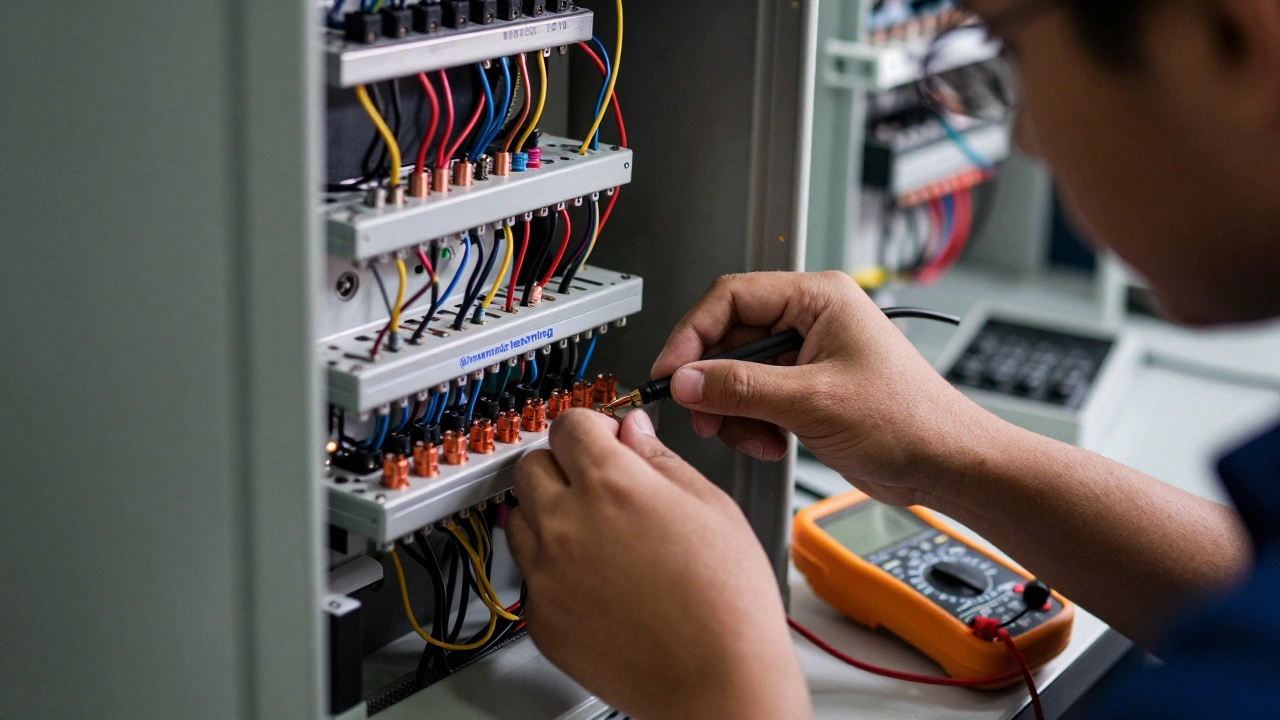
Vocational schools flip this script. If you're studying to be an electrician, you aren't spending three months reading about the history of electricity; you're wiring a mock house in a lab. This immediate application of knowledge keeps students engaged and reduces the "brain fog" that comes from endless theoretical lectures. It transforms the learning process from a passive experience into an active one.
Closing the Skills Gap
There is a massive disconnect in the modern economy known as the "skills gap." This happens when employers have open positions but can't find anyone with the specific technical ability to do the job. While there are plenty of people with general degrees, there is a critical shortage of people who can actually fix a complex industrial boiler or program a CNC machine.
This is where Government Vocational Training programs come into play. Many governments now subsidize these courses because they realize that a functioning society needs plumbers and technicians just as much as it needs managers and analysts. By aligning curriculum with industry needs, these schools ensure that students aren't just getting a diploma, but are becoming employable from day one.
| Feature | Vocational School | Traditional University |
|---|---|---|
| Average Duration | 6 months to 2 years | 4 years |
| Primary Focus | Technical skills / Practical application | Theory / General education |
| Cost of Tuition | Generally Lower | Generally Higher |
| Job Placement | Direct industry pipeline | Broad career options / Competitive |
| Learning Style | Hands-on / Lab-based | Lecture / Research-based |
The Stability of "Recession-Proof" Careers
Another reason people are flocking to trade schools is the desire for job security. In a world where AI and automation are eating up middle-management and data-entry roles, the physical trades remain stubbornly human. A robot might be able to write a basic report or generate an image, but it can't crawl under a kitchen sink to fix a burst pipe or climb a utility pole to repair a transformer during a storm.
Trades like Welding, plumbing, and electrical work are often described as "recession-proof." People will always need their toilets to flush and their lights to turn on, regardless of whether the stock market is crashing or the economy is booming. This stability is a huge draw for people who prioritize peace of mind over a prestigious title.
Changing Perceptions and the "New Collar" Worker
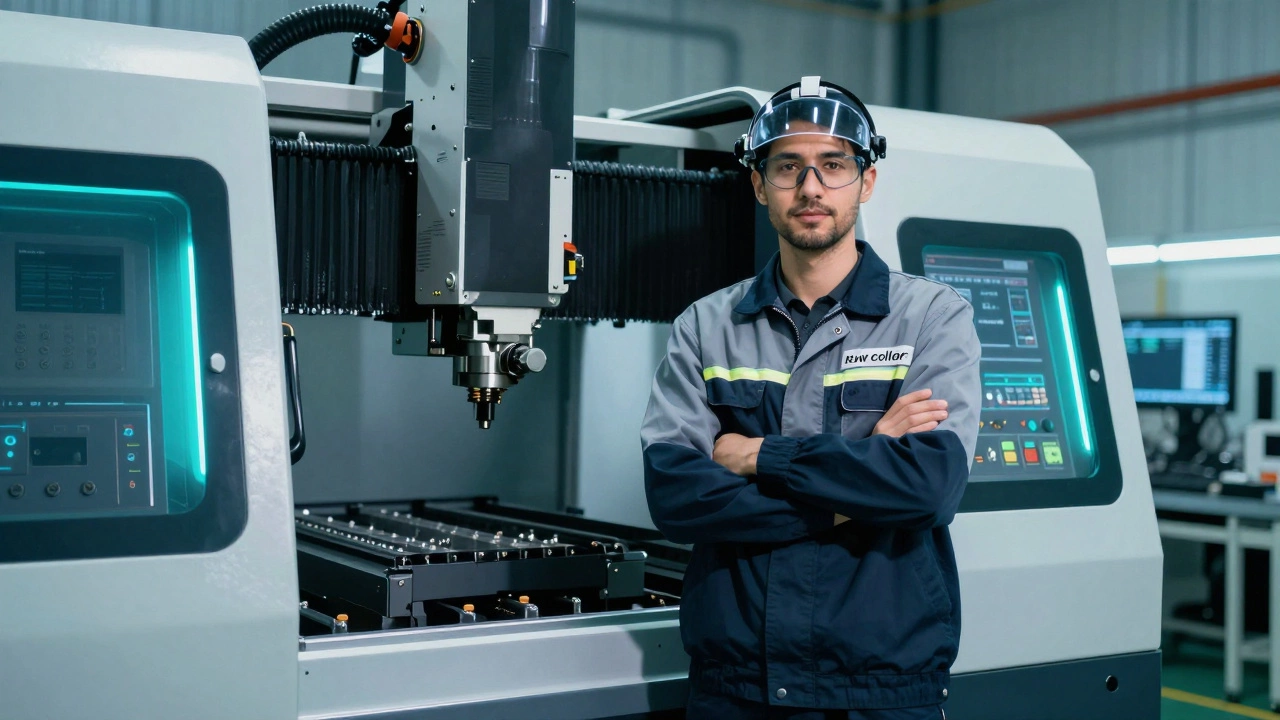
For a long time, there was a social stigma attached to trade schools-the idea that they were for people who "couldn't make it" in college. That narrative is dying. We are seeing the rise of the "new collar" worker: professionals who have highly technical skills that don't require a four-year degree but still command high salaries.
Take Precision Manufacturing as an example. Modern machinists use computer-aided design (CAD) and complex software to create aerospace parts. This isn't just "manual labor"; it's high-level technical work. When people realize that a master technician can often earn more than a mid-level corporate manager, the stigma disappears and is replaced by genuine respect.
Finding the Right Fit: Is It For You?
Deciding between a degree and a trade isn't about intelligence; it's about temperament. If you love deep-diving into philosophy, writing 20-page essays, and debating abstract concepts, university is likely your place. But if you get a rush from solving a physical problem, working with your hands, and seeing a tangible result at the end of the day, you'll likely find a vocational path much more rewarding.
It's also worth noting that these paths aren't mutually exclusive. Many people start with a vocational certificate to get their foot in the door and earn a living, then later pursue a degree in business or management to start their own company. This "earn while you learn" strategy allows them to fund their higher education without taking on massive loans.
Do vocational schools offer degrees?
Most vocational schools offer certificates, diplomas, or associate degrees. While they don't typically grant Bachelor's or Master's degrees, their credentials are industry-recognized and often more valued by employers in technical fields than a general degree.
How much do trade school graduates actually earn?
Earnings vary wildly by trade. While entry-level pay is competitive, experienced specialists in fields like electrical work, elevator repair, or aircraft maintenance can earn six-figure salaries, often surpassing those with traditional college degrees.
Is it hard to get into a vocational school?
Generally, admission is more accessible than at competitive universities. Most programs require a high school diploma or GED and a genuine interest in the trade. Some may have basic aptitude tests to ensure you have the foundational math or mechanical skills needed for the course.
What happens if I change my mind after finishing a trade program?
The skills you learn in vocational school-troubleshooting, project management, and technical literacy-are transferable. Many trade graduates move into supervisory roles, safety inspection, or even entrepreneurship by starting their own service businesses.
Are there government grants for vocational training?
Yes, many governments provide grants, subsidies, or low-interest loans for vocational training to combat the skills gap. These are often targeted at high-demand industries like green energy, healthcare technology, and advanced manufacturing.