Career Path Cost Comparison Calculator
Input Your Information
People choose career technical schools because they promise fast results: get trained, get hired, start earning. But what no one tells you upfront? These schools aren’t the magic ticket everyone makes them out to be. For every success story, there are people stuck with debt, limited options, and diplomas that don’t open as many doors as they thought.
Lower Earning Potential Over Time
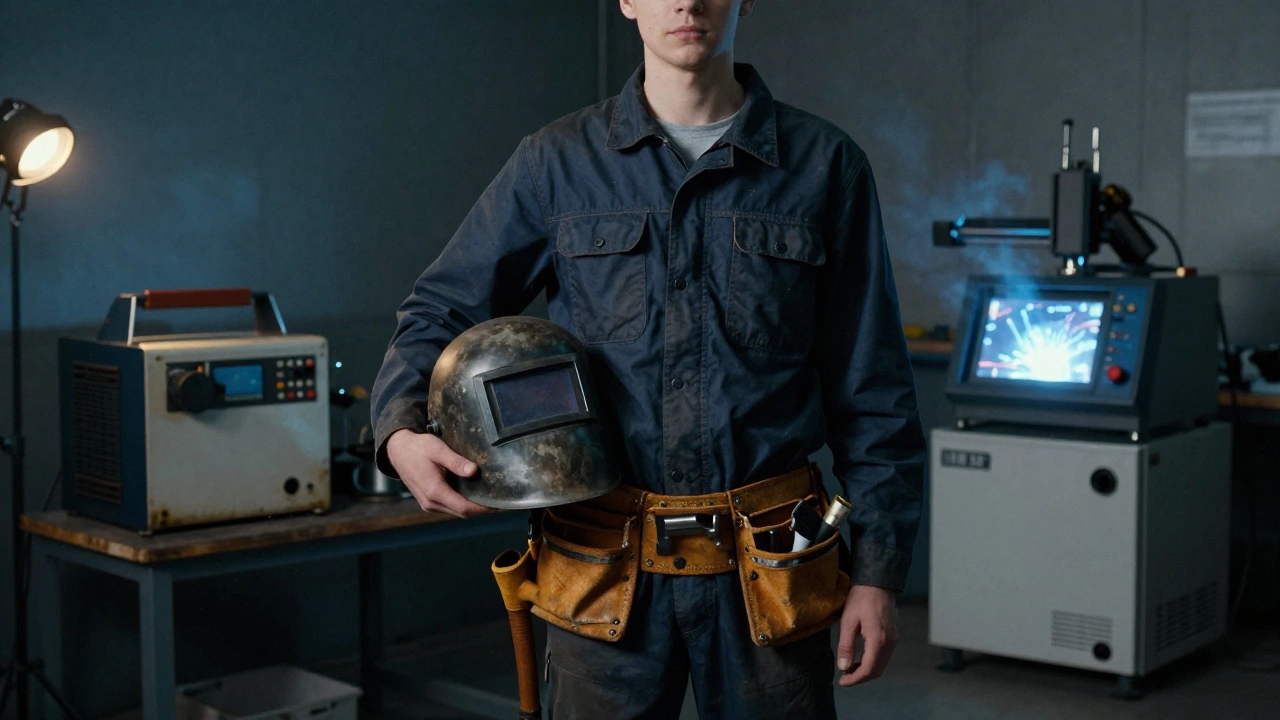
Yes, you can start working faster. A certified electrician or welder might earn $50,000 right out of school. That sounds great compared to a college grad working a $35,000 entry-level job. But here’s the catch: earnings often plateau.
According to U.S. Department of Labor data, workers with only a technical certificate earn about 20% less over their lifetime than those with a bachelor’s degree. Why? Many technical roles don’t have clear paths to management. You become a skilled worker, not a supervisor. If you want to move up-say, into project management or operations-you’ll likely need more education later. That means going back to school, paying more, and losing income while you do it.
Limited Transferability of Credits
What if you change your mind? What if you realize you want to become a nurse, an engineer, or even a teacher? Most career technical schools don’t offer credits that transfer to universities. That’s not a glitch-it’s by design. These programs are built for speed, not flexibility.
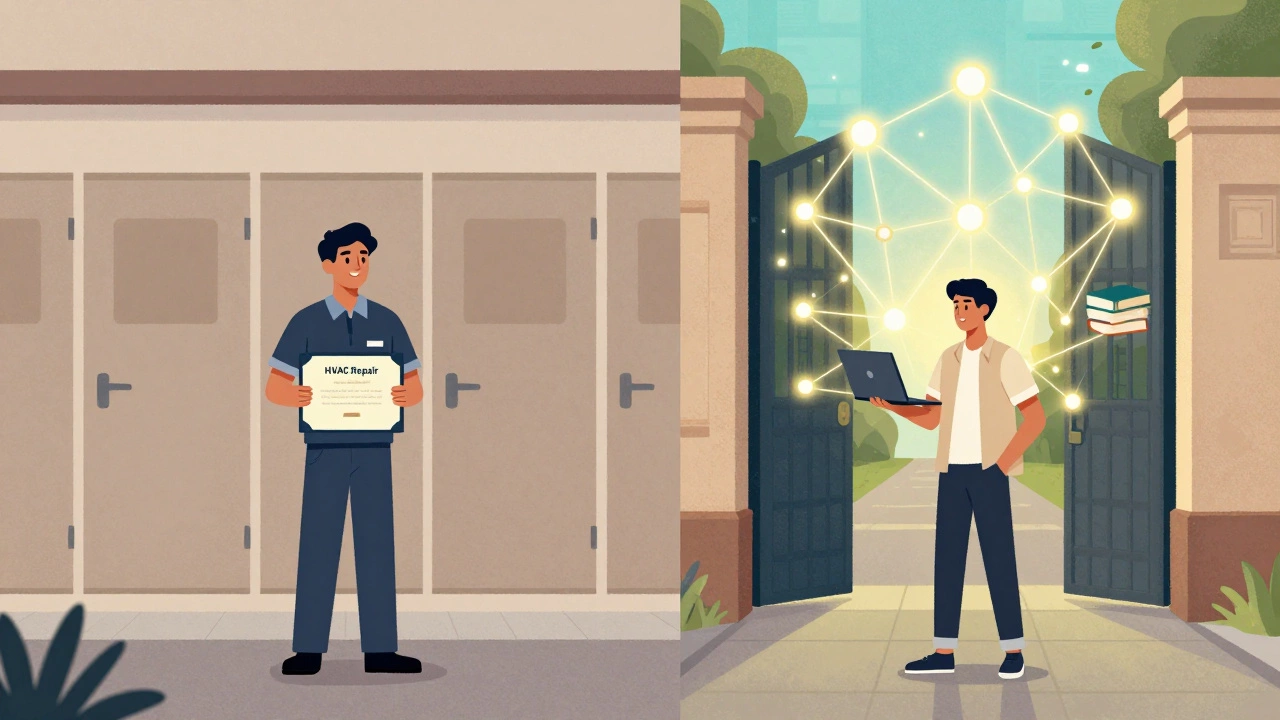
You might spend $15,000 and 18 months learning HVAC repair. Then you decide you’d rather work in healthcare. That $15,000? Mostly wasted. You’ll have to start over at a community college or university. No one warns you about this until it’s too late. Unlike traditional colleges, technical schools rarely partner with four-year institutions. You’re locked in.
Stigma and Perception Still Exist
Let’s be honest: some employers still see technical school graduates as "less educated." It’s not fair, but it’s real. In corporate environments, hiring managers often assume a college degree means better critical thinking, communication, or adaptability-even when the technical candidate has more hands-on experience.
This bias shows up in job postings that say "Bachelor’s preferred" or "Required" for roles that don’t actually need one. You might be the best candidate, but your resume gets tossed because you don’t have that four-year stamp. It’s especially tough in industries like IT, marketing, or finance, where degrees are still seen as gatekeepers.
Less Access to Broader Career Networks
College isn’t just about classes. It’s about internships, alumni networks, career fairs, and professors who know people in the industry. Technical schools rarely offer these connections. Most have small campuses, few alumni, and minimal employer partnerships beyond local shops.
Imagine you graduate as a certified plumber. Your school helps you land a job at a family-run business down the street. Great. But what if you want to work for a national construction firm? Or move to another city? You’re on your own. No alumni network to call. No career center to help you apply. You’re stuck relying on word-of-mouth or job boards.
Outdated Curriculum and Equipment
Technology changes fast. So do industry standards. But many technical schools can’t keep up. Budgets are tight. Instructors are often hired based on experience, not teaching ability or industry updates. Equipment? Sometimes it’s 10 years old.
I spoke with a recent graduate from a welding program in Christchurch. She learned on manual arc welders. When she got hired, her company used automated MIG systems. She had to learn the new machines on the job-no training, no support. That’s not rare. A 2024 survey by the National Center for Education Statistics found that 43% of technical school students felt their training didn’t match current workplace tools.
High Dropout Rates and Hidden Costs
It’s easy to think technical school is cheaper. But hidden costs add up. Tools, uniforms, safety gear, certification exams-those aren’t included in tuition. A dental assistant program might cost $8,000, but you’ll need $1,500 just for instruments. A cosmetology student might need $2,000 for kits and licenses.
And dropout rates? They’re high. A 2023 report from the Brookings Institution found that nearly 30% of students in short-term technical programs drop out before finishing. Why? Financial pressure. Family obligations. Realizing the job market is tighter than promised. And if you leave early? You’re left with debt and no credential.
Geographic Limitations
Technical jobs are often local. You can’t easily move your plumbing license to another state without retesting. Same with electricians, HVAC techs, and even some IT certifications. If you live in a small town, your options are limited. Move to a bigger city? You might have to start over with new licensing.
Compare that to a business or computer science degree. You can apply for remote jobs anywhere. You can freelance. You can work internationally. Technical skills? They’re tied to location, regulations, and local demand. If your town’s construction industry crashes? Your career crashes with it.

Not a Path to Entrepreneurship
Want to start your own business? Technical schools rarely teach you how. You’ll learn how to fix a boiler, but not how to price a job, manage clients, handle taxes, or market your services. That’s a huge gap.
Many graduates end up working for someone else because they don’t know how to go it alone. Even if they have the skills, they lack the business foundation. A plumber who can fix pipes in three hours might still lose money because they don’t know how to invoice properly or negotiate contracts.
It’s Hard to Switch Tracks Later
People change. Interests shift. Life happens. You might start in welding because your dad was a welder. But five years later, you’re drawn to coding or design. Going back to school for something totally different is expensive and time-consuming.
With a traditional degree, you can pivot more easily. You can take electives, minors, online courses. With a technical certificate? You’re boxed in. You can’t just "add a class" in graphic design. You have to enroll in a whole new program. And that means more debt, more time, and more uncertainty.
Is It Worth It? Only If You Know the Trade-Offs
Technical schools aren’t bad. They’re just not for everyone. If you’re certain about your path-say, you want to be a diesel mechanic in a region with high demand-they can be a smart choice. But if you’re unsure, or if you want flexibility, growth, or options down the road, think twice.
Ask yourself: Will this credential still be valuable in 10 years? Can I move with it? Can I earn more later? Can I start my own business? If the answers are "maybe," "probably not," or "I don’t know," then you’re risking your time and money on a path with serious limits.
The best move? Talk to people who’ve been there. Ask them what they wish they’d known. Visit the school and ask to see the equipment. Check job boards for actual openings in your field-not just ads, but real postings with salary ranges. And if you’re still unsure? Start with a short course. Test the waters before you commit $10,000.
Are career technical schools worth it?
They can be, but only if you’re clear on your goals. If you want a specific trade like plumbing, electrical work, or welding-and you’re confident you’ll stay in that field-then yes. But if you want flexibility, higher pay over time, or the option to change careers later, a traditional college or hybrid path might be better.
Do technical schools accept financial aid?
Some do, but not all. Public technical schools may offer federal or state aid, but private for-profit trade schools often don’t qualify. Always check if the school is accredited by a recognized body like the ACCSC or CTC. If it’s not, you likely won’t get aid, and your loans won’t be dischargeable if things go wrong.
Can I go to college after technical school?
Yes, but it’s not automatic. Most technical credits don’t transfer. You’ll need to start over with general education courses. Some community colleges have bridge programs for trade graduates, but they’re rare. Plan ahead-if you think you might want a degree later, choose a school that offers dual enrollment or articulation agreements.
What’s the difference between a trade school and a community college?
Trade schools focus on one skill, fast. Community colleges offer certificates too, but also associate degrees, general education, and transfer pathways. Community colleges are usually cheaper, more accredited, and more likely to let you switch majors. Trade schools are often private, expensive, and designed to get you into a job quickly-not to give you options.
Do employers prefer trade school graduates or college grads?
It depends on the job. For hands-on roles like electrician, HVAC tech, or CNC operator, trade school grads often win. For roles that involve management, communication, or problem-solving beyond the technical-like project coordinator, IT analyst, or operations manager-employers still favor college degrees. Many companies want both: technical skill plus a broader education.
What to Do Next
If you’re still considering a technical school, don’t rush. Get real data. Ask for job placement rates-not just "85% employed," but how many got jobs in their field, at what salary, and for how long? Ask to speak with three recent graduates. Don’t just talk to the admissions rep.
Also, consider hybrid options. Take a short-term certificate while enrolled in a community college. Learn the trade, but also take writing, math, and business classes. That way, you keep your options open. You’re not betting everything on one path.
There’s no one-size-fits-all answer. But knowing the downsides upfront? That’s how you make a choice that lasts.