Vocational Career Matchmaker
Unsure about which vocational path to take? Answer 3 simple questions to discover which of the 6 major trade branches suits your natural aptitudes.
Quick Summary
Finding the right trade course can change your entire career trajectory. While there are hundreds of specific skills, they mostly fall into six major industrial sectors. Here is what you need to know:
- Mechanical Trades focus on machinery, engines, and manufacturing equipment.
- Electrical Trades cover power systems, wiring, and appliance repair.
- Civil Engineering Trades deal with construction, masonry, and infrastructure building.
- Electronics & Communication involve circuitry, telecommunication, and instrument handling.
- Computer & IT Hardware handle computer repair, networking, and data management.
- Welding & Fabrication specialize in metal joining and structural creation.
Understanding Trade Branches
When people ask about the six branches of trade, they are often trying to navigate the massive ocean of vocational education. In the context of Indian vocational training, specifically through Industrial Training Institutes (ITIs) and the National Council for Vocational Training (NCVT), trades are not limited to just six official codes. Instead, they cluster into major skill sets. These clusters determine where you work, the tools you use, and the type of degree equivalent qualification you receive.
It is essential to understand that these branches are not isolated silos. A mechanical fitter might work alongside an electrician on a production line. However, for the purpose of choosing a career path, separating them helps you identify your interests. Are you interested in fixing things, building structures, or understanding how machines think? Each branch offers a distinct daily routine and a unique set of challenges. By age 2026, automation is shifting some roles, but the core demand for skilled technicians remains robust across India's manufacturing and infrastructure sectors.
Your choice of branch depends heavily on your educational background. Most trades require passing the 10th standard exam, though some advanced diploma courses ask for 12th-grade completion. The duration typically ranges from six months to two years. You gain a certificate that is recognized across the country, allowing you to move between states for employment easily.
Mechanical Engineering Trades
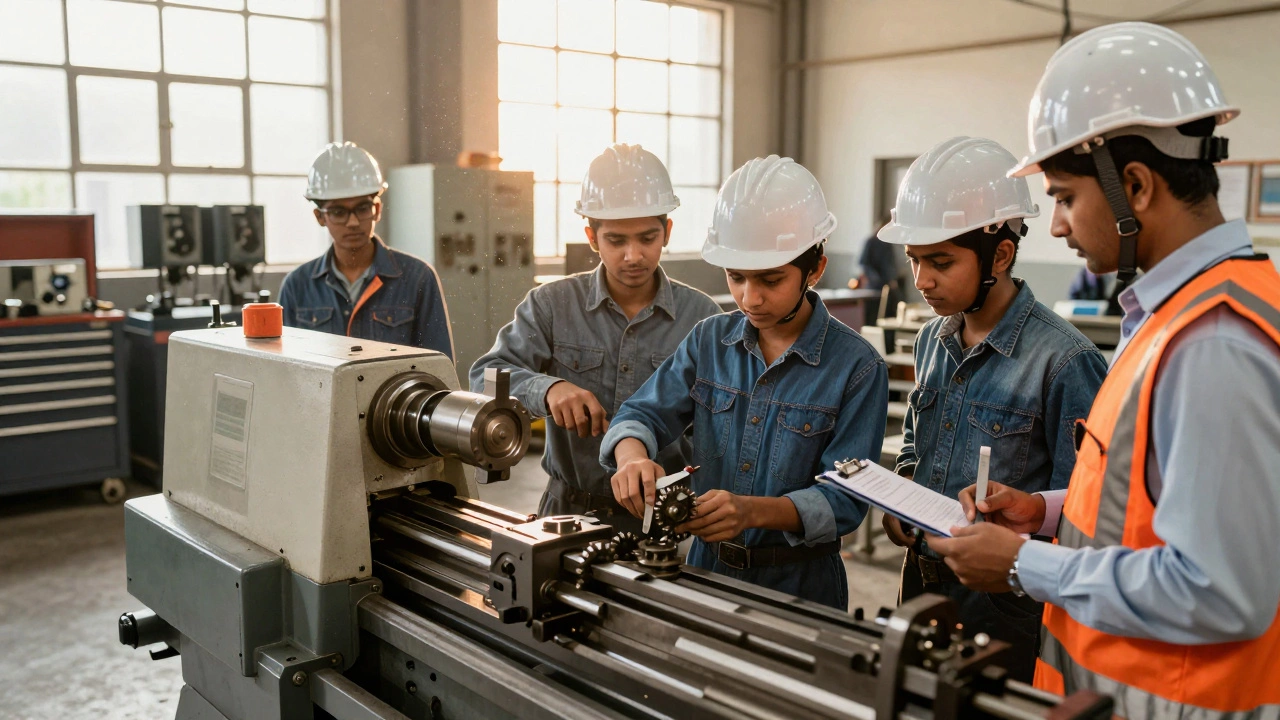
This is arguably the largest sector in terms of job availability. If you enjoy working with engines, gears, and heavy machinery, this branch is for you. The primary role here is ensuring that industrial equipment runs smoothly. Specific trades include Fitter, Machinist, and Diesel Mechanic. As a Fitter, you assemble machine parts with precision. You work in workshops, factories, or automotive repair shops.
The tools of the trade span from hand tools like hammers and chisels to complex CNC machines. In recent years, the shift towards "Make in India" has boosted the need for these workers significantly. You are not just fixing broken parts; you are maintaining the backbone of the manufacturing economy. Graduates often find placements in automotive giants, railway sectors, or defense manufacturing units. It requires physical stamina and patience, as tasks can be repetitive but demand high accuracy.
Electrical Engineering Trades
Energy powers our world, and electrical trades are responsible for delivering that power safely. An Electrician is one of the most versatile skilled workers. This branch covers everything from residential wiring to large-scale power distribution networks. You will learn about circuits, load calculations, safety protocols, and how to troubleshoot faults in live systems.
Demand here is incredibly steady. Every building, factory, and home requires electrical maintenance. With the green energy push in 2026, solar panel installation and EV charging station maintenance have become sub-specialties within this branch. You can work for government electricity boards, private construction firms, or start your own contracting business. Safety is paramount because you work with high voltage. Proper training prevents accidents and ensures you handle hazards responsibly.
Civil Engineering Trades
If you prefer seeing tangible results like buildings and bridges, civil trades offer that satisfaction. This group includes Surveyors, Carpenters, and Masons. Unlike other trades that deal with moving parts, this sector deals with static structures. You learn about materials, mixing concrete, reading blueprints, and using survey instruments to map land.
India’s infrastructure boom continues to drive this sector. Roads, flyovers, and metro rail projects need skilled labor who understand the fundamentals of structural integrity. A Carpenter makes sure the wood is cut correctly, while a Mason lays bricks perfectly. The work is often outdoors and weather-dependent. It is physically demanding but offers diverse project environments. You might work in urban skyscrapers one month and rural housing projects the next.
Electronics & Communication Trades
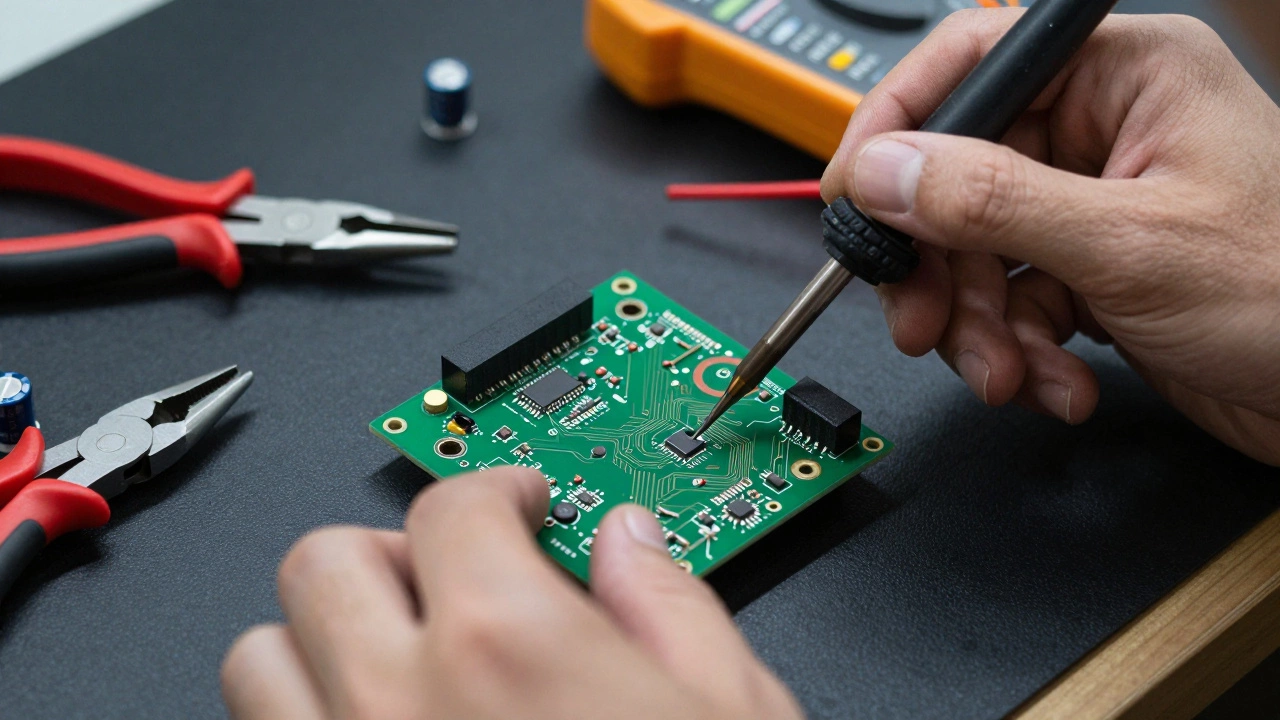
We live in a connected world, making electronics vital. This branch focuses on small-scale components and signal transmission. Key roles include Instrument Man and Electronics Mechanic. You handle printed circuit boards (PCBs), sensors, and communication devices. This path sits between traditional mechanical work and modern software engineering.
You will study logic gates, analog electronics, and radio theory. Careers open up in telecom companies, consumer electronics manufacturing, and medical device maintenance. Hospitals rely on technicians to keep MRI machines and diagnostic tools running. The pay scale tends to be higher compared to general labor because the skill threshold is steep. You must stay updated on technology since components evolve rapidly every year.
Computer & IT Hardware Trades
Technology maintenance is a growing field distinct from coding. While programmers create software, hardware technicians fix the physical machines. This trade involves assembling computers, managing server racks, and troubleshooting network connectivity. Roles include Hardware Engineer and System Administrator Assistant.
Even with cloud computing rising, local hardware support remains necessary for businesses and schools. You learn to configure operating systems, replace faulty RAM sticks, and secure local area networks (LANs). In 2026, cybersecurity basics are also part of this curriculum. Companies need someone they can trust to handle their internal tech infrastructure. It is less physically taxing than civil or mechanical trades but requires constant mental learning to keep up with specs.
Welding & Fabrication Trades
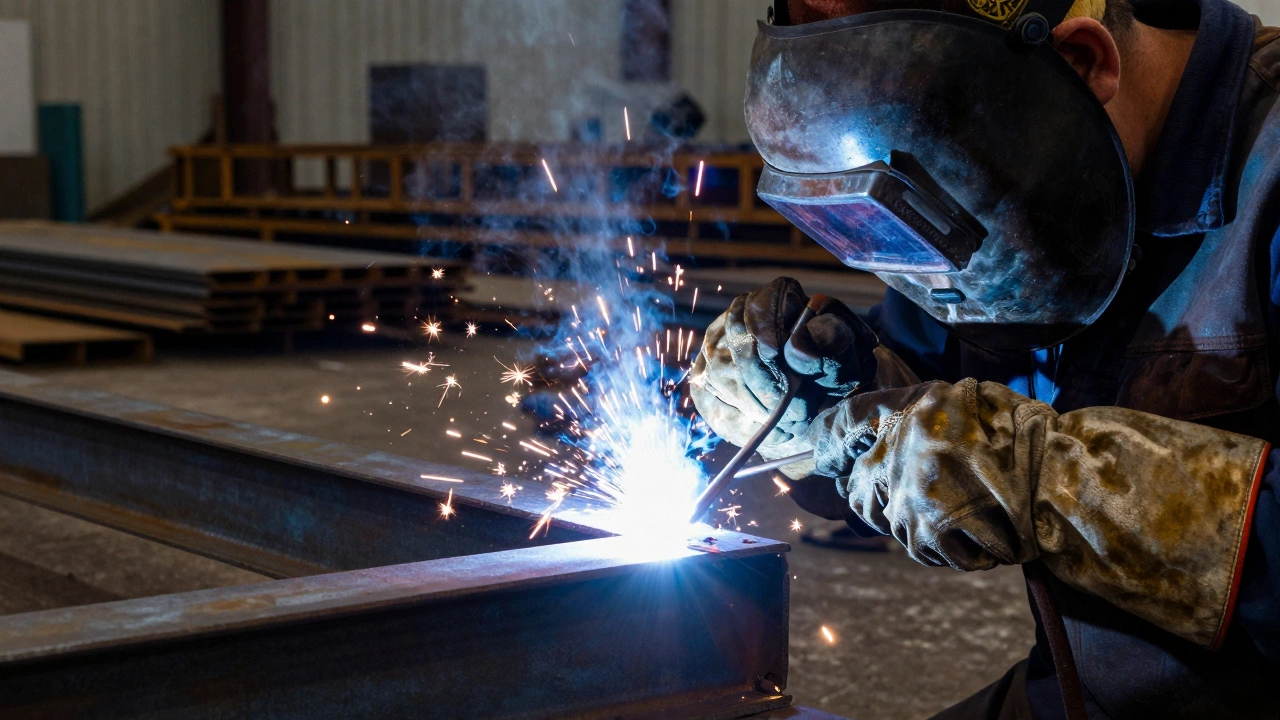
Metalwork creates the frames and joints of the industrial world. Welding is a specialized art combined with physics. Trades like Gas Welding and Arc Welding teach you how to fuse metals securely. Fabrication adds the design element-creating parts from raw sheets or rods.
This is critical for shipbuilding, automotive chassis, and pipeline construction. A qualified welder commands respect and good wages because few have mastered the technique to prevent leaks or weak joints. It involves working with intense heat and light, requiring protective gear. Many welders eventually own their own fabrication shops. It is a highly portable skill; you can find work anywhere, including international opportunities, provided you meet safety standards.
Comparison of Career Paths
| Branch | Primary Work Environment | Key Tool/Skill | Growth Trend (2026) |
|---|---|---|---|
| Mechanical | Factory / Workshop | CNC Machine / Lathe | High (Automation) |
| Electrical | Sites / Urban Areas | Multimeter / Wiring | Very High (EV/Green) |
| Civil | Construction Sites | Concrete / Survey | Stable |
| Electronics | Laboratory / Office | Oscilloscope / PCB | High |
| Computer Hardware | Office / Server Room | Network Cable / PC | High |
| Welding | Workshop / Shipyard | Welding Torch | Moderate |
Evaluating these paths requires looking beyond the name. Some allow remote diagnostics, while others require on-site presence. Salary packages often depend on whether you join the public sector or private industry. Government jobs through departments like Railways or Defence require passing specific competitive exams after completing the course.
Choosing Your Path
Deciding on a branch is about balancing personal aptitude with market reality. Do not choose a branch just because your friend picked it. Spend a day at a local workshop if possible. Ask instructors about placement rates. Look for institutes approved by the Directorate General of Training (DGT). Accreditation matters because it validates your skills to employers nationwide.
Remember that soft skills matter too. Communication helps you explain faults to managers, and teamwork speeds up projects. Start early, get certified, and build a portfolio of completed projects. These details separate you from thousands of other applicants.
Frequently Asked Questions
Can I start trade courses after the 10th grade?
Yes, most ITI courses in India accept students who have passed the 10th standard examination. The courses are designed to provide practical skills quickly.
Are women allowed in trade branches like welding?
Absolutely. Women face increasing opportunities in all trade branches, including welding and mechanics, often with special stipends or quotas in various regions.
Which branch has the highest salary potential?
Electronics and Computer Hardware trades generally command higher starting salaries due to the technical complexity and high demand in the IT sector.
Is government certification mandatory?
For recognition across India, certification from the NCVT or State Council is crucial. Private certificates may not hold weight for government jobs.
Can I switch branches later?
You can upgrade skills by taking additional short-term certifications, but changing your primary specialization usually requires a second long-term course.
Next Steps
Once you decide, contact the nearest ITI center. Gather admission brochures for the upcoming session. Prepare documents like mark sheets and identity proof. Visit the campus to see the labs first-hand. This preparation ensures you enroll confidently and start your journey toward becoming a skilled professional.