Diploma Salary Calculator
Find Your Highest-Paying Diploma
Select your preferred field to see average salary ranges and career potential in India (2025)
Salary Range
* Salaries are approximate starting salaries for freshers in India (2025)
When you hear "diploma", you might think of a two-year course that leads to a low-paying job. But that’s not true anymore. In India today, some diploma programs pay more than many bachelor’s degrees - and they take half the time to finish. If you’re wondering what diploma pays the most, the answer isn’t just about popularity. It’s about demand, skill gaps, and industries that are growing fast.
Diploma in Petroleum Engineering
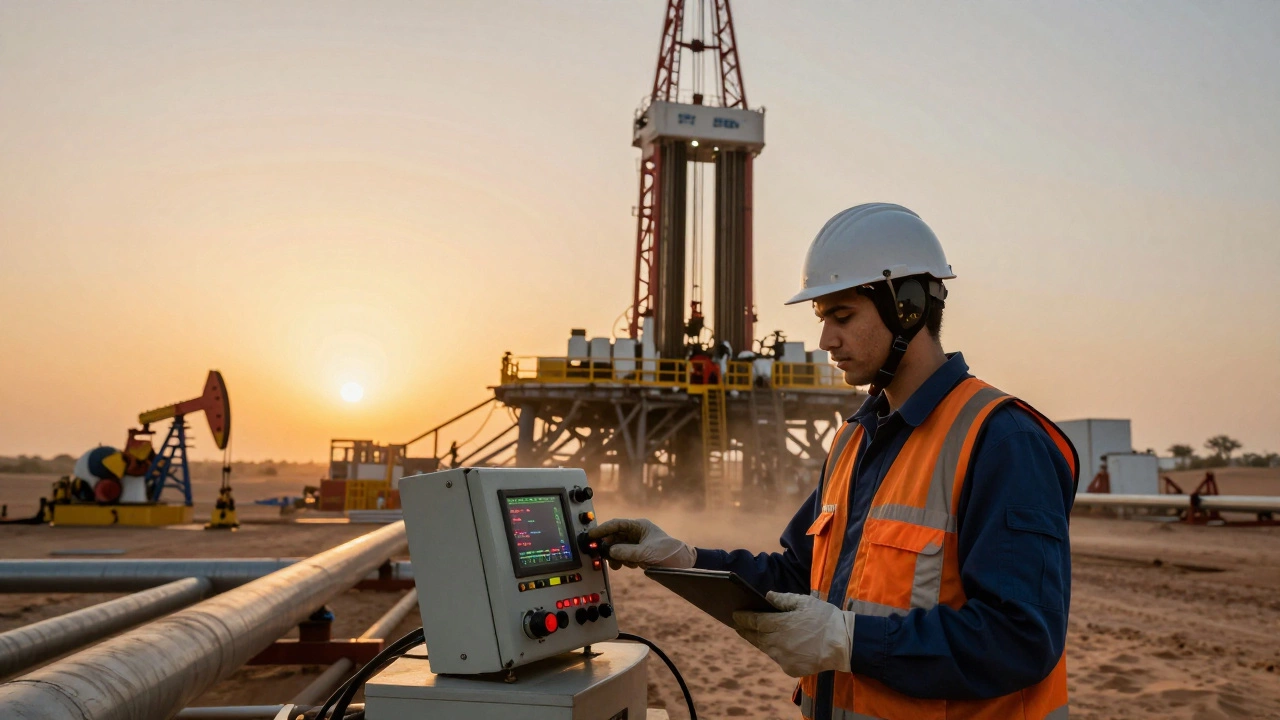
This is the top-paying diploma in India right now. Graduates from institutes like the Indian Institute of Petroleum and Energy (IIPE) or Gujarat Technological University earn between ₹6 lakh and ₹12 lakh per year as freshers. Companies like ONGC, Reliance Industries, and Shell actively recruit these diploma holders because they need hands-on technicians who can operate drilling rigs, monitor pipelines, and manage safety protocols on-site. Unlike engineering degrees that focus on theory, this diploma trains you to fix real problems in oil fields - and companies pay well for that skill.
The course lasts two years and includes field training. You don’t need to be a math genius - you need to be comfortable with mechanical systems, reading gauges, and following safety rules. Many students start as junior operators and move up to shift supervisors within three years. The industry is still expanding in Gujarat, Assam, and Rajasthan, where new exploration projects are opening up.
Diploma in Nuclear Technology
Not many people know this, but India’s nuclear energy sector is hiring diploma holders in large numbers. The Department of Atomic Energy (DAE) runs training centers in Mumbai, Kalpakkam, and Hyderabad that offer a three-year diploma in Nuclear Technology. Freshers earn ₹5.5 lakh to ₹9 lakh annually. These graduates work in nuclear power plants like Kakrapar, Kaiga, and Rawatbhata, handling radiation monitoring, equipment maintenance, and reactor control systems.
The entry barrier is higher - you need to pass a physical fitness test and a security clearance. But once you’re in, job security is almost guaranteed. The government is planning to build 10 new nuclear plants by 2030, which means demand for skilled diploma holders will keep rising. This isn’t a job you walk into after a weekend course. It’s a career built on precision, discipline, and trust.
Diploma in Aviation Maintenance Engineering (AME)
If you like working with machines and don’t mind heights, this is one of the fastest-growing paths. The Directorate General of Civil Aviation (DGCA) approves 54 institutes across India to offer the AME diploma. Graduates earn ₹4.5 lakh to ₹8 lakh in their first year. Airlines like IndiGo, Akasa Air, and Vistara hire them directly to service aircraft engines, landing gear, and avionics systems.
You’ll spend half your time in classrooms and half in hangars. The course covers jet engines, hydraulic systems, and electronic navigation tools. After graduation, you get a license from DGCA - and that license lets you work anywhere in the world. Many Indian AME diploma holders get jobs in Dubai, Singapore, and Qatar with salaries 2-3 times higher than in India.
Diploma in Data Science and AI
You might assume you need a B.Tech to work in AI. That’s not true anymore. Institutes like IIIT Bangalore, NIIT, and upGrad offer 12- to 18-month diplomas in Data Science and AI that are designed for working professionals and school leavers alike. Graduates earn ₹5 lakh to ₹10 lakh in their first job.
These programs teach Python, SQL, machine learning models, and data visualization tools like Power BI. Companies like Zomato, Swiggy, and Paytm hire these diploma holders to analyze customer behavior, optimize delivery routes, and detect fraud. You don’t need a math degree - you need to be curious, patient, and good at spotting patterns. Many students land jobs after just six months of training because companies are desperate for people who can turn raw data into decisions.

Diploma in Cybersecurity
Every bank, hospital, and government office in India is being hacked. That’s why cybersecurity diploma holders are in short supply. The National Skill Development Corporation (NSDC) partners with companies like TCS and Infosys to run certified 12-month programs. Freshers earn ₹4.2 lakh to ₹8.5 lakh per year.
You’ll learn how to set up firewalls, detect phishing attacks, and respond to data breaches. Many graduates start as security analysts in IT firms or as network defenders in public sector banks. The government’s Digital India initiative is pushing every state to upgrade its digital infrastructure - and that means more jobs. This isn’t about coding. It’s about thinking like a hacker so you can stop them.
Diploma in Robotics and Automation
Factories in Pune, Chennai, and Noida are replacing human workers with robots. But someone has to build, fix, and program those robots. That’s where diploma holders in Robotics and Automation come in. Institutes like the Central Manufacturing Technology Institute (CMTI) and PSG College of Technology offer 2-year programs that cost under ₹1 lakh.
Graduates earn ₹4.5 lakh to ₹9 lakh starting out. They work with Siemens, Tata Motors, and Bosch to maintain robotic arms, conveyor systems, and automated assembly lines. You’ll learn PLC programming, sensor calibration, and troubleshooting motor drives. The best part? These jobs aren’t going anywhere. India’s manufacturing sector is expected to grow by 12% every year until 2030.
Why These Diplomas Pay More Than Degrees
Here’s the truth: companies don’t pay for paper. They pay for results. A B.Tech graduate might know 10 theories about fluid dynamics. A diploma holder in Petroleum Engineering knows how to stop a blowout before it kills people. That difference matters.
These high-paying diplomas share three things:
- They solve urgent, real-world problems - not abstract theories.
- They require hands-on skills - you can’t fake this in an exam.
- They’re in industries with labor shortages - not crowded fields like B.Com or BA English.
Many students choose degrees because they think it’s "safer." But in 2025, the safest path is the one that matches your skills to what the market actually needs.

What to Avoid
Not all diplomas pay well. Stay away from:
- Diploma in Fashion Designing - saturated market, low starting salaries (₹1.8-2.5 lakh)
- Diploma in Hotel Management - long hours, high turnover, slow growth
- Diploma in Tourism and Travel - mostly seasonal, low benefits
- Diploma in Animation - only top 5% earn well; most work freelance on unstable income
These fields look glamorous on posters, but the reality is different. The jobs are few, the pay is low, and competition is brutal.
How to Pick the Right One
Ask yourself these three questions:
- Do I like working with my hands or with machines? → Go for AME, Robotics, or Petroleum.
- Do I enjoy solving puzzles with data? → Try Cybersecurity or Data Science.
- Do I want to work in a stable, government-backed industry? → Nuclear Technology or Aviation.
Also, check the placement records. Don’t just pick a college because it’s close to home. Look at where past students ended up. Ask for salary slips of alumni - most institutes will share them if you ask politely.
Final Thought
The highest-paying diploma isn’t the one with the fanciest brochure. It’s the one that teaches you how to do something no one else can - or won’t - do. In India’s new economy, your value isn’t measured by your degree. It’s measured by what you can fix, build, or protect.
Choose a diploma that gives you a skill, not just a certificate. The money follows the skill - not the other way around.
Which diploma course has the highest salary in India in 2025?
The highest-paying diploma in India in 2025 is in Petroleum Engineering. Freshers earn between ₹6 lakh and ₹12 lakh annually, especially from institutes like IIPE. Other top earners include Nuclear Technology, Aviation Maintenance Engineering, and Data Science diplomas, with salaries ranging from ₹5 lakh to ₹10 lakh.
Can I get a high salary with a 2-year diploma after 12th?
Yes. Many diploma holders earn more than B.Tech graduates right after graduation. Fields like Petroleum Engineering, AME, Cybersecurity, and Robotics offer starting salaries of ₹5-12 lakh per year. These jobs value practical skills over academic degrees, and the demand is growing fast.
Is a diploma better than a degree in India?
It depends on your goal. If you want to start earning quickly and work in hands-on technical roles, a diploma is often better. It’s cheaper, faster, and more focused. If you want to move into management, research, or higher education later, a degree gives you more options. But for immediate, high-paying jobs, diplomas in technical fields outperform most degrees.
Are government diploma courses better than private ones?
Government-approved institutes like those under NSDC, DAE, or DGCA have higher placement rates and industry recognition. Private institutes can be good too, but only if they’re accredited and have strong industry ties. Always check if the diploma is recognized by the relevant regulatory body before enrolling.
Do I need to be good at math to do a high-paying diploma?
Not necessarily. For Cybersecurity or AME, you need logic and attention to detail, not advanced calculus. For Data Science, you’ll use tools that do the math for you. What matters more is persistence, curiosity, and the ability to learn by doing. Many top performers in these fields didn’t ace math in school.
Can I switch to a degree later after a diploma?
Yes. Many universities in India offer lateral entry into B.Tech programs after completing a diploma. You can join in the second year and complete your degree in two more years. Some employers even sponsor employees to upgrade their qualifications while working.
What’s the cheapest high-paying diploma in India?
Diplomas in Cybersecurity and Data Science from NSDC-affiliated institutes cost between ₹30,000 and ₹80,000. Government-run programs like those for Nuclear Technology or AME often have subsidized fees under ₹50,000. Compare costs, placement rates, and industry recognition - not just the price tag.
Next Steps
If you’re serious about one of these paths:
- Visit the official website of the regulatory body - DGCA for aviation, DAE for nuclear, NSDC for IT diplomas.
- Find an approved institute near you. Avoid unaccredited private colleges.
- Apply early. Many programs have limited seats and require entrance tests or interviews.
- Start learning basics now - YouTube has free tutorials on Python, PLCs, and basic networking.
Don’t wait for the perfect moment. The best time to start was yesterday. The second best time is now.