Vocational Trade Difficulty & Income Estimator
Select Your Career Path
Analysis Result
Based on current Indian market trends and NSDC data.
Estimated Monthly Income (After Mastery)
₹ 0
*Estimates vary by city (Mumbai/Delhi/Bangalore) and employer.
Key Challenges:
Select a trade and adjust parameters to see your career potential analysis.
There is a myth that manual labor is easy because it doesn’t require a four-year degree. If you have ever watched a master welder fuse two pieces of metal with precision or seen an electrician trace a fault in a complex server room, you know this isn't true. Some jobs demand a level of physical endurance, mental sharpness, and technical knowledge that rivals any university program.
In India, where the vocational education sector is growing rapidly under initiatives like the National Skill Development Corporation (NSDC), thousands of students are looking for career paths that offer stability and high income. But not all trades are created equal. Some are steep learning curves that break beginners. So, what is actually the hardest trade to learn?
The Physical and Mental Toll of Skilled Trades
Before naming the specific trades, we need to define what makes a job "hard." It’s rarely just one thing. Usually, it’s a combination of three factors: physical danger, cognitive load, and emotional stress.
Physical danger involves working at heights, handling heavy machinery, or dealing with hazardous materials. Cognitive load refers to how much information you must memorize and apply instantly. For example, an air conditioning technician needs to understand thermodynamics, refrigerant pressures, electrical wiring, and mechanical repair simultaneously. Emotional stress comes from high-stakes environments where a mistake could cost a client thousands of rupees or, worse, injure someone.
When we look at the Indian market, particularly in urban centers like Mumbai, Delhi, and Bangalore, the demand for highly specialized technicians is outpacing the supply. This scarcity makes these difficult trades some of the most lucrative options available today.
Electrician Work: The High-Stakes Puzzle
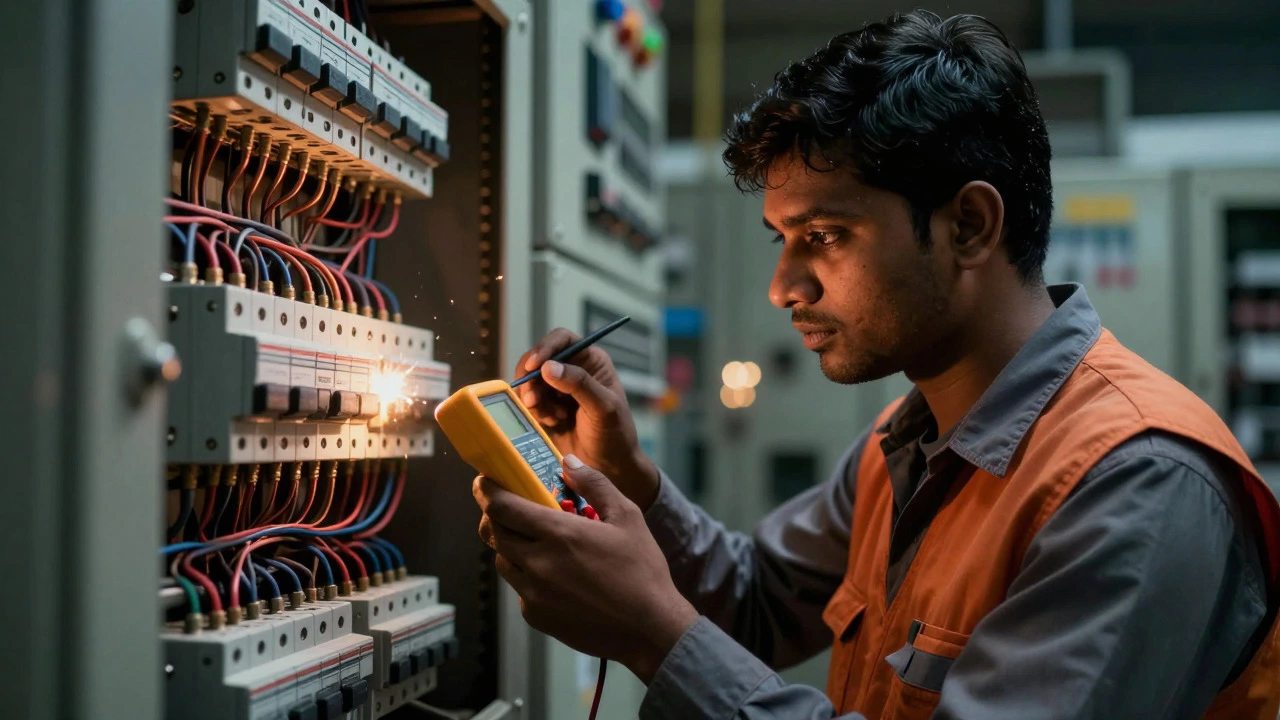
If you ask industry veterans, many will point to electrical engineering technology as one of the toughest entry points. Why? Because electricity is invisible. You cannot see the current flowing through a wire until it burns you or blows a fuse. This requires a unique type of spatial reasoning and caution that few people possess naturally.
An apprentice electrician in India typically starts with basic residential wiring. However, the real challenge begins when moving into industrial or commercial settings. Here, you are dealing with three-phase power, variable frequency drives, and complex control panels. The margin for error is zero. A single loose connection can start a fire in a factory or shut down a hospital wing.
Furthermore, the regulations are strict. In India, electricians often need certification from the State Electricity Boards or recognized institutes like the Industrial Training Institutes (ITIs). The exams test both theoretical knowledge of the Indian Electricity Rules and practical competency. Many candidates fail the practical exam multiple times because they lack the steady hands required to strip wires without damaging the copper core.
- Cognitive Load: High. Requires understanding Ohm’s Law, circuit diagrams, and safety protocols.
- Physical Risk: Severe. Electric shock and arc flash injuries are constant threats.
- Learning Curve: Steep. Mastery takes 3-5 years of consistent practice.
Welding: Precision Under Extreme Conditions
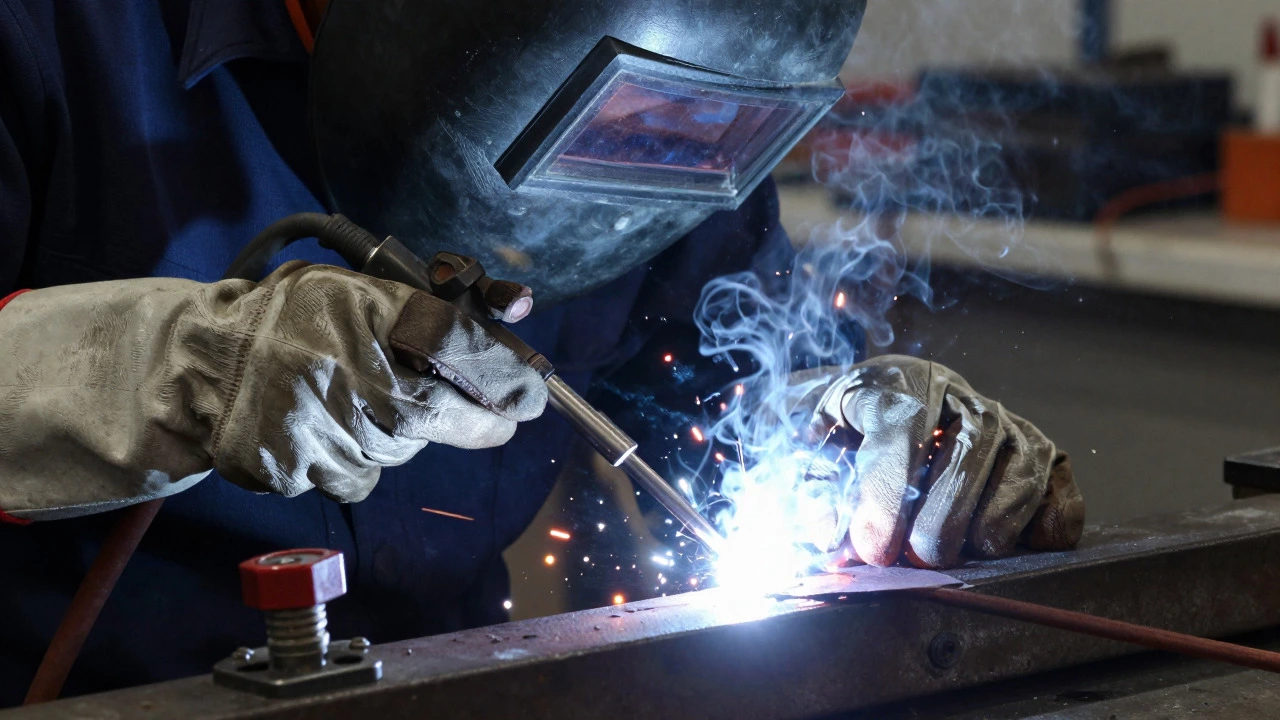
Another contender for the title of hardest trade is advanced welding, specifically Gas Tungsten Arc Welding (GTAW) or TIG welding. Unlike simple stick welding used in construction, TIG welding is an art form that requires intense focus and dexterity. You are holding a torch in one hand and feeding filler rod with the other, while controlling the foot pedal for amperage. All three actions must be perfectly synchronized.
In India, the manufacturing and automotive sectors rely heavily on skilled welders. Companies in Gujarat and Maharashtra produce components for global markets, demanding welds that pass rigorous non-destructive testing (NDT). If your weld has porosity or incomplete fusion, the entire batch is rejected. The pressure to maintain quality is immense.
Moreover, welding environments are harsh. You work with extreme heat, blinding ultraviolet light, and toxic fumes. Protecting yourself requires wearing heavy gear even in India’s tropical climate. The physical discomfort alone filters out many beginners. Those who stay develop a "welder’s eye," able to judge pool fluidity and penetration depth by sight alone-a skill that takes years to hone.
| Trade | Primary Challenge | Average Training Time | Key Certification Needed |
|---|---|---|---|
| Electrician | Safety & Theory | 3-4 Years | ITI / State Board License |
| TIG Welder | Dexterity & Focus | 1-2 Years + Apprenticeship | CSWIP / AWS Certified |
| HVAC Technician | Multi-Disciplinary Knowledge | 2-3 Years | F-Gas Equivalent / Diploma |
| Plumber | Problem Solving & Strength | 2-3 Years | ITI Plumber Certificate |
HVAC Technicians: The Jack-of-All-Trades Nightmare
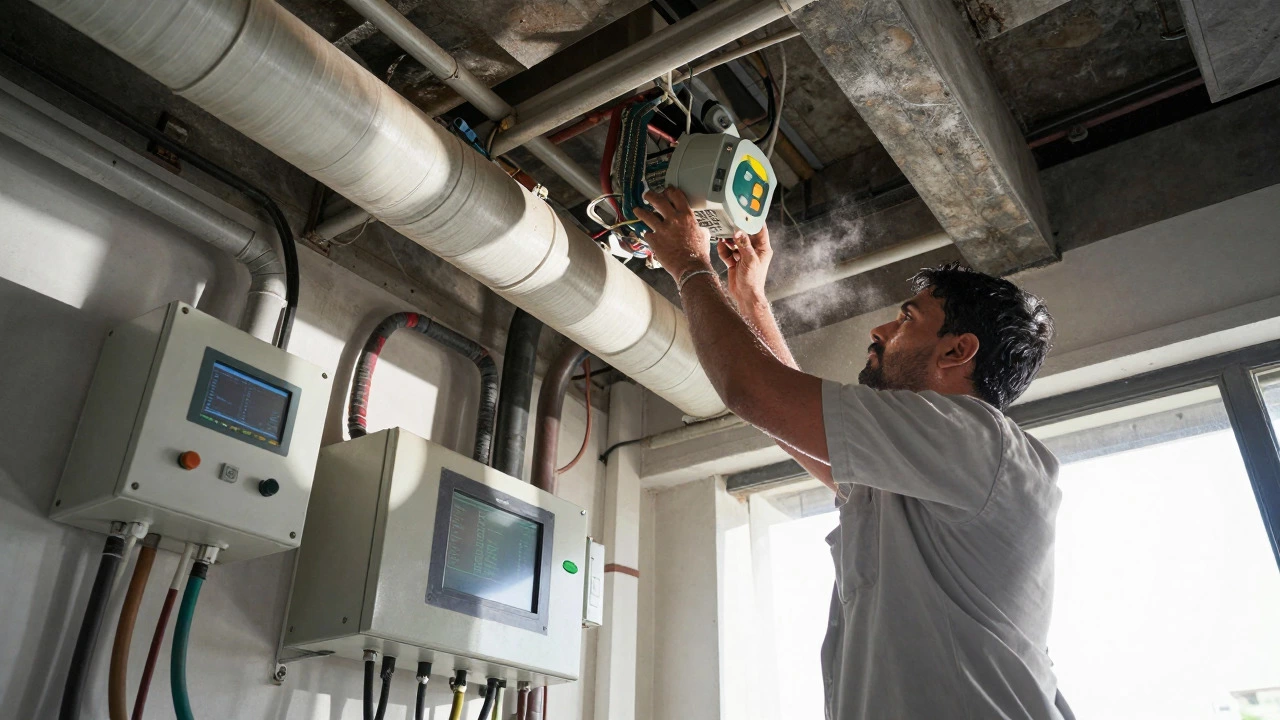
Heating, Ventilation, and Air Conditioning (HVAC) might sound straightforward, but it is arguably the most intellectually demanding trade for generalists. An HVAC technician must be part plumber, part electrician, and part mechanic. They deal with gas lines, refrigerant cycles, electrical controls, and airflow dynamics.
In India, the rising temperatures and urbanization have skyrocketed the demand for AC installation and maintenance. However, modern systems are computerized. Diagnosing a fault often requires reading error codes, measuring micro-amps, and understanding sensor logic. If you only know how to replace a filter, you will struggle. You need to understand why the system failed.
The environmental aspect adds another layer of complexity. Handling refrigerants like R410A requires specific licenses due to their impact on the ozone layer and global warming potential. Improper disposal can lead to heavy fines. Technicians must also work in confined spaces, such as ceiling voids or rooftop units exposed to monsoon rains and scorching sun.
Why These Trades Are Hard to Find Talent For
The difficulty of these trades explains the talent gap in India. According to reports from the Ministry of Skill Development and Entrepreneurship, there is a significant mismatch between the skills taught in traditional ITIs and the needs of modern industry. Employers complain that graduates can pass written exams but cannot perform tasks on site.
This creates a paradox: the harder the trade, the higher the pay, but the fewer people willing to endure the training. For instance, a certified TIG welder in a shipyard in Cochin can earn significantly more than an entry-level office worker, yet recruitment remains tough. The grueling nature of the work acts as a natural barrier to entry.
Additionally, social perception plays a role. Despite government campaigns promoting vocational training, many families still view white-collar jobs as superior. This cultural bias discourages bright students from pursuing technically challenging careers, leaving the field to those who either have no other option or a genuine passion for the craft.
How to Succeed in the Hardest Trades
If you are considering entering one of these difficult fields, here is what you need to do differently. First, seek out apprenticeships over pure classroom learning. Reading about electrical circuits won’t teach you how to troubleshoot a live panel. You need mentorship from experienced professionals who can show you shortcuts and safety habits that books miss.
Second, invest in continuous education. Technology changes fast. Inverter-driven welding machines, smart home electrical systems, and inverter-based ACs require updated knowledge. Stay curious. Join forums, watch technical videos, and attend workshops offered by organizations like NSDC or private training providers.
Third, prioritize safety above all else. In dangerous trades, complacency kills. Develop a routine of checking your equipment before every job. Respect the tools and the environment. Your longevity in the career depends on your ability to go home safely every day.
Is electrician training difficult for beginners in India?
Yes, electrician training is challenging because it combines theoretical physics with high-risk practical application. Beginners must master safety protocols and complex wiring diagrams while developing the fine motor skills needed for precise connections. The Indian Electricity Rules are extensive, and failing to comply can result in severe accidents or legal issues.
Which trade pays the most in India despite being hard to learn?
Specialized welding, particularly TIG and underwater welding, tends to pay the highest among skilled trades. Due to the scarcity of certified professionals who can meet international quality standards, industries like shipbuilding, oil and gas, and aerospace offer premium salaries. HVAC technicians in commercial sectors also command high wages due to the multi-disciplinary nature of their work.
How long does it take to become proficient in a difficult trade?
It typically takes 3 to 5 years of combined formal education and on-the-job apprenticeship to become fully proficient. While basic certifications can be obtained in 6 to 12 months through ITI programs, true mastery-where you can diagnose complex problems independently-requires years of exposure to diverse scenarios and troubleshooting situations.
Are there online courses for learning these hard trades?
Online courses can supplement your learning by teaching theory, such as electrical codes or thermodynamics principles. However, they cannot replace hands-on training. You cannot learn to weld or wire a house purely through a screen. Look for hybrid programs that offer online theory modules followed by mandatory practical labs or internships.
What is the biggest mistake beginners make in vocational training?
The biggest mistake is rushing into paid work before mastering fundamentals. Beginners often accept low-quality gigs to earn money quickly, reinforcing bad habits and unsafe practices. It is better to spend extra time in apprenticeship or unpaid training to build a solid foundation, which leads to higher earnings and reputation in the long run.