
Plumbing Career Salary Estimator
Select Your Career Path
Choose a role to see earning potential
Estimated Annual Income
Base range varies by region.
You don’t have to spend years in university to make a serious living. In fact, some of the highest earners in the construction and maintenance sectors are tradespeople who picked up a wrench instead of a textbook. If you are looking at plumber training courses as your entry point, you might be wondering where the money actually is. Is it just fixing leaky taps, or can this trade lead to a six-figure income?
The short answer is yes, but not every plumbing job pays the same. The gap between a junior apprentice and a top-tier specialist is massive. Understanding which roles command the highest wages helps you plan your career path from day one. It’s not just about working harder; it’s about working smarter and targeting high-value niches.
The Ceiling for Traditional Residential Plumbing
Most people picture a plumber showing up to fix a burst pipe in a suburban home. This is the bread and butter of the industry, and it provides steady work. However, residential plumbing has a relatively low earning ceiling compared to other specializations. A journeyman plumber in Auckland or Sydney might earn a comfortable wage, often ranging from $70,000 to $95,000 annually depending on experience and overtime. But once you hit that mark, growth slows down unless you change your role.
The limitation here is scope. Residential jobs are usually small-scale, reactive, and price-sensitive. Homeowners want quick fixes at fair prices. To break through the income cap, you need to move into areas where the stakes are higher, the regulations are stricter, and the consequences of failure are catastrophic.
Master Plumber: The License That Opens Doors
Before we talk about specific high-paying niches, you need to understand the credential that unlocks them: the Master Plumber license. In New Zealand and Australia, becoming a master plumber requires years of apprenticeship, passing rigorous exams, and demonstrating deep technical knowledge. This isn’t just a title; it’s a legal requirement for supervising complex work and signing off on permits.
Master Plumbers are licensed professionals authorized to design, install, and supervise major plumbing systems. They act as the bridge between blueprints and reality. Because they carry the liability for large projects, their hourly rates are significantly higher. A master plumber might charge double what an apprentice does, not because the physical labor is twice as hard, but because their expertise prevents costly mistakes.
If your goal is high income, getting your master license is non-negotiable. It allows you to bid on commercial contracts, start your own company, and take on the specialized roles we will discuss next.
Industrial Plumbing: Where the Big Money Lives
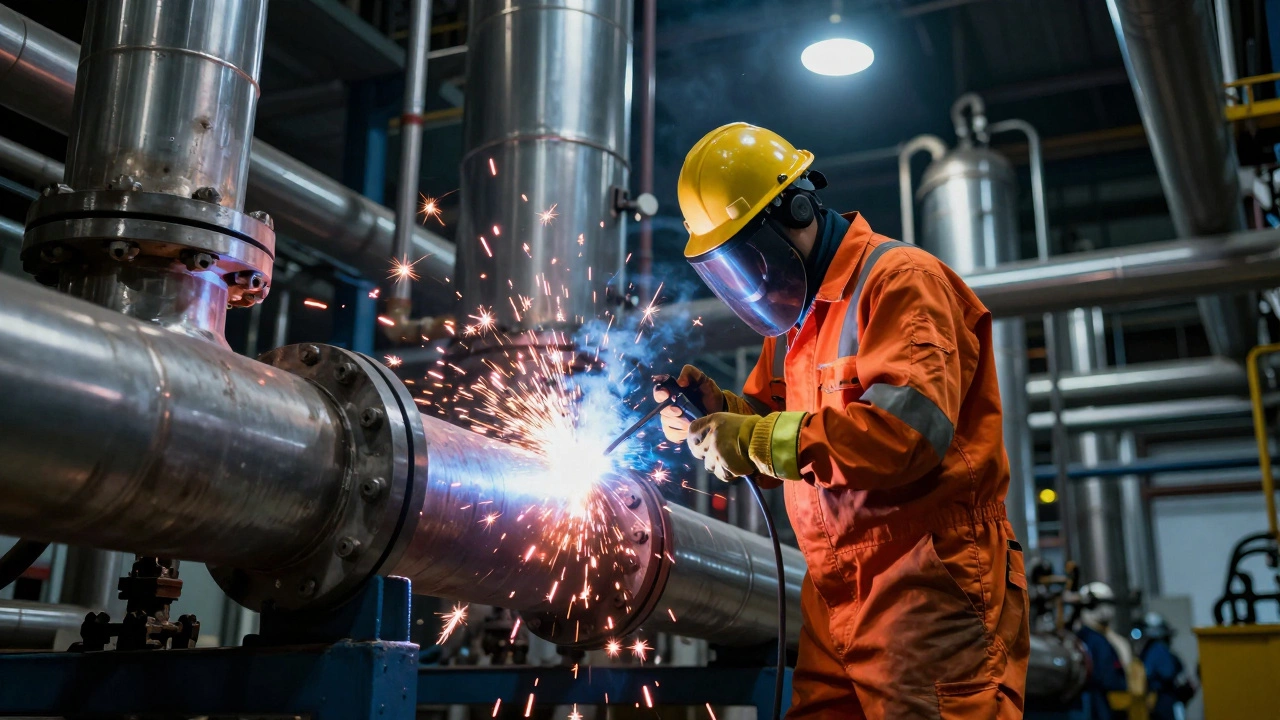
If you want the highest hourly wage without owning a business, look toward industrial plumbing. These professionals work in factories, refineries, chemical plants, and power stations. The environments are harsh, the hours can be irregular, and the safety risks are real. But the pay reflects those challenges.
Industrial plumbers deal with high-pressure steam lines, corrosive chemicals, and massive piping networks that keep entire production lines running. When a pipe fails in a factory, the cost isn’t just a wet floor; it’s thousands of dollars lost per minute in halted production. Companies pay premium rates to ensure these systems never fail.
- Salary Range: Senior industrial plumbers can earn between $100,000 and $140,000+ annually.
- Key Skills: Welding (TIG/MIG), understanding of fluid dynamics, hazardous material handling.
- Work Environment: Construction sites, operating plants, remote mining locations.
In regions like the West Coast of New Zealand or the resource-rich states of Australia, industrial plumbers often receive fly-in-fly-out (FIFO) packages that include accommodation, flights, and significant bonuses. This is arguably the highest paying individual contributor role in the trade.
Specialized Niches: Backflow, Gas, and Medical Systems
Beyond general industrial work, there are specialized certifications that allow plumbers to charge premium rates for specific tasks. These niches require additional training beyond the standard apprenticeship.
| Role | Average Annual Income (NZD/AUD) | Key Requirement | Demand Level |
|---|---|---|---|
| Backflow Prevention Tester | $80,000 - $110,000 | Certified Testing Course | High (Regulatory Mandate) |
| Gas Fitter | $90,000 - $120,000 | Gas Licensing Exam | Very High |
| Medical Gas Installer | $100,000 - $130,000 | Hospital Certification | Moderate (Specialized) |
| Solar Hot Water Specialist | $85,000 - $115,000 | Electrical/Plumbing Hybrid Cert | Growing (Green Energy) |
For example, backflow prevention testers ensure that contaminated water doesn’t flow backward into the public supply. This is legally required for restaurants, hospitals, and schools. Because it’s a regulatory compliance issue, clients don’t haggle over price-they just need it done correctly by a certified professional. Similarly, gas fitting involves life-safety risks, so only licensed experts can touch those lines, creating a protected market with high fees.
The Ultimate Earner: Plumbing Business Owner
While industrial plumbers and specialists earn excellent salaries, the true financial ceiling in this industry belongs to business owners. Starting your own plumbing company transforms you from a worker selling your time to an entrepreneur selling solutions.
A successful plumbing business owner in a major city like Auckland or Melbourne can generate revenues well into the hundreds of thousands, if not millions. Profit margins in plumbing are healthy, often ranging from 10% to 20% net profit, provided the business is managed well. The key here is scalability. You aren’t limited by how many hours you can personally work; you’re limited by how many employees you can manage and how many contracts you can win.
To succeed as an owner, you need more than plumbing skills. You need to understand:
- Estimating and Bidding: Accurately pricing jobs to ensure profitability.
- Marketing and Sales: Building a brand that customers trust.
- Staff Management: Hiring reliable journeymen and managing schedules.
- Compliance and Insurance: Navigating local laws and protecting your assets.
Many master plumbers start by working for others, saving money, and learning the business side before launching their own firms. This path offers the highest potential return but also carries the most risk.

How to Get There: From Training to Top Earners
So, how do you go from zero to one of these high-paying roles? It starts with the right foundation. Enrolling in a reputable plumbing trade course is your first step. Look for programs that offer hands-on training, not just theory. You need to learn how to read blueprints, use tools safely, and understand local building codes.
After your initial training, you’ll typically complete an apprenticeship. This is where you earn while you learn. Be proactive during this phase. Ask questions, seek out mentors, and try to get exposed to different types of projects. If you want to go industrial, ask to help on larger site works. If you’re interested in gas, express that interest early.
Once you’ve completed your apprenticeship, aim for your journeyman license. Then, continue your education. Take courses in backflow prevention, gas fitting, or solar installation. Each certification adds a new revenue stream and increases your value to employers or clients.
Finally, consider the business route. If you have an entrepreneurial spirit, start networking with suppliers and property managers. Build a reputation for reliability and quality. Over time, transition from doing the work yourself to managing the team that does it.
Common Pitfalls to Avoid
Not everyone who enters the trade makes it to the top earner bracket. Some common mistakes include:
- Stagnating Skills: Relying on old methods instead of learning new technologies like smart home plumbing or green energy systems.
- Poor Financial Management: For business owners, mixing personal and business finances can sink a profitable company.
- Neglecting Safety: One accident can end a career or bankrupt a business. Always prioritize safety protocols.
- Ignoring Soft Skills: Customer service matters. Even the best technician will struggle if they alienate clients with poor communication.
Is It Worth the Effort?
The plumbing trade offers a rare combination of job security and high earning potential. Unlike many white-collar jobs that can be automated or outsourced, plumbing requires physical presence and skilled judgment. As long as buildings exist, they will need plumbing. And as systems become more complex, the demand for highly skilled specialists will only grow.
If you are willing to put in the years of training, handle the physical demands, and continuously upgrade your skills, the financial rewards are substantial. Whether you choose the stable, high-wage path of industrial plumbing or the risky, high-reward path of business ownership, the ceiling is far higher than most people realize.
Do I need a degree to become a high-paid plumber?
No, you do not need a university degree. Most high-earning plumbers complete vocational training, apprenticeships, and obtain specific licenses like Master Plumber or Gas Fitter. Practical experience and specialized certifications are valued more than academic degrees in this trade.
Which pays more: residential or commercial plumbing?
Commercial and industrial plumbing generally pays more than residential plumbing. Industrial roles, in particular, offer higher base salaries due to the complexity of the systems and the hazardous nature of the work. Commercial projects also tend to have larger budgets and longer durations.
How much does a master plumber earn in New Zealand?
In New Zealand, a master plumber can earn between $90,000 and $130,000 annually, depending on location, specialization, and whether they are self-employed. Those in high-demand areas or with niche certifications like gas fitting may earn even more.
What is the fastest way to increase my plumbing income?
The fastest way to boost income is to obtain additional certifications in high-demand niches such as gas fitting, backflow prevention, or solar hot water installation. These credentials allow you to charge higher rates and access exclusive job markets.
Can I start a plumbing business immediately after training?
It is not recommended to start a business immediately after basic training. You typically need to gain several years of practical experience, obtain a master license, and develop business management skills. Starting too early without sufficient expertise can lead to costly mistakes and reputational damage.