
Electrician Salary Estimator
Configure Your Profile
Estimated Annual Income
Range: $0 - $0
Money talks, but in the electrical trade, specialization shouts. If you are wondering which path leads to the biggest paycheck, the short answer is usually industrial electrician. However, the reality is a bit more nuanced. The type of electrician that makes the most money depends heavily on where you work, what systems you master, and whether you are willing to trade comfort for cash.
We aren't just talking about hourly rates here. We are looking at total compensation, including overtime, hazard pay, and contract bonuses. Some electricians make a comfortable living fixing home wiring, while others pull down six-figure salaries maintaining massive manufacturing plants or offshore oil rigs. Let's break down exactly who earns what and why.
The Hierarchy of Electrical Income
To understand the money, you first need to understand the ladder. In countries like the United States, New Zealand, and Australia, your earning potential is strictly tied to your certification level and experience.
| Role / Certification | Typical Experience | Income Potential (USD/Year) | Key Constraint |
|---|---|---|---|
| Apprentice Electrician | 0-4 years | $30,000 - $50,000 | Must work under supervision; lower wage scale |
| Journeyman Electrician | 4+ years | $55,000 - $85,000 | Capped without overtime or specialized skills |
| Master Electrician | 8+ years | $70,000 - $110,000+ | Requires passing rigorous exams; often shifts to management/design |
| Industrial Electrician | Varies | $80,000 - $130,000+ | High skill requirement; hazardous environments |
An Apprentice Electrician is an entry-level worker learning the trade through on-the-job training and classroom instruction. You start low because you are still learning how not to shock yourself. As you climb to Journeyman Electrician is a licensed professional qualified to perform electrical work independently., your base rate jumps significantly. But the real money isn't in the base rate-it's in the niche.
Why Industrial Electricians Lead the Pack
If you want the highest consistent paycheck, look toward industry. Industrial Electrician is a specialist who maintains and repairs complex machinery and power systems in factories and plants. These professionals don't just run wire; they troubleshoot programmable logic controllers (PLCs), variable frequency drives (VFDs), and high-voltage motor controls.
Why do they get paid so much? Because downtime costs millions. If an assembly line stops, the factory loses thousands of dollars every minute. An industrial electrician who can diagnose a fault in a robotic arm or restore power to a chemical processing unit quickly is invaluable. This urgency translates directly into higher wages, shift differentials, and overtime opportunities.
- Complexity: They deal with 480V, 600V, or even higher voltage systems, unlike residential workers who typically handle 120V/240V.
- Skill Set: Proficiency in reading complex schematics and understanding mechanical-electrical interfaces is required.
- Environment: Work often happens in noisy, hot, or dangerous conditions, which commands a premium.
The High-Stakes World of Commercial and High-Voltage Specialists
While industrial roles dominate the top of the salary charts, commercial electricians working on large-scale projects also earn well. Think skyscrapers, hospitals, and data centers. These projects require strict adherence to building codes and often involve working at heights or in confined spaces.
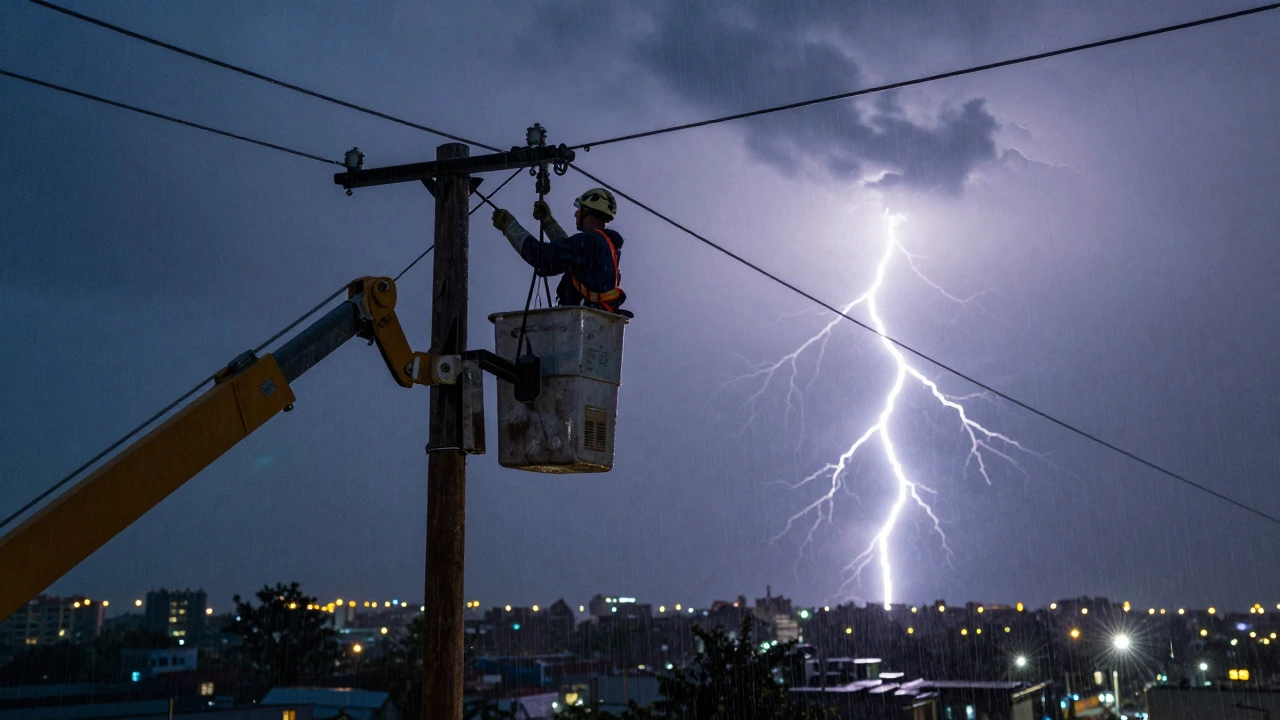
However, there is a subset of electricians who can out-earn even industrial specialists: Linemen (or outside electricians) are workers who install and maintain overhead power lines and transformers. While technically distinct from "inside" electricians, many people consider them part of the broader electrical family. Linemen face extreme weather, heights, and live high-voltage lines. Their pay reflects this danger, often exceeding $100,000 annually, especially during storm recovery operations.
Another lucrative niche is Control Systems Technician is a specialist focused on automation, robotics, and electronic control systems. As factories become smarter, the demand for electricians who understand IT networks and automation protocols skyrockets. These individuals bridge the gap between electrical engineering and computer science, commanding salaries that rival software engineers in some regions.
Residential vs. Commercial: The Stability Trade-Off
So, does that mean residential electricians make poor money? Not necessarily. A skilled Residential Electrician is a professional who installs, maintains, and repairs electrical systems in homes. might have a lower base salary than their industrial counterpart, but they have unique advantages.
Many residential electricians own their own businesses. Once you build a reputation, you set your own rates. Emergency call-outs, weekend work, and service contracts can push a self-employed residential electrician's income past $100,000. The key difference is risk. An industrial employee gets a steady paycheck regardless of whether the factory runs smoothly. A residential business owner eats the cost of slow seasons, insurance, and marketing.
In Auckland, for example, the demand for residential electrical work has surged due to housing developments. While the hourly rate might be lower than in a mining town, the volume of work and opportunity for entrepreneurship can lead to significant wealth accumulation over time.
Factors That Skyrocket Your Earnings
Your job title is only part of the equation. Several other factors dramatically influence your bottom line:
- Overtime: Industrial and commercial sites often operate 24/7. Willingness to work nights, weekends, and holidays can double your effective hourly rate.
- Location: Wages vary wildly by region. Urban centers with high costs of living and strong unions (like San Francisco or Sydney) pay more. Remote locations, such as oil rigs or mining camps, offer "fly-in, fly-out" packages with substantial allowances.
- Unions: Unionized electricians (such as IBEW members in the US) often negotiate better wages, benefits, and pension plans compared to non-union workers.
- Certifications: Additional certifications in solar installation, EV charging stations, or smart home technology can justify higher rates.

How to Maximize Your Earning Potential
If your goal is financial growth in the electrical trade, here is a strategic roadmap:
1. Get Licensed Early: Don't linger as an apprentice. Pass your journeyman exam as soon as you are eligible. Every year spent unlicensed is a year of lost earning potential.
2. Specialize in Automation: Learn PLC programming and industrial networking. This skill set is rare among general electricians and highly valued in manufacturing.
3. Consider Contract Work: Temporary assignments in construction or maintenance often pay higher hourly rates than permanent positions, though they lack benefits.
4. Move Upstream: Transition from troubleshooting to design and project management. Master electricians who oversee large teams or manage budgets earn significantly more than those solely turning wrenches.
The Bottom Line
The type of electrician that makes the most money is typically an industrial electrician with expertise in automation and control systems, working in a high-demand region or unionized environment. However, entrepreneurial residential electricians and dangerous-environment linemen can also reach similar income levels.
It's not just about picking a label; it's about acquiring hard-to-replace skills. The more complex the system you can fix, and the more critical that system is to someone else's revenue, the more they will pay you. Choose your path based on your tolerance for risk, desire for stability, and interest in technical complexity.
Do master electricians make more than journeyman electricians?
Generally, yes. Master electricians have more experience and can pull permits, design systems, and supervise other electricians. This added responsibility and expertise command higher salaries, often ranging from $70,000 to over $110,000 depending on location and specialization.
Is it worth getting a degree in electrical engineering instead?
It depends on your career goals. Electrical Engineers typically earn higher starting salaries and work in design and theory. Electricians focus on practical installation and repair. Many find that combining hands-on trade experience with engineering knowledge offers the best of both worlds, leading to roles in project management or technical sales.
Which states or countries pay electricians the most?
In the US, states like Alaska, Illinois, and New Jersey often report the highest median wages for electricians due to strong unions and high costs of living. Internationally, countries with robust industrial sectors like Canada, Australia, and Germany offer competitive salaries, especially for specialized industrial roles.
Can residential electricians make six figures?
Yes, but usually by owning their own business. By managing multiple employees, securing high-volume contracts, and offering emergency services, successful residential electrical contractors can earn well over $100,000 annually. However, this comes with business risks and responsibilities.
What skills increase an electrician's salary the most?
Skills in automation (PLC programming), high-voltage systems, renewable energy installation (solar/wind), and smart home integration are currently in high demand. Additionally, soft skills like communication and project management can help electricians move into higher-paying supervisory roles.