
Choosing the right 1-year computer course in India can change your career path in just 12 months. With so many options-from coding bootcamps to government-certified diplomas-it’s easy to feel overwhelmed. But not all courses are created equal. The best one for you depends on your goals, budget, and how much hands-on experience you want before landing a job.
What You Actually Get in a 1-Year Computer Course
A good 1-year computer course isn’t just theory. It’s structured to give you real skills you can use on day one of your job. Most quality programs include:
- Live projects using industry tools
- Internships or work placements
- Certifications from recognized bodies
- Resume building and interview prep
- Access to job portals or placement drives
Compare that to a 3-month online course that teaches you how to make a website but leaves you alone when it’s time to apply for jobs. The best 1-year programs are designed like apprenticeships-they train you to work, not just to pass an exam.
Top 5 Best 1-Year Computer Courses in India (2026)
Here are the five most in-demand, high-return options based on placement data from over 200 institutes across Delhi, Bangalore, Hyderabad, and Pune. These aren’t guesses-they’re backed by recent job reports from NASSCOM and NSDC.
1. Full Stack Development (React + Node.js + MongoDB)
This is the most popular choice for people under 25. Why? Because every startup, e-commerce site, and SaaS company needs web developers. A solid Full Stack course teaches you both front-end (React, HTML/CSS) and back-end (Node.js, Express, REST APIs) with real databases like MongoDB.
Graduates from top institutes like NIIT is a leading IT training provider in India offering industry-aligned Full Stack Development programs and APSSDC is a government-backed skill development corporation offering certified Full Stack courses land jobs with salaries between ₹4.2 LPA and ₹7.5 LPA. Many start as junior developers and move up fast.
2. Data Analytics with Python and Excel
Businesses are drowning in data and starving for people who can make sense of it. This course teaches you how to clean data, build dashboards in Power BI, run statistical analysis in Python, and use Excel for business reporting.
It’s ideal if you’re good with numbers but don’t want to code full-time. Companies like Deloitte, Infosys, and even local retail chains hire data analysts. Entry-level salaries range from ₹3.5 LPA to ₹6 LPA. The best part? You don’t need a math degree-just willingness to learn patterns.
3. Cybersecurity Fundamentals (NASSCOM Certified)
With cyberattacks rising 40% every year in India (as per the 2025 Indian Cybersecurity Report), companies are scrambling for trained professionals. This course covers network security, phishing detection, firewall setup, and basic ethical hacking.
It’s offered by institutes like C-DAC is a premier R&D organization under MeitY that runs certified cybersecurity training programs and Red Hat is a global leader in open-source software offering entry-level security certifications. You’ll get hands-on labs using tools like Wireshark and Metasploit. Starting salaries: ₹4 LPA-₹6.5 LPA. Many get hired by BPOs, banks, and IT firms as security assistants.
4. Digital Marketing (SEO, Google Ads, Social Media)
If you’re creative, love social media, and understand how people think, this is your path. You’ll learn how to run Google Ads campaigns, optimize websites for search engines, manage Facebook and Instagram ads, and measure ROI using analytics.
It’s one of the most flexible options-you can freelance, work remotely, or join agencies. Top institutes like Simplilearn is a global online learning platform offering industry-recognized digital marketing certifications and NIIT is a leading IT training provider in India offering industry-aligned Digital Marketing programs have placement rates above 85%. Average starting salary: ₹3 LPA-₹5.5 LPA.
5. Advanced Excel + Power BI for Business
This isn’t your college Excel class. This course takes you from basic formulas to building dynamic dashboards that help managers make decisions. You’ll learn pivot tables, VLOOKUP, macros, and how to connect Excel to live data sources using Power BI.
It’s perfect for people who want to work in finance, HR, logistics, or operations. Almost every company-big or small-needs someone who can turn raw data into clear reports. Salaries range from ₹3.2 LPA to ₹5 LPA. Many graduates start as data entry assistants and move into business analyst roles within a year.
What to Avoid
Not all "computer courses" are worth your time. Here’s what to skip:
- Courses that only give a "certificate" without any recognized body (like "XYZ Institute Certified")
- Programs with zero projects or internships
- Those that don’t tell you where past students got placed
- Anything priced over ₹1.5 lakh without clear ROI
- Courses that teach outdated tech (like Flash or ASP.NET without modern upgrades)
Ask for placement records. If they can’t show you names of companies or salary ranges, walk away.

How to Pick the Right One for You
Ask yourself these three questions:
- Do you want to work in an office, from home, or freelance?
- Are you more interested in logic (coding, data) or creativity (design, marketing)?
- What’s your budget? Government-backed courses often cost under ₹30,000. Private institutes range from ₹50,000 to ₹1.2 lakh.
Here’s a quick guide:
| Course | Best For | Starting Salary | Placement Rate | Duration |
|---|---|---|---|---|
| Full Stack Development | Logic-driven, tech lovers | ₹4.2-7.5 LPA | 90% | 12 months |
| Data Analytics | Numbers, Excel users | ₹3.5-6 LPA | 85% | 12 months |
| Cybersecurity | Problem solvers, detail-oriented | ₹4-6.5 LPA | 88% | 12 months |
| Digital Marketing | Creative, social media savvy | ₹3-5.5 LPA | 87% | 12 months |
| Advanced Excel + Power BI | Business, finance, admin roles | ₹3.2-5 LPA | 92% | 12 months |
Where to Find These Courses
You don’t need to pay a private institute thousands of rupees. Many high-quality options are free or low-cost:
- NSDC (National Skill Development Corporation) - Offers government-subsidized courses across India. Check their portal for nearby centers.
- SWAYAM - Free online courses from IITs and NITs. Some offer certificates for a small fee.
- CDAC - Runs certified training in cybersecurity and software development. Low fees, high credibility.
- ITI (Industrial Training Institutes) - Government-run centers offering computer operator and programming courses.
Always check if the course is listed on the NSDC is India's national body for skill development, overseeing certification standards for vocational training portal. If it’s not, proceed with caution.
What Happens After You Finish?
Finishing the course is just the start. To stand out:
- Create a GitHub portfolio (even if it’s 3 small projects)
- Join LinkedIn groups for your field
- Apply for internships-even unpaid ones in your first month
- Get one more certification (like Google Data Analytics or Microsoft Excel Specialist)
Many people land their first job within 2-3 months after course completion. The key? Don’t wait for the "perfect" job. Start anywhere, learn faster, and climb.
Is a 1-year computer course better than a degree?
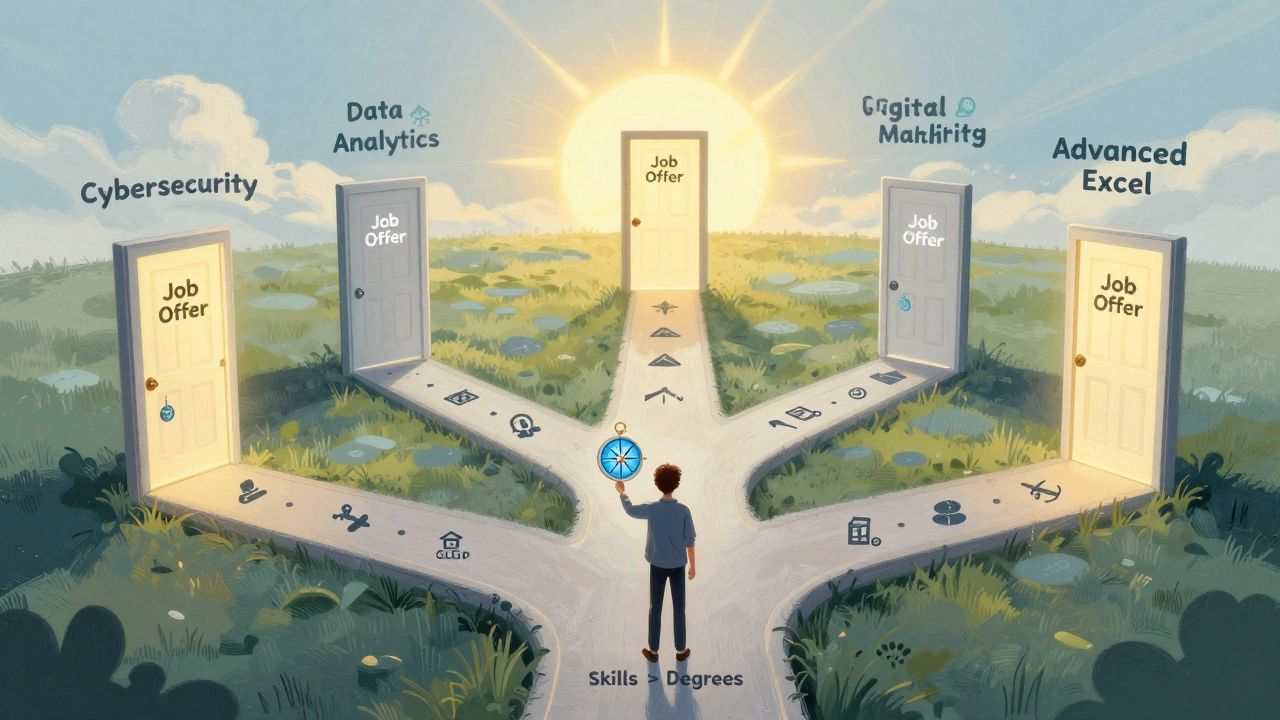
For most people in India, yes. A B.Tech takes 4 years and costs ₹10-20 lakh. A 1-year course costs under ₹1 lakh and gets you a job faster. Employers now care more about skills than degrees, especially in IT. If you’re aiming for government jobs or higher studies, a degree still matters. But for tech roles-coding, data, marketing, security-skills win.
Can I do a 1-year computer course after 12th grade?
Absolutely. Most courses only require a 12th-grade pass. Some even accept students who dropped out after 10th. The focus is on your ability to learn, not your academic history. Institutes like NSDC and CDAC actively recruit from non-traditional backgrounds.
Are online 1-year computer courses worth it?
Only if they include live projects, mentorship, and job placement support. Many online courses just give you videos and a quiz. The best ones-like those from Simplilearn, NIIT, or SWAYAM-offer live doubt sessions, real client projects, and interview prep. Avoid self-paced-only options unless you’re highly disciplined.
Which course has the highest job demand right now?
Full Stack Development and Cybersecurity lead in demand. According to NASSCOM’s 2025 report, India needs over 1.2 million new IT professionals this year, with over 40% in development and security roles. Data Analytics is growing fast too, especially in mid-sized companies.
Do these courses help if I want to work abroad?
Yes, but with conditions. Certifications from globally recognized bodies (like Microsoft, Google, AWS, or Cisco) carry weight overseas. A Full Stack or Cybersecurity course from an NSDC-certified institute can open doors in countries like Canada, Australia, or the UAE-especially if you build a strong portfolio and learn English fluently. Many Indian IT firms have offshore offices, so starting locally is a smart first step.
Next Steps
Start today. Don’t wait for the "perfect" course. Visit the NSDC website. Find the nearest center offering one of these five courses. Talk to a counselor. Ask to see placement records. Enroll in the one that matches your interests and budget. In 12 months, you could be earning more than you ever thought possible-with no student debt and real skills you can show.