
Vocational Education & Equality Impact Calculator
Inspired by Mary Wollstonecraft’s belief that education is meaningless without equality, this tool helps you visualize how specific vocational choices can lead to greater financial autonomy and social standing. Enter your hypothetical scenario below to see the projected impact.
Imagine going to school, learning everything you can, and still being told your knowledge is useless because of who you are. That was the reality for countless women throughout history. The question "Who believed education was meaningless without equality?" points us toward a powerful truth: access to learning means nothing if society refuses to value what you learn based on your gender.
While many thinkers touched on this idea, one name stands out in the fight for women's intellectual rights: Mary Wollstonecraft. In her 1792 masterpiece, A Vindication of the Rights of Woman, she argued that women were not naturally inferior to men but appeared so only because they lacked proper education. She didn't just want women to read novels; she wanted them to have rational minds capable of contributing to society. Her core belief was simple yet radical: education loses its meaning if it doesn't lead to equal standing.
The Link Between Education and Social Standing
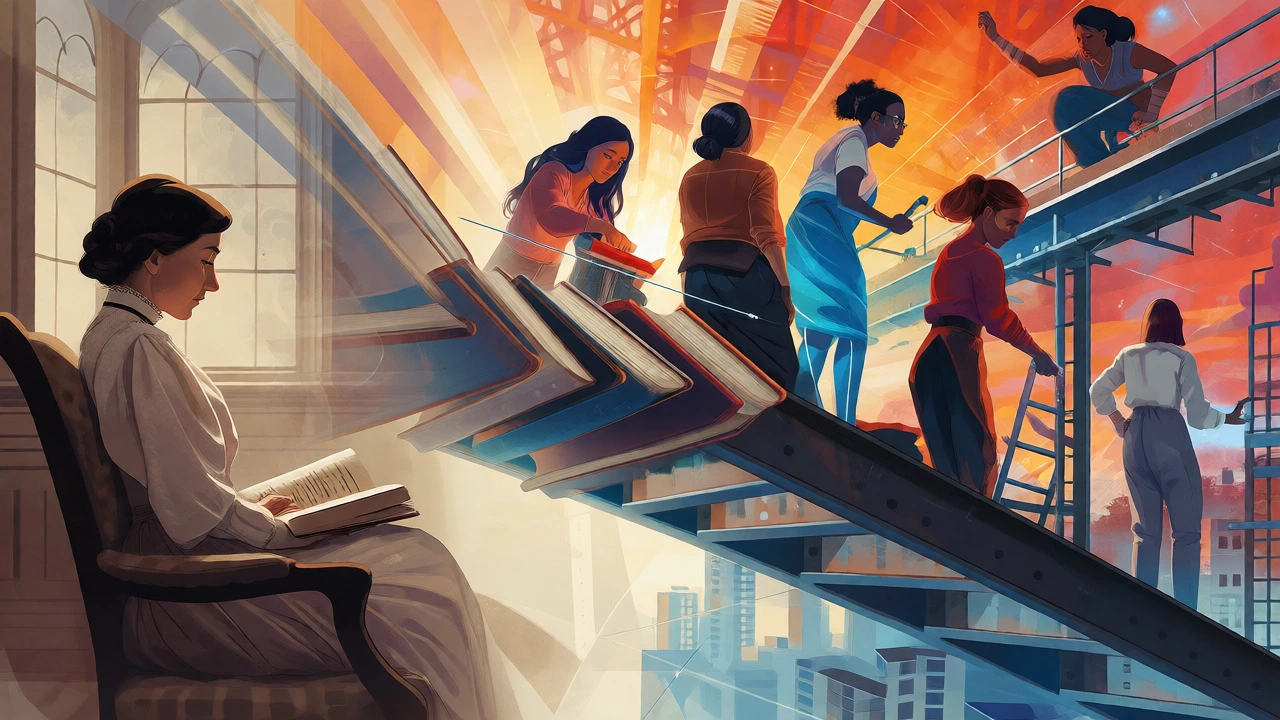
Wollstonecraft wasn't talking about abstract philosophy. She was looking at real lives. In the 18th century, women were often educated in "accomplishments"-singing, dancing, and basic reading-designed to make them attractive wives rather than independent thinkers. If a woman learned calculus but couldn't vote or own property, did that education truly empower her? Wollstonecraft said no. She believed that unless education led to economic independence and social respect, it was merely decoration.
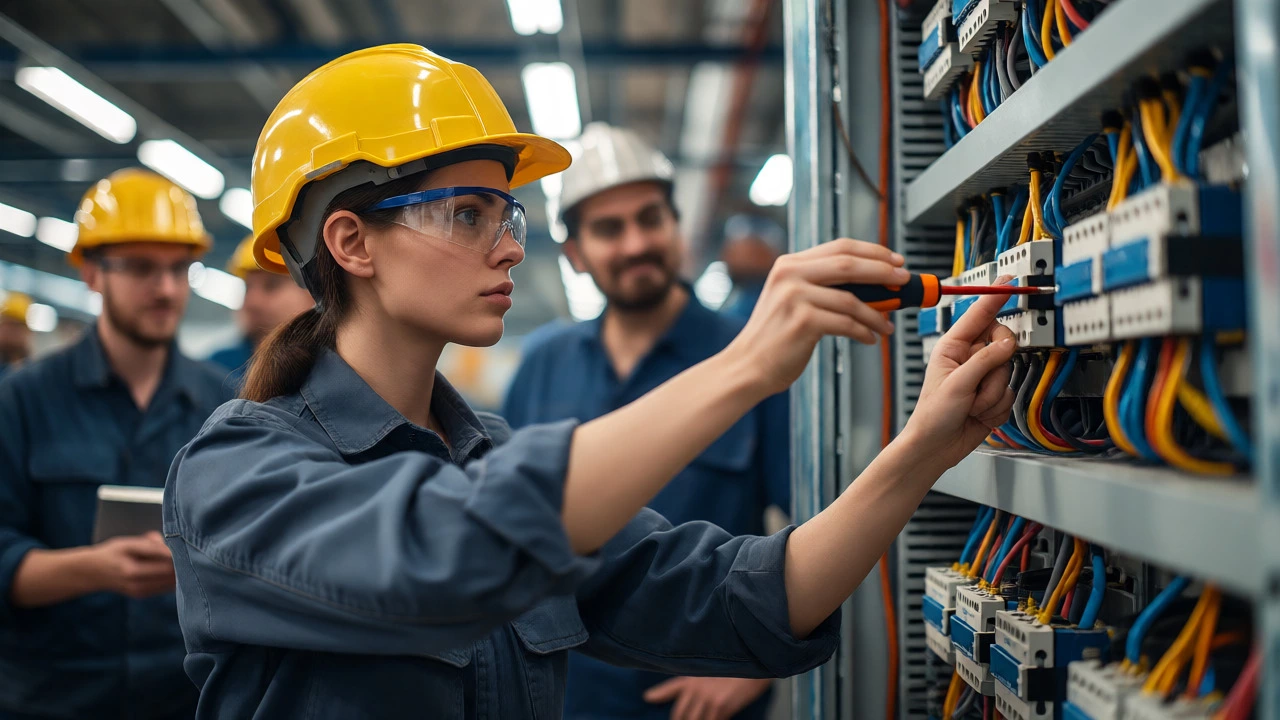
This idea resonates deeply with modern discussions about vocational training for women. Today, we might think the battle is won, but look closer. Are women entering high-paying trade roles at the same rate as men? Do employers value female electricians or plumbers equally? The principle remains: skills must be matched with opportunity. If a woman completes a rigorous diploma course but faces a glass ceiling, the education feels incomplete.
Why Vocational Training Matters for Equality
Historically, academic education was seen as the path for men, while domestic arts were for women. This split created a massive economic gap. When women entered the workforce in large numbers during the World Wars, they proved their capability in factories and trades. Yet, when men returned, many women were pushed back into lower-paid service roles.
Vocational training became a crucial tool for breaking this cycle. Unlike general liberal arts degrees, vocational courses offer direct pathways to employment. Think about it: a certificate in plumbing or digital marketing has immediate market value. For women seeking financial autonomy, these skills provide leverage. They allow you to negotiate pay, choose jobs, and build careers on merit rather than tradition.
Consider the data. According to recent labor statistics, industries like construction and IT remain heavily male-dominated. However, women who complete specialized skill training programs often report higher job satisfaction and faster entry into the workforce compared to those with generic degrees. Why? Because the skills are tangible. You can point to a fixed pipe or a coded website and say, "I did this." It’s undeniable proof of competence.
Modern Barriers to Equal Opportunity
So, if the logic is sound, why isn't every trade shop filled with women? The barriers have shifted from legal bans to cultural biases. Hiring managers might unconsciously assume a woman can't lift heavy materials or handle a site environment. Colleagues might question her authority. These micro-aggressions create an environment where education feels isolating.
Wollstonecraft would recognize this struggle. She argued that society conditions women to be timid and dependent. Breaking that conditioning requires more than just classroom time; it requires structural support. Mentorship programs, inclusive workplace policies, and visible role models are the modern equivalents of the political rights Wollstonecraft demanded. Without these supports, a woman's education can feel like shouting into a void.
Beyond the Classroom: Practical Steps for Change
If you're considering vocational training, how do you ensure your education leads to true equality? It starts with choosing the right program and the right mindset. Here are three practical steps:
- Pick High-Demand Skills: Focus on trades with labor shortages. Electrician training, welding, and coding bootcamps often prioritize skill over gender. The demand for workers outweighs bias in many sectors.
- Seek Inclusive Providers: Look for training centers with diverse student bodies and staff. If you're the only woman in a class of fifty, ask yourself why. Support networks matter.
- Negotiate Based on Value: Don't accept entry-level pay because of stereotypes. Know the market rate for your certification. Confidence comes from competence, and competence comes from solid training.
It’s also worth noting that "equality" doesn't mean identical paths. Some women prefer flexible hours, which certain freelance digital marketing roles offer. Others thrive in structured corporate environments. The goal is choice. Education should expand your options, not limit them to traditional expectations.
The Ripple Effect of Educated Women
When women gain meaningful education and equal economic footing, the benefits ripple outward. Studies consistently show that women reinvest up to 90% of their income into their families and communities, compared to 30-40% for men. An educated, economically independent mother is more likely to educate her children, regardless of gender.
This creates a positive feedback loop. As more women enter skilled trades and professional fields, the perception of who belongs in those spaces changes. Young girls see electricians wearing hard hats and know it's a viable career. Boys grow up seeing women as leaders and experts, normalizing equality in their worldview. Wollstonecraft’s vision wasn't just about individual rights; it was about societal progress. She knew that half the population held back meant half the potential lost.
Comparing Historical and Modern Perspectives
To understand how far we've come, let's look at the shift in educational goals for women over the centuries.
| Aspect | Late 18th Century (Wollstonecraft Era) | Modern Vocational Context |
|---|---|---|
| Primary Goal | Rationality and moral virtue | Economic independence and career growth |
| Curriculum Focus | Literature, philosophy, basic sciences | Technical skills, certifications, hands-on trades |
| Social Barrier | Legal restrictions on property and voting | Cultural bias and hiring discrimination |
| Outcome of Education | Better wife/mother status | Professional identity and financial autonomy |
The table highlights a clear trajectory. We moved from educating women to serve others to educating them to serve themselves. But the core warning remains: without equality in application, the education is hollow.
What Does "Meaningful" Education Look Like Today?
In Auckland, where I live, the push for vocational excellence is strong. New Zealand’s economy relies heavily on skilled trades. Programs offering diplomas in hospitality, IT, and construction are booming. But are they equitable? Data suggests that while enrollment rates are rising, retention rates for women in some technical fields lag behind. Why? Often due to lack of mentorship or unsafe work environments.
Meaningful education today includes safety protocols, anti-harassment training, and leadership development alongside technical skills. It prepares women not just to do the job, but to keep the job and advance within it. If a course teaches you to code but doesn't teach you how to advocate for yourself in a male-dominated tech team, it’s missing a piece of the puzzle.
We must also consider the global context. In developing nations, vocational training for women often focuses on artisan crafts. While valuable, does it lead to fair wages? Or does it trap women in low-margin home-based work? True equality requires market access. Connecting artisans to global e-commerce platforms is a form of educational extension that adds meaning to the skill.
Conclusion: Education as a Tool for Justice
Mary Wollstonecraft didn't just write a book; she sparked a movement. Her assertion that education is meaningless without equality challenges us to look beyond certificates. It asks us to examine the systems that receive our graduates. Are they fair? Are they open?
For anyone pursuing vocational training, remember this: your skill is your power. But power needs a platform. Seek out environments that value your contribution. Support organizations that fight for equal pay. And when you succeed, pull others up. That’s how education becomes meaningful-not just for you, but for everyone watching.
Who is most associated with the idea that education requires equality?
Mary Wollstonecraft is the primary figure associated with this idea. In her 1792 work 'A Vindication of the Rights of Woman,' she argued that women's perceived inferiority was due to lack of education and unequal social status, not nature. She believed that without equal rights and opportunities, education could not fulfill its purpose of creating rational, independent citizens.
How does vocational training promote gender equality?
Vocational training provides women with specific, marketable skills that lead directly to employment and financial independence. By entering traditionally male-dominated trades like plumbing, electrical work, or IT, women challenge gender stereotypes and demonstrate competence. This economic empowerment allows them to negotiate better pay and working conditions, fostering greater equality in the workplace and society.
Is education alone enough to achieve equality?
No, education alone is not enough. While education provides knowledge and skills, equality requires systemic support such as fair hiring practices, equal pay laws, safe work environments, and cultural acceptance. Without these structural elements, educated individuals may still face discrimination, limiting the impact of their learning. Education must be paired with opportunity to be truly meaningful.
What are common barriers for women in vocational training?
Common barriers include unconscious bias from employers and peers, lack of female role models in certain trades, unsafe or unwelcoming work environments, and inflexible scheduling that conflicts with caregiving responsibilities. Additionally, some training programs may not adequately address the specific needs or safety concerns of female participants, leading to higher dropout rates.
How can employers support women in skilled trades?
Employers can support women by implementing strict anti-harassment policies, providing appropriate personal protective equipment (PPE) designed for women, offering mentorship programs, and ensuring transparent promotion criteria. Creating a culture that values diversity and actively recruiting women into apprenticeships also helps break down historical barriers and fosters an inclusive environment.