Diploma vs Degree: Which Path Pays More in India?
When you're choosing between a diploma, a short-term, hands-on program focused on practical job skills and a degree, a longer, theory-heavy university program that often takes 3-4 years, you're not just picking a course—you're picking a career speed and cost. In India, where student debt is rising and jobs demand real skills fast, more people are asking: does a degree even matter anymore? The answer isn’t simple, but the data is clear. Many of the highest-paying jobs today don’t require a bachelor’s at all—they need certified vocational training, focused, industry-backed learning for trades like IT, plumbing, cybersecurity, and locksmithing.
Take diploma courses in Cybersecurity or Data Science. In 2025, graduates with a 2-year diploma from a recognized institute are earning ₹6-12 lakhs annually—sometimes more than B.Tech holders in non-core fields. Why? Because companies don’t care if you have a degree if you can fix a server, write code, or secure a network. Meanwhile, many degree holders are stuck in low-paying jobs because their education didn’t teach them how to actually do the work. A diploma cuts through the noise. It’s built with input from employers, not just professors. It’s shorter, cheaper, and gets you hired faster. You don’t need to spend ₹10 lakhs on a university to land a job that pays ₹8 lakhs a year. You just need the right technical training, practical, certified learning that leads directly to a job in a skilled trade or tech field.
But it’s not just about money. It’s about control. A diploma lets you skip the 4-year grind and start earning while others are still paying off loans. You can train in Mumbai, Delhi, or even a small town and get hired locally—no need to move to Bangalore or Hyderabad for a job. And if you want to grow later? Many employers now offer promotions based on skills, not degrees. A plumber with a PEX certification earns more than an engineer who can’t fix a leak. A locksmith with WhatsApp marketing skills makes more than a marketing grad who doesn’t know how to get clients. The old rules are breaking. The new ones? They’re written in hands-on experience, not textbooks.
Below, you’ll find real stories, salary data, and step-by-step guides on which diplomas in India actually pay the most, which degrees are worth the cost, and how to turn short-term training into long-term income—without the stress, debt, or wasted years.
Is a Diploma Considered a Graduate Degree in India?
Posted by Kieran Sethi with 0 comment(s)
9
Dec
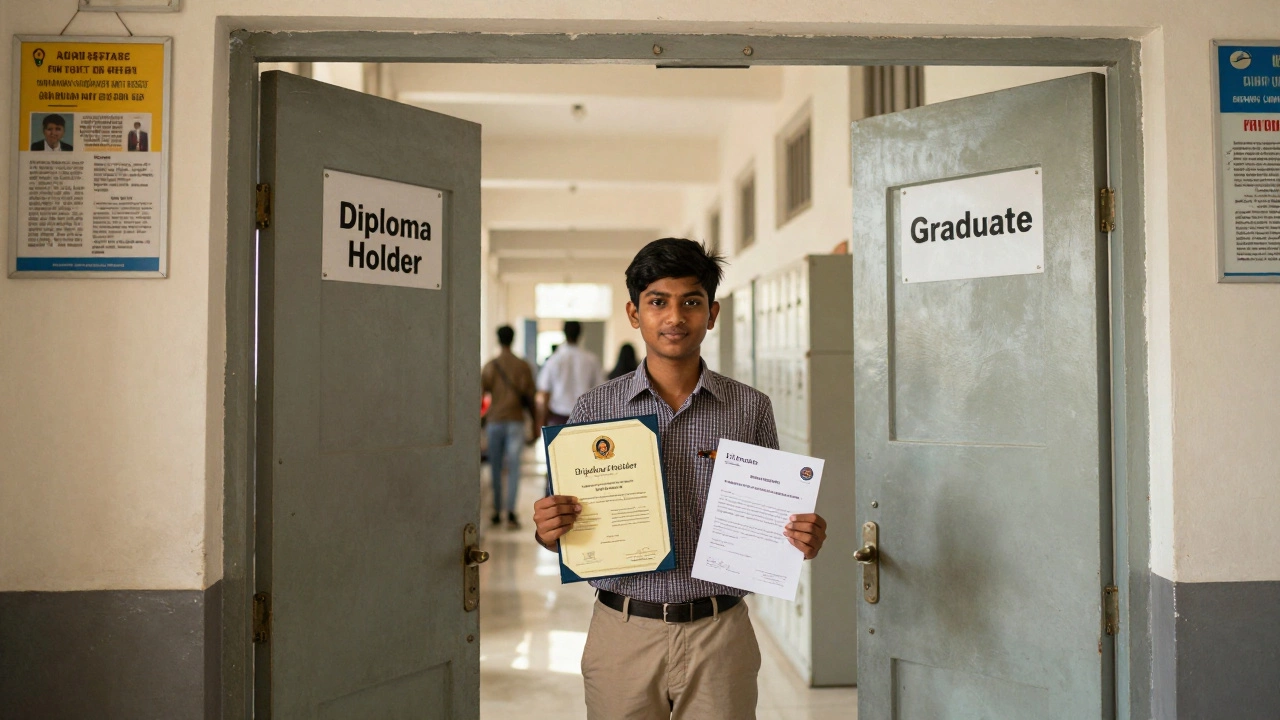
A diploma in India is not a graduate degree. Learn the difference between diplomas and bachelor’s degrees, why the confusion exists, and how to use your diploma to build a better career.
view more